US must send a thank-you note for yuan policy









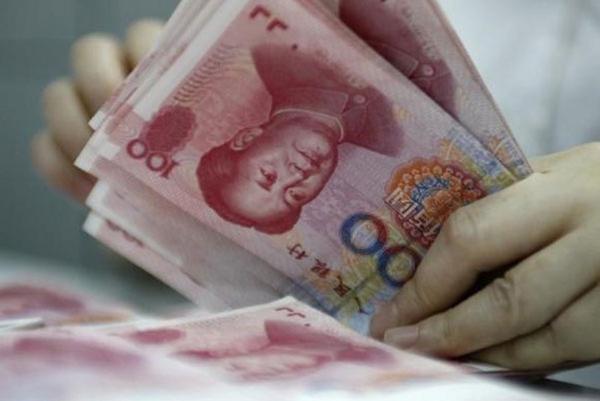 |
| A worker counts Chinese currency Renminbi (RMB) at a bank in Linyi, East China's Shandong province, Aug 11, 2015. [Photo/Xinhua] |
Economists and leading currency experts such as Fred Bergsten of the Peterson Institute for International Economics and Eswar Prasad of the Brookings Institution have argued in the past that China is not manipulating its currency. And if China is doing so, it is only to prop the yuan up, not to keep it down, which incidentally does the United States a big favor by strengthening the competitiveness of its exports.
When Trump tweeted, "Why would I call China a currency manipulator when they are working with us on the North Korean problem? We will see what happens!" on Sunday, he seemed to suggest he was doing China a favor by not labeling it a currency manipulator. The fact is, the US probably owes China a thank-you note for helping prop up the yuan.
The same is true for the US' trade deficit with China, which crossed $300 billion last year. Trump and his Cabinet members such as Commerce Secretary Wilbur Ross continued to blame China and other countries such as Germany and Japan despite wide consensus among economists that it was a wrong approach to look at the issue.
On March 31, Trump ordered a study into the causes of the US trade deficit-a study that will focus on trade barriers and unfair trade practices in foreign countries.
The trade deficit figure, however, is greatly inflated. A report prepared by Oxford Economics for the US-China Business Council in January shows that as China has become an integral part of the global manufacturing supply chain, much of its exports comprise foreign-produced components delivered for final assembly in China. If the value of these imported parts is subtracted from China's exports, the US' trade deficit with China will reduce by half, to about 1 percent of GDP, about the same as its trade deficit with the European Union.
Apple's iPhones are an apt example of such products. China contributed only about $15 in added value to an iPhone but each set added about $600 to China's exports. That is why the trade deficit looks so huge and is misleading.
Most economists believe the US should not be rattled by its trade deficit with China. If the US stops buying goods made by labor-intensive industries from China, it will need to buy them from other low-cost countries, thereby increasing its trade deficits with those economies, and its total trade deficit will more or less be the same.
Economists also believe trade deficits have more to do with fiscal policy rather than trade policy. They agree that trade barriers do not cause trade deficits. A country can have a trade deficit even by borrowing from the rest of the world, as the US has been doing for decades.
Over the past decades, products from China's manufacturing sector have lowered prices for US consumers, helping control inflation and saving Americans' money, according to the Oxford Economics study.
Besides, economists should also calculate the staggering environmental cost Chinese people have paid to make these goods, for which China deserves another thank-you note, instead of finger-pointing, from the US government and consumers.
The author is deputy editor of China Daily USA. chenweihua@chinadailyusa.com