



Credit debt issuance slumps in H1 as government tightens regulation









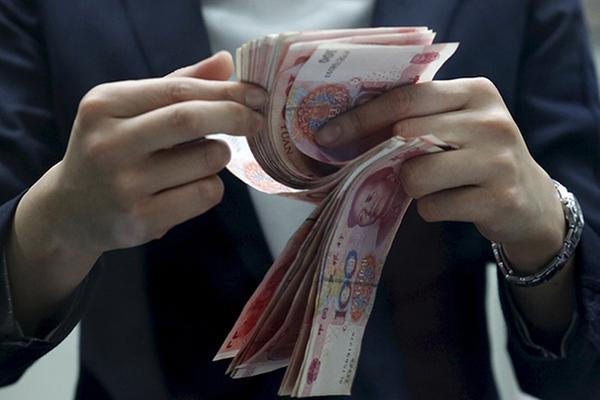 |
| A clerk counts Chinese 100 yuan banknotes at a branch of a foreign bank in Beijing Jan 4, 2016. [Photo/Agencies] |
Issuance of China's credit debt declined sharply in the first half due to stricter regulation and rising financing costs, but the market is expected to improve in the second half, according to a leading Chinese credit rating agency.
In China's inter-bank bond market, 1,640 credit debts were issued worth 1.8 trillion yuan ($268 billion) in the first half of this year, decreasing 41 percent year-on-year, according to United Credit Ratings Co Ltd.
There are mainly three types of debt in China's debt market, government bonds, credit debt and convertible bonds. Credit debt includes corporate debt, short-term financing bills, mid-term notes and subordinated debt.
"A series of new regulations on the bond market and rising financing costs could be the reasons for the decline," said Ai Renzhi, vice-president of United Credit Ratings Co Ltd.
In the first half, China's banking regulator released regulations on interbank business, wealth management business and off-balance sheet activities, a move to encourage funds to shift to the real economy.
"In the second half, we expect China's credit debt issuance to improve and the nation's prudent and neutral monetary policy will not have a fundamental impact on this trend," said she.
According to United Credit Ratings Co Ltd, a total of 2.85 trillion yuan of credit debt matured in the first half of 2017, and the amount will decrease to 2.66 trillion yuan in the second half.
Benefiting from the supply-side structural reform, credit debt issuers in sectors suffering from overcapacity improved their cash flow and strengthened their profitability, so there were fewer credit default cases in the first half, said Ai.
"Although there will be fewer debts maturing in the second half, issuers with low credit ratings could face greater financing pressure," said Ai. "Investors should be cautious about issuers in sectors experiencing overcapacity and those in a downward cycle."
Huang Delong, asset management director at Citic Securities, said: "Chinese enterprises with credit defaults will positively seek ways to finance funds and many can repay the remaining principal and interest within a year," said Huang.
Huang agreed with Ai that debt issuers with low credit ratings will face financing pressures in the second half of this year.
"Companies with continuous losses and high debt-to-asset ratios will face risks, along with private construction, coal, logistics, real estate, and small thermal power companies," he said.


















