World applauds ivory ban, but experts say illegal trade may rise










"Moreover, they also offer customers smuggling tips. Stronger enforcement is needed by the government to ensure that ivory traders operate within the law," he said.
According to a survey conducted by WWF and TRAFFIC in 2015-16, about 60 percent of ivory retailers in Hong Kong did not have the requisite certificates issued by the government, while 36 percent admitted misleading customers about the legality of transporting ivory to the mainland or overseas.
Rising trade online
"In addition to the possible illegal trade in store, we must pay greater attention to a new trend - the rise in the illegal trade in wildlife on social media and other internet platforms," said Li, from TRAFFIC.
In July, TRAFFIC published a report about cybercrime and wildlife in China.
By monitoring 58 social media accounts, the NGO discovered that the country's e-commerce platforms have become major channels for the sale of illegal wildlife products, with more than half of the trade related to ivory.
In November, several internet giants banded together to form the country's first alliance dedicated to combating the illegal trade online.
Started by Baidu, Alibaba and Tencent, the alliance quickly attracted other members, including platforms such as Zhuanzhuan and 58.com, which specialize in secondhand items, and others that focus on antiques, such as Cang.com and Wenwantianxia.
The members have signed a commitment to detect and remove advertisements for illegal wildlife products on their platforms, along with warning the organizations concerned and preventing them from releasing more information.
They use advanced technologies, such as big data analysis and artificial intelligence, to detect illegal trading.
"We are training our employees to identify illegal wildlife products, and also raising their awareness of wildlife cybercrime," said Qin Qi, deputy director of Tecent's security management department.
"We also actively assist the law enforcement agencies in investigations and prosecutions, and support other industries, particularly the logistics industry, to combat the illegal trade and raise operating costs to reduce the number of cases."





- Dazzling Guangzhou lantern display begins countdown to Spring Festival
- Huizhou takes major step forward as petrochemical hotspot
- Beijing's Shunyi district cracks down on crimes related to public welfare
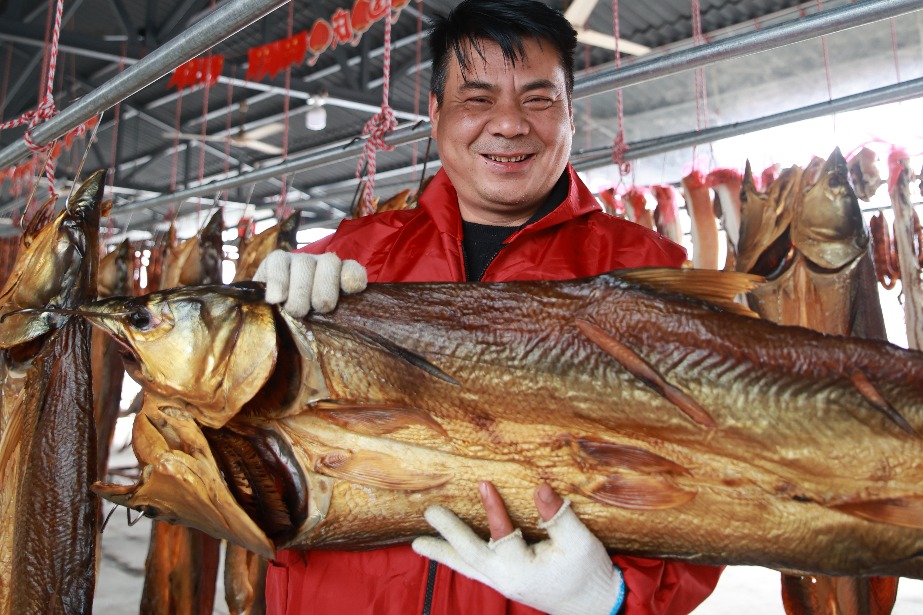
- Hunan's smoked fish and meat arrive in time for Spring Festival
- International arrivals to Guizhou skyrocket after visa-free policies
- Hubei deputy proposes museum of ancient Chinese law at Qin bamboo slip site