



Canada wants more bridges to China









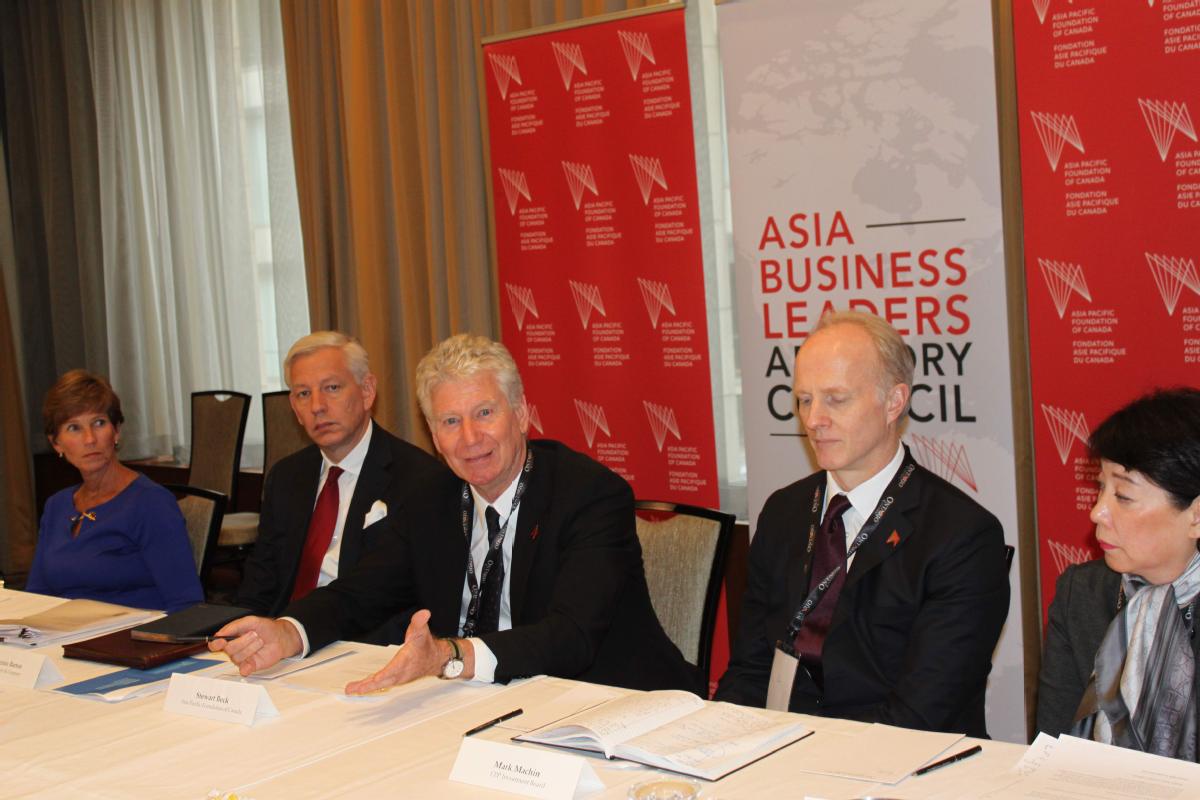
Canada should realize the full potential of its business and economic engagement with Asia, in particular China, according to Stewart Beck, president and CEO of the Asia Pacific Foundation of Canada (APF Canada).
Beck made his comments at the third annual meeting of the Asia Business Leaders Advisory Council 2018 (ABLAC 2018) hosted by APF Canada on March 2 in Toronto.
"In today's geopolitical climate, with the centre of global economic gravity clearly shifting to Asia, we are positioned to make substantial contributions to Canada-Asia business relations," said Beck, adding that ABLAC members convened the forum to catalyze dialogue and action between the two sides.
Responding to China Daily's questions about what challenges APF sees in playing the role of catalyst to strengthen and promote ties between Canada and China, Beck said in some ways challenge is opportunity.
"China is everywhere in the media today. Being a player globally, China grows rapidly. But when we talk about China, there may be some negative images involved in the Western media," said Beck, who was Canada's Consul General in Shanghai in 1999, when Shanghai's development was beginning to take off.
"Canadians cannot believe how China has risen so quickly and they are beginning to realize that China is becoming more important to us. We need to engage more with China."
In the last ten years, APF has been polling constantly that more and more Canadian people see themselves becoming part of Asia. In 2014, 36 percent of Canadians support free trade agreement (FTA) with China. By 2017, more than 55 percent support an FTA.
Being a co-chair of Canada China Track II Energy Dialogue, which covers a full spectrum of energy subsectors, Beck is familiar with how the two governments build relationships. He believes that Canada will have more cooperation with China in the areas of new technology, climate change, innovation, agriculture and natural resources.
"We have the water and the land so we need to export commodity products and value added products and fit those technologies into China, where they will be rapidly used and seen as a way of collaborating rather than just selling tons of products," said Beck.
Beck said that since China has targeted a reduction of coal consumption as a percentage of primary energy to below 65 percent by 2017 and replace it with gas, "there was a role for Canada to play that we can get our gas to China."
"We can partner with China toward the goal. We can also collaborate in e-commerce. These are all the tremendous opportunities for us to develop where both sides can work together," Beck added.
Echoing Beck, president and CEO of Canada Pension Plan Investment Board (CPPIB), Mark Machin, who has been based in Asia for more than 20 years, said that with the center of gravity of the world economically shifting to Asia which has half of the world population and will continue to grow for many years, Canada, as an important country with a smaller population "has to engage with Asia, in particular China through trade and investment and many other aspects."
Dominic Barton, global managing partner at McKinsey & Company and an adjunct professor at Tsinghua University, Beijing, also said they see "tons of opportunities in Asia, in China."
According to Barton, the charts show that Canada's relative trading position in Asia "is not very good". And part of the challenge is because Canada is so close to the US, which has 75 percent of its trade and that is difficult to shift.
But with the US market dropping, Canada needs to strategically tap into Asia and China, where the growth will be.
"We have three cities among the top 20 in terms of cleanliness in the world, and we have a lot of opportunities to work with China on that everything from water use to air pollution to traffic control and that goes with the clean-tech side of things, so I think that represents a big win-win situation that both countries can work on," said Barton.
Canada Minister Bill Morneau, who attended the ABLAC 2018 discussion, said that the Liberal government has targeted engagement with China on trade. The 2018 budget tabled last Tuesday in the House of Commons dedicated $75 million over the next five years to "establish a stronger Canadian diplomatic and trade support presence in China and Asia."
renali@chinadailyusa.com








