



Philips to grow China investment









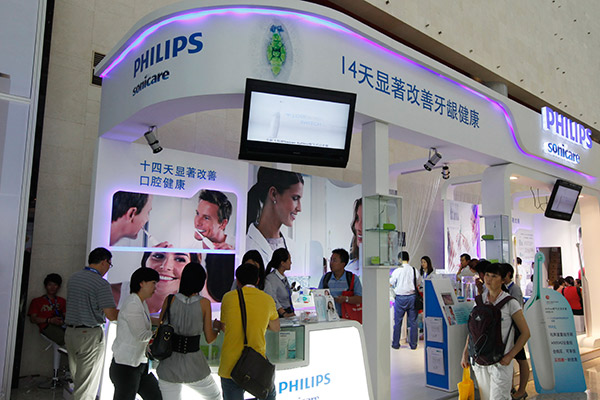
Dutch firm expands R&D efforts to tap health-conscious consumers
Dutch multinational Royal Philips NV said it is bullish on the growth potential of personal health products in China and will continue to expand its investment in the country, as Chinese consumers increasingly pursue high-quality lifestyles.
Philips said it plans to continue to expand its research and development efforts in China, its second-largest market after the United States. Currently, it has a major R&D center in Shanghai, and it has more than 1,000 researchers in the country.
Last year, Philips netted sales of 17.78 billion euros ($20.7 billion) globally, and its sales in China reached 2.3 billion euros, according to its annual earnings report.
"It's real money, real business, with a real outcome. The R&D in China is not just fundamental things or modifying products designed outside of China, then trying to introduce them to China," said Egbert van Acht, executive vice-president and chief business leader for personal health businesses of Philips.
"For many years, we have had a range of dedicated innovations in China that we do not sell in other markets. We are working on artificial intelligence-enabled personal health solutions for products such as oral care, air and sleep innovations, as well as nutrition and mother and child care," he said.
With the introduction of the Healthy China 2030 Blueprint, an action program announced in 2016 and the country's first national-level medium-to long-term strategic plan for national health and well-being, China has been endeavoring to improve its healthcare services. The initiative forecasts that by 2020, the total scale of healthcare-related sectors in China will exceed 8 trillion yuan ($1.2 trillion).
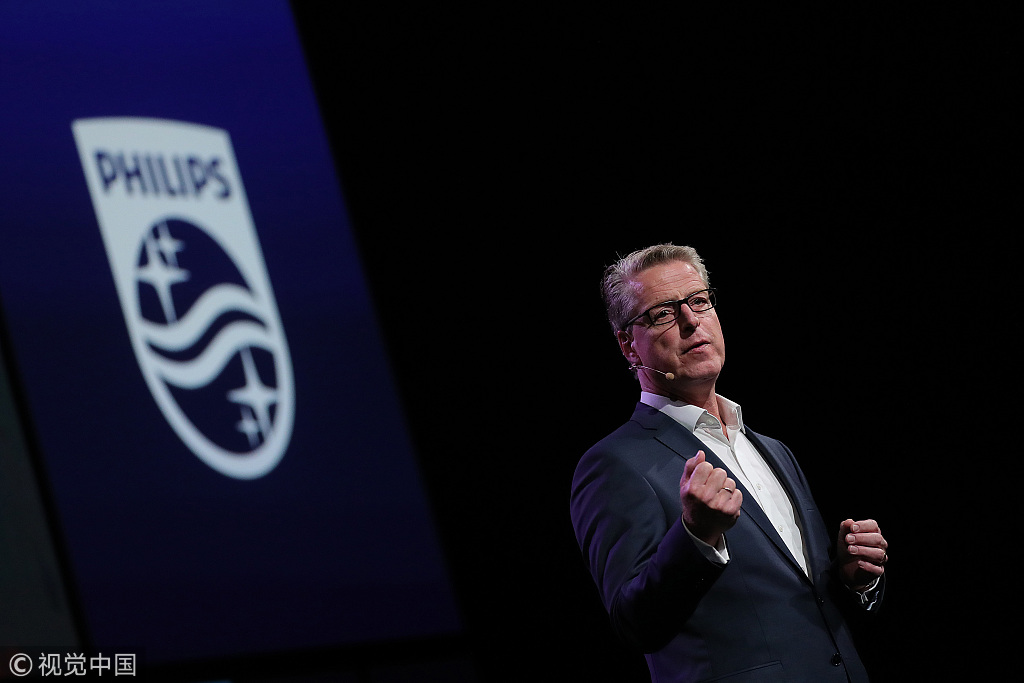
"I see a big shift in the younger generation. They are much more aware of the importance of health. I'm very happy with the Healthy China 2030 national strategy, as it will help to fuel a lot of opportunities," van Acht said.
"Middle-class families are one of the strengths of China's population and society, and the number of educated families is growing, so I'm positive about China, not just today, but in the years to come," he said.
Meanwhile, other established rivals such as Rotterdam-based Unilever Plc and Procter & Gamble Co from the US have deployed more resources to develop new consumer products to compete with each other.
Unilever and Tmall, Alibaba's online marketplace, have built a new R&D center in Shanghai this year to promote health-related products.
Regarding the specific demands of the China market, Myles Zhong, president of personal health of Philips China, said Chinese consumers consider the appearances of products important, and they like to buy good-looking things.
"China's gifting culture is also different from other markets. In China, a lot of products we sell are used for gifts. This is not a big trend in the Western markets, where more products are for personal use, so we have adjusted our portfolio to fit Chinese consumers in these areas," he said.
"In terms of online shopping, China is the biggest. I can't disclose any numbers but a big chunk of our products are sold online. This helps us to reach lower-tier cities and speed up innovation. We have started to build strategic alliances with big online players, to better understand consumer needs through their data," Zhong said.
Many global companies have noticed that China's reform and opening-up have increased the pace of consumers trading up, leading to a changed market environment and new channels, said Zhao Shiyuan, a professor at Beijing Technology and Business University.
"The focus of Chinese consumers has shifted from price to quality, and it is reversing the vicious cycle of price competition in the retail market. Innovation has become the main resort to meet the demand of consumers who value quality, health and uniqueness."


















