Key English education reforms in China









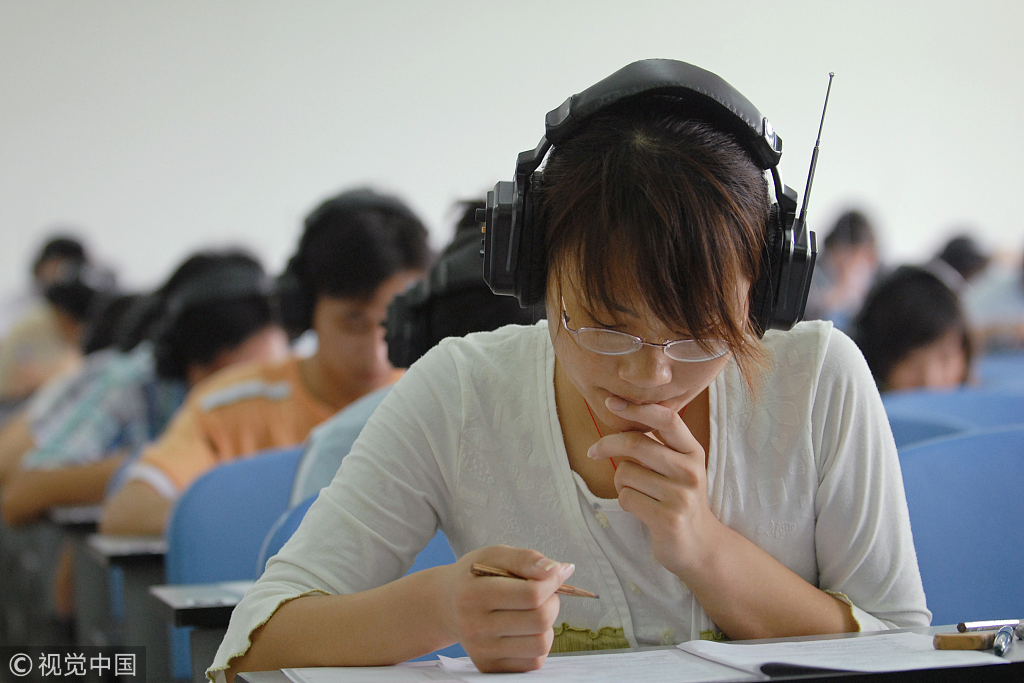
? 1978: The Ministry of Education suggested that students should learn English from Grade 3 to the end of high school. All students taking the national college entrance examination, or gaokao, could also take the foreign language exam. When China resumed the gaokao in 1977, only students choosing foreign language majors were required to take exams on foreign languages.
? 1981: The TOEFL exam was held in China for the first time, with 615 candidates taking the exam in Beijing, Shanghai and Guangzhou. Chinese students started going to the United States to study.
? 1987: The College English Test Band 4 and Band 6, CET-4 and CET-6, or the national standardized English examinations, were held by the Ministry of Education to evaluate college students' English proficiency.
? 1991: The Test for English Majors Band 4 and Band 8, TEM 4 and TEM 8, were launched by the English Language Teaching Advisory Board under the Ministry of Education to evaluate the English proficiency of English major students.
? 2001: The Ministry of Education issued a guideline requiring students in Grade 3 or above to take English classes.
? 2006: Translation was included as a major for college students. Guangdong University of Foreign Studies, Fudan University and Hebei Normal University started to enroll undergraduates majoring in translation.
? 2007: Fifteen universities, including Peking University, Beijing Foreign Studies University and Shanghai Foreign Studies University, began offering a Master of Translation and Interpretation degree.
The Ministry of Education issued the teaching requirements for non-English-major college students.
? 2014: High school students in Shanghai and Zhejiang province were able to take the English exam on the gaokao twice and have the higher of the two test scores as the final gaokao score.
? 2017: The national database of foreign language talent was established. It included three sub-databases-for high-end foreign language talent, foreign language students and teachers, and the supply and demand of foreign language talent.
? 2018: The Ministry of Education and the State Language Commission jointly released China's first evaluation standard for proficiency in English. The standard defines three categories of English language ability-basic, intermediate and advanced-with nine levels altogether.
The English proficiency standard, called "China's Standards of English Language Ability", lays down detailed requirements for listening, speaking, reading and writing. It also includes practical skills, such as translation, where standards are rare worldwide.





- China, Philippines to keep talks open on maritime affairs
- AI governance tops China’s 2025 technology buzzwords list
- China-Swiss exhibition on green construction opens
- China says navy, coast guard are peace guardians
- Hunan scholar donates 104 artifacts documenting Japanese aggression
- Beijing approves first foundational and comprehensive regulation on elderly care