



E-vehicle batteries to be recycled in green push









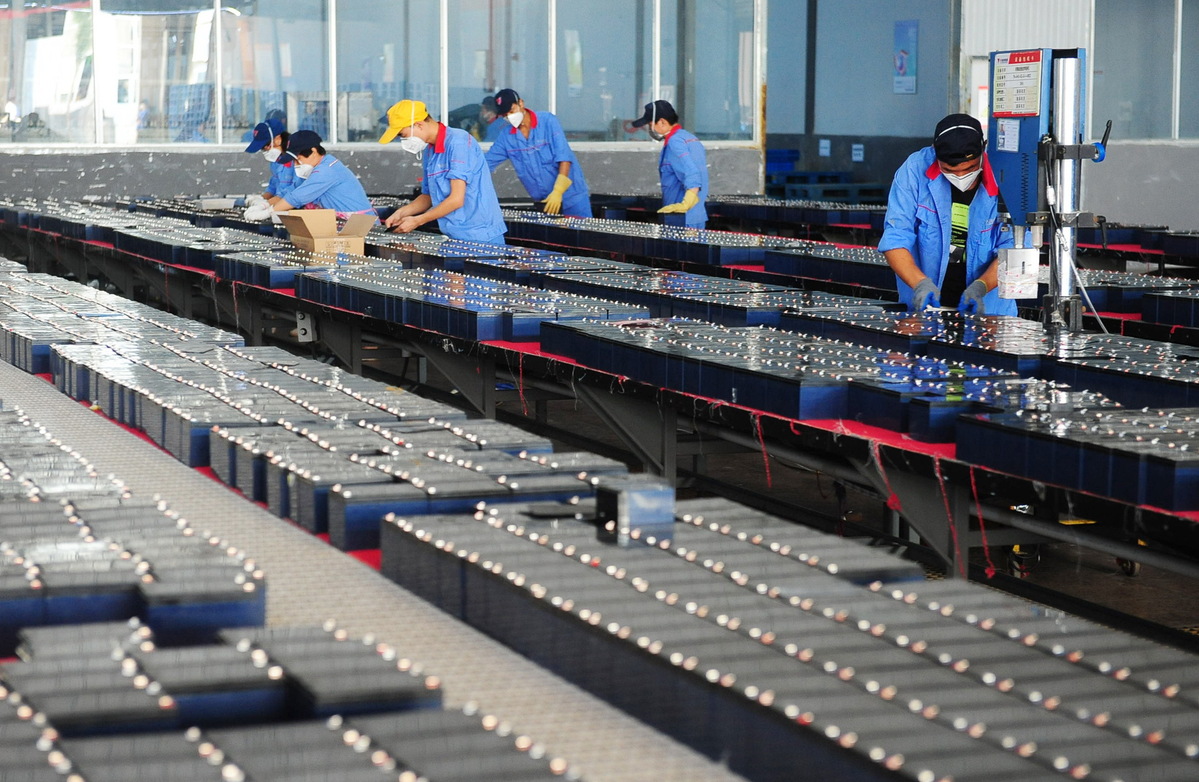
China is planning ahead for recycling electric vehicle batteries, in a bid to ensure the industry's healthy development and create a sustainable environment, officials and experts said.
Their comments came as the first batch of lithium batteries, which are commonly used in e-vehicle production, are forecast to end their service life in coming years. Without proper disposal, the used batteries will pollute the environment.
Xin Guobin, a vice-minister of industry and information technology, said improving the system of recycling and utilizing the used batteries is an important measure to protect the environment. "It is not only conducive to environmental protection, but also good for recycling resources."
He made the comments in late July at the launch of a national platform to track the entire life cycle of e-vehicle batteries from production to disposal.
The establishment of such a platform, according to Xin, is a milestone in facilitating the sector's sustainable development.
It can help ensure that sources of the batteries are traceable, so the government can effectively supervise the companies concerned to recycle the batteries at the end of their life cycle, he said.
The country's e-vehicle market grew rapidly as the government continued its strong push for green transport. Recycling has thus become an increasingly significant part of China's e-vehicle supply chain.
The average service life of lithium batteries is five to eight years. Metal resources like copper, cobalt and nickel in the batteries also have high recycling value.
The China Automotive Technology and Research Center estimated that the country would see 120,000 to 200,000 metric tons of batteries disposed of between 2018 and 2020, and 350,000 tons in 2025.
Since 2016, the Chinese government has been urging the makers of e-vehicles to build a recycling network for used batteries, and use an after-sales network to recycle used batteries.
In July, the Ministry of Industry and Information Technology said in a notice that Chinese cities and regions would encourage automakers to establish recycling service outlets and cooperate with battery producers, used-car dealers and scrap merchants to build regional recycling systems.
The ministry said it would strictly control the number of new enterprises involved in battery recycling and make full use of existing recycling bases in China, with a goal to promote the industry's sustainable development.
Inspired by such government guidance, a number of Chinese companies are exploring effective ways to reuse battery modules.
Contemporary Amperex Technology Co collects used e-vehicle batteries and reuses them in other fields, and the recovery rate has reached 99 percent, said Bo Geren, chief technology officer of the company.
According to Bo, the world's largest e-vehicle battery producer by sales has mastered the key technologies of the whole industry chain, ranging from materials, research and development, to manufacturing and recycling.
Brunp Recycling Technology Co is building a factory in Changsha, Hunan province, with an annual capacity to recycle 100,000 tons of used batteries.
Li Changdong, chairman of Brunp, said the recycling base, worth 1.2 billion yuan, is expected to start operations by 2021.
China's concerted efforts to recycle batteries have been driven by the rapid growth of the e-vehicles industry.
In the first half of this year, the country produced 413,000 new energy vehicles, up almost 95 percent year-on-year, according to data from the Ministry of Industry and Information Technology. Sales more than doubled to 412,000 units.
Last year, 777,000 new energy vehicles were sold in the China market, up 53.3 percent year-on-year, according to the China Association of Automobile Manufacturers.








