Cultural tourism to rejuvenate the Silk Road









Belt and Road Initiative (BRI) proposed by President Xi Jinping in 2013 is an ambitious plan of getting together different people and cultures across Asia and Europe.
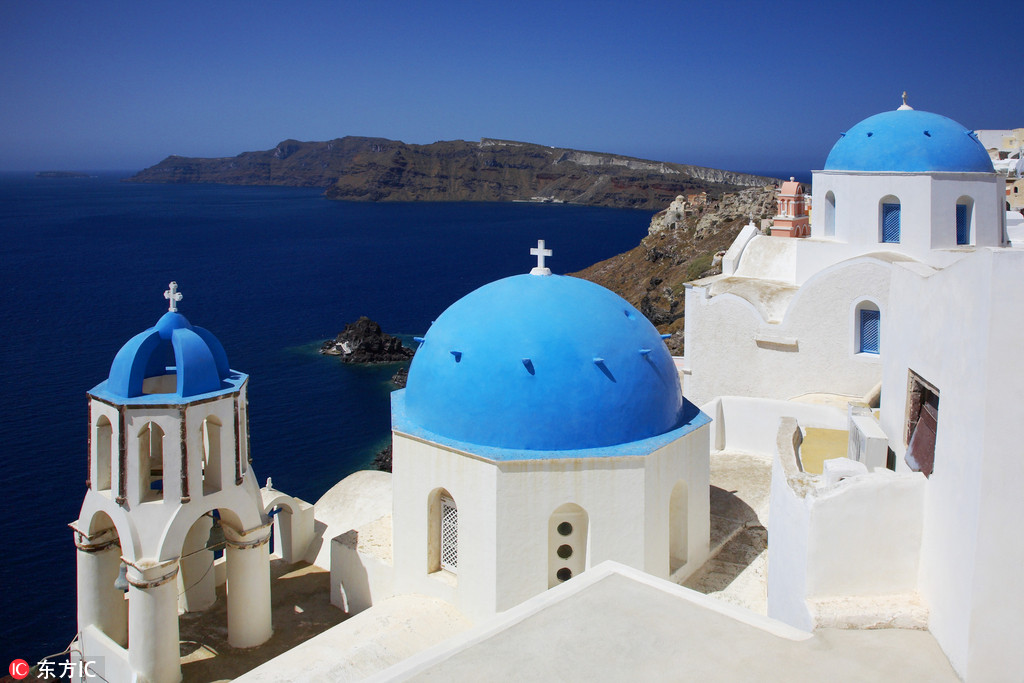
Greece as an integral part of the European Union since 1981 and euro currency user from 2001underwent deep financial crisis in the last decade starting in 2010.
China and Greece decided to enhance their historic relationship through the investment by Shanghai-based COSCO Shipping Lines in the major Greek Port of Piraeus, in 1997, and in Thessaloniki, Northern Greece, in 2004. The Belt and Road Initiative came as an added value strategic decision-making to, first, complement the existing cooperation, and, second, to broaden the spectrum of bilateral ties between Greece and China, and between Europe and China.
The BRI has so far opened up a valuable channel of communication at an international, European, and national scale. It is my understanding that the changes brought by BRI in Greece could be mostly understood at governmental level in bilateral and multilateral negotiations, and less in the people’s everyday life.
I would expect the international organizations, mainly UNESCO and Council of Europe, to assume an educational role by presenting historically to the broad public via their official websites the ways Asia and Europe were interconnected.
An informative role in that respect could be played by the Business Institute Confucius, and selected universities toward providing their students and the general public with data on the ties between Asia and Europe.
Working together in a creative way based on mutual interest of the people of Greece and China and nurturing people-to-people relations might be a way to moving forward. Cultural and educational relations are always the preferential field of soft power in the region of Southeastern Europe where Greece represents stability, democracy, and openness to “other”, either foreigner visitors and workers or migrants seeking a better future in the west.
Greek and Chinese people have the advantage of carrying in their DNA the history of millennia of their nation and the region’ s turbulences having acted as an important factor of knowledge and everyday wisdom, while embracing, nowadays, the element of new. They also have in common their firm belief in in the value of family, a belief interwoven with the fabric of their societies, and to a certain extent to the legal system of the two countries.
It is certain they are people interested in getting to know the Silk Road itinerary by traveling in an organized, safe and affordable way to the European or Asian parts of the Silk Road. The current situation does not permit such an attempt.
It is quite characteristic that visiting China destinations from a small country of 10 million people, such as Greece, is an Odyssey taking into consideration the language gap, the feeling of being lost to “mega” cities of millions of people such as Beijing and Shanghai and the lack of really experienced travel agencies that could provide you with a satisfactory experience at an affordable cost.
The need-to-be-seen-basis, the curiosity for, and the attraction to “exotic” destinations, the spiritual search to find oneself away from their home comfort zone, the regime one puts oneself when abroad experiencing different climate zone, landscape, gastronomy and culture are some of the reasons that itineraries could be developed for cultural tourism purposes.
Cultural itineraries based on the project may contribute in the local development and economy growth, the better understanding of history and cities’ modern way of life. But, if it is to bring the best for many, we should explore the ways to make it affordable in a cohesive approach starting from a pilot cultural route of medium distance, and international character transcending the language barriers.
The pilot cultural route Belt and Road Initiative should be treated with utmost caution toward respecting the people, the environment, and the landscape, natural, architectural, and historical. Taking this concept further, I would say that the goal is not a corporate takeover, but a human chain of people seeking to open up their mind, and enrich their culture, so as to get back home better and with a feedback for their societies.
Vassiiki Papakostopoulou is a Greek citizen.
The opinions expressed here are those of the writer and do not represent the views of China Daily and China Daily website.