



EU, China experts defend liberalized trade









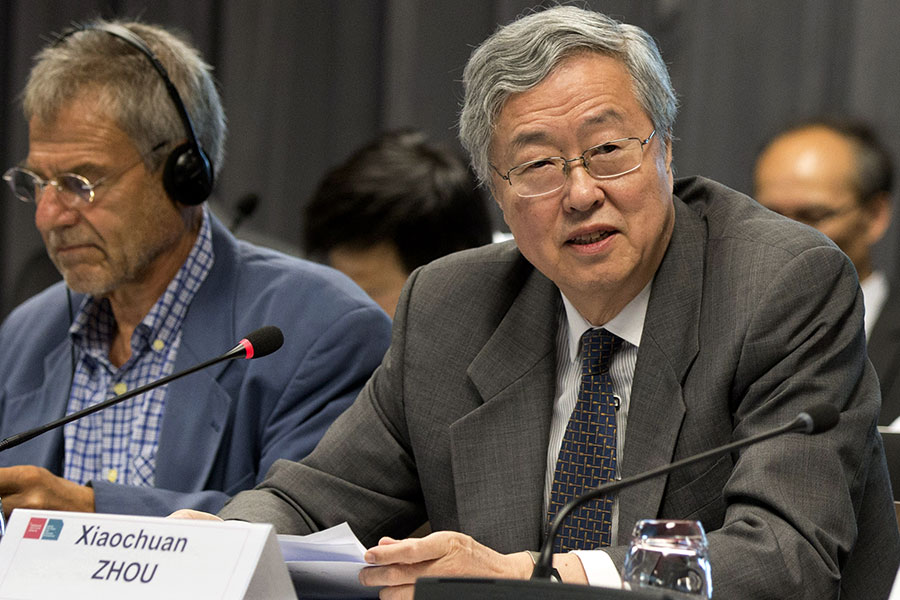
GENEVA-A number of experts and former government officials from the European Union and China stressed on Wednesday that they should find a way to safeguard and improve the multilateral trade governance system championed by the World Trade Organization.
At a roundtable discussion in Geneva sponsored jointly by two think tanks-the China Center for International Economic Exchanges and the Center for Trade and Economic Integration of the Geneva Graduate Institute of International and Development Studies-they also said China and the EU should enhance their cooperation to confront the prevailing trade protectionism and unilateralism around the world.
Zhou Xiaochuan, former Chinese central bank governor and adviser to CCIEE, said at the discussion that China always hopes to reduce trade frictions, improve the global multilateral system, and reduce the uncertainty of the global economy in a complex and dynamic environment.
China opposes unilateralism and trade protectionism, and hopes to promote investment, trade liberalization and facilitation, Zhou said.
The country also aims to establish a more open, balanced, inclusive, transparent, rules-based, nondiscriminatory multilateral trading system, he added.
Zhu Guangyao, former Chinese vice-minister of finance, pointed out during the discussion that the spread of unilateralism will not only significantly disrupt global supply chains, but also threaten the multilateral mechanism which safeguards the collective interests of all countries, and hamper cultural and people-to-people exchanges and mutual development.
Zhu told the audience that both China and Europe are staunch defenders of the multilateral trading system, and it is of strategic importance for both sides to strengthen policy communication and coordination through think tank exchanges.
"Through this very direct, frank and constructive dialogue, we have deepened our understanding and promoted mutual trust," Zhu told reporters at a news briefing after the roundtable discussion.
He described the WTO as the most important rule-making representative of the current multilateral trading system, and it plays a vital role in the settlement of disputes and the promotion of trade.
However, he said, due to obstacles put in place by the United States, the complete functioning of the WTO, especially the dispute settlement mechanism, has been greatly affected. It remains an urgent task for the US and other members to deal with disputes constructively and cooperatively.
As for Sino-US trade relations, Zhu said that to solve problems, the two sides need to communicate and negotiate, and treat each other equally with mutual respect and understanding.
"China has never succumbed to external pressure," he said, adding that bilateral economic relations are mutually beneficial and win-win, so it is in the interests of both countries and the world to maintain healthy and stable economic relations.
Arancha Gonzalez, executive director of the International Trade Center, said that as challenges mount, the choice now is whether the multilateral trading system will be a buffer in trade confrontation or will be dragged down by trade conflicts.
She stressed that in today's multipolar world, multilateral trade governance needs to be improved, and for the WTO, the most urgent challenge is how to make the dispute settlement body resume its full functionality as soon as possible.
On the issue of WTO reform, Zhang Jianping, director of the Research Center for Regional Economic Cooperation at the Institute of International Trade and Economic Cooperation, said that the WTO still needs to adhere to the principles of nondiscrimination, most-favored-nation treatment and transparency, openness and consensus.
Wei Jianguo, CCIEE vice-chairman and former Chinese vice-minister of commerce, also stressed that the multilateral trade governance system should always adhere to rule-based principles, ensure more transparency and fairness, and take the interests of developing countries into account.
He said he hopes the US will return to the negotiating table as soon as possible.
Robert McDougall, a visiting scholar at the Graduate Institute of International and Development Studies, noted during the discussion that WTO reforms need to be based on a four-point principle, namely, the flexibility of membership participation and rule-making, the balance of members, mutual trust and leadership.


















