



Fungus and factories forge stable incomes and raise living standards









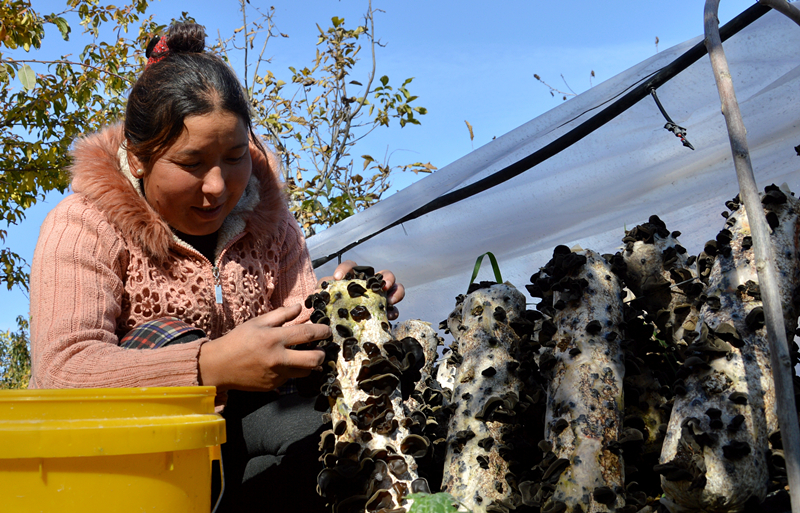
The lives of residents of four areas in western China are improving thanks to targeted measures. Zhang Yi reports from Aksu prefecture, Xinjiang Uygur autonomous region, with Cui Jia in Urumqi.
Tunisakhan Juma and her neighbors in Towankh Magget village spend their days taking care of rows of enormous plastic grow tubes in their fields. The tubes contain logs made from pulped walnut branches that are covered with wood ear, an edible black fungus that is rich in vitamin K.
In about four months, the fungus crop will be harvested, bringing a profit of 500,000 yuan ($72,000) to about 200 people in 64 impoverished families in the poverty-stricken village in Wushi county, Aksu prefecture, Xinjiang Uygur autonomous region.
The county, which covers 9,082 square kilometers, has a population of about 235,000, with about 94 percent being members of ethnic groups, including Uygur and Kyrgyz people.
Local farmers used to grow walnuts for a living, but the high level of salinity in the soil and a high water table that often left the ground waterlogged resulted in unstable yields and fluctuating annual incomes.
A poor transportation and distribution network makes it difficult for the locals to sell their agricultural produce and exacerbates low incomes. In some areas, the harsh natural environment makes further development almost impossible.
Last year, the regional government sent a poverty alleviation team to the village.
"We needed to turn the disadvantages into advantages," said Li Keqiong, head of the team. They discovered that the village, with its cool climate and abundant water resources, was suitable for commercial cultivation of the edible fungus.
Impoverished communities
Government data shows that there were about 1.9 million impoverished people in Xinjiang in January, with more than 1.6 million of them living in extreme poverty in four southern prefectures: Kashgar, Hotan, Aksu and the Kezilesu Kirgiz autonomous prefecture.
The prefectures lie on the edge of the Taklimakan Desert, the largest desert in China and the second-largest shifting sand desert in the world. Local living standards have been below the poverty line for decades as a result of the changeable weather and erratic crop yields.
Raising living standards in the four prefectures is crucial to China's objective of eradicating rural poverty by 2020, but it poses a great challenge for the regional government.
Pushing forward poverty alleviation work in Xinjiang has always been difficult, and that is still fundamentally the case, according to a statement released on Tuesday by the Xinjiang Poverty Alleviation Office.


