
综合一区欧美国产,99国产麻豆免费精品,九九精品黄色录像,亚洲激情青青草,久久亚洲熟妇熟,中文字幕av在线播放,国产一区二区卡,九九久久国产精品,久久精品视频免费

John L. Holden
Veteran China expert
EDUCATION:

1974-76: MA, Chinese language and literature, Stanford University

1970-74: BA magna cum laude, Chinese language and literature, University of Minnesota Twin Cities

AWARDS:

2017: Foreign Educator of the Year, presented by the State Administration of Foreign Expert Affairs; Chinese Government Friendship Award

CAREER:

2017-present: President and CEO, US-China Strong Foundation

2013-present: Nonresident senior associate, Carnegie Endowment for International Peace

2010-present: Senior adviser, Vermilion Partners

2014-17: Associate dean, Peking University's Yenching Academy

2014-17: Professor of management practice, Peking University's Guanghua School of Management

2008-13: Managing director and senior adviser, Hill+Knowlton Strategies, Beijing

2005-08: Chairman of China operations, Shaklee Corp

1998-2005: President, National Committee on US-China Relations

1986-1998: Various senior management positions with Cargill

How search for knowledge helped lift China's reform
Foundation leader says nation developed by learning, and now can teach other countries a thing or two
Dong Leshuo in Washington
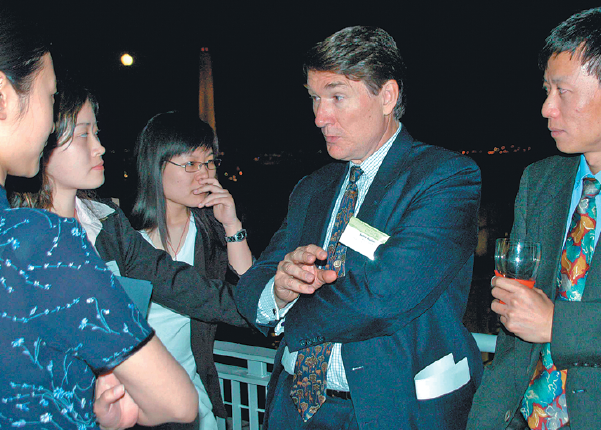
Holden talks with Chinese students at George Washington University in Washington during a symposium on US foreign policy in June 2004. [YU DONGHUI/CHINA NEWS SERVICE]

Under the new policy, farmers were able to exercise formal control of their land as long as they sold a contracted portion of their crops to the government, which resulted in an increase in production.

Holden returned to Beijing at the end of 1980, and the following year he spent six months traveling across the country as an interpreter.

He visited many places up and down the Yellow River, and was in the Tibet autonomous region for five weeks. During this trip, he saw a lot of China and got a sense of what was happening in the countryside.

"So many farmers' lives were improved dramatically by reform and opening-up," he said. "I realized that if they had the incentive to produce their own food and sell it, and they had a market to sell it in, lots of things became possible."

He said reform and opening-up removed the barriers that prevented the Chinese from being successful.

In addition to material benefits, the opening of Chinese people's minds has made a deep impression on Holden, a veteran China expert who served as president of the National Committee on US-China Relations from 1998 to 2005 and later became an associate dean at Peking University.

"That's actually the biggest change in China - the acquisition of knowledge, which was not available before," he said. "The idea that the average person could have a passport and travel overseas was an incomprehensible and impossible idea even in 1985,'86 or'88."

In 1980, when Holden was living in Washington, China established an encyclopedia publishing house. "They realized there were just big gaps of knowledge. They started the conversation with the Encyclopaedia Britannica in Chicago," he said.

In the summer of that year, China Encyclopedia Publishing House announced it would translate the Encyclopaedia Britannica into Chinese. Holden served as interpreter at a news conference in Washington to announce the partnership.

To Holden, it was a major signal that China was ready to learn about the outside world and wanted as much knowledge as possible.

"That was a major step to opening-up. That was the beginning to show a clear purpose from the Chinese people to be open to new ideas. Over the past 40 years, China has accomplished a great deal, and the Chinese people have been enabled to fully utilize their work habits and entrepreneurial spirit to create a better future for themselves."


|<< Previous 1 2 3 4 5 Next   >>|
John L. Holden
Veteran China expert
EDUCATION:

1974-76: MA, Chinese language and literature, Stanford University

1970-74: BA magna cum laude, Chinese language and literature, University of Minnesota Twin Cities

AWARDS:

2017: Foreign Educator of the Year, presented by the State Administration of Foreign Expert Affairs; Chinese Government Friendship Award

CAREER:

2017-present: President and CEO, US-China Strong Foundation

2013-present: Nonresident senior associate, Carnegie Endowment for International Peace

2010-present: Senior adviser, Vermilion Partners

2014-17: Associate dean, Peking University's Yenching Academy

2014-17: Professor of management practice, Peking University's Guanghua School of Management

2008-13: Managing director and senior adviser, Hill+Knowlton Strategies, Beijing

2005-08: Chairman of China operations, Shaklee Corp

1998-2005: President, National Committee on US-China Relations

1986-1998: Various senior management positions with Cargill

How search for knowledge helped lift China's reform

Foundation leader says nation developed by learning, and now can teach other countries a thing or two
Dong Leshuo in Washington
Holden talks with Chinese students at George Washington University in Washington during a symposium on US foreign policy in June 2004. [YU DONGHUI/CHINA NEWS SERVICE]

Under the new policy, farmers were able to exercise formal control of their land as long as they sold a contracted portion of their crops to the government, which resulted in an increase in production.

Holden returned to Beijing at the end of 1980, and the following year he spent six months traveling across the country as an interpreter.

He visited many places up and down the Yellow River, and was in the Tibet autonomous region for five weeks. During this trip, he saw a lot of China and got a sense of what was happening in the countryside.

"So many farmers' lives were improved dramatically by reform and opening-up," he said. "I realized that if they had the incentive to produce their own food and sell it, and they had a market to sell it in, lots of things became possible."

He said reform and opening-up removed the barriers that prevented the Chinese from being successful.

In addition to material benefits, the opening of Chinese people's minds has made a deep impression on Holden, a veteran China expert who served as president of the National Committee on US-China Relations from 1998 to 2005 and later became an associate dean at Peking University.

"That's actually the biggest change in China - the acquisition of knowledge, which was not available before," he said. "The idea that the average person could have a passport and travel overseas was an incomprehensible and impossible idea even in 1985,'86 or'88."

In 1980, when Holden was living in Washington, China established an encyclopedia publishing house. "They realized there were just big gaps of knowledge. They started the conversation with the Encyclopaedia Britannica in Chicago," he said.

In the summer of that year, China Encyclopedia Publishing House announced it would translate the Encyclopaedia Britannica into Chinese. Holden served as interpreter at a news conference in Washington to announce the partnership.

To Holden, it was a major signal that China was ready to learn about the outside world and wanted as much knowledge as possible.

"That was a major step to opening-up. That was the beginning to show a clear purpose from the Chinese people to be open to new ideas. Over the past 40 years, China has accomplished a great deal, and the Chinese people have been enabled to fully utilize their work habits and entrepreneurial spirit to create a better future for themselves."

木兰县| 江孜县| 广平县| 阿拉善左旗| 壤塘县| 巧家县| 崇信县| 涞水县| 呼伦贝尔市| 连州市| 巫溪县| 闽侯县| 斗六市| 玉林市| 长白| 长葛市| 定兴县| 肇庆市| 社旗县| 习水县| 黄大仙区| 海伦市| 文成县| 青岛市| 临海市| 奉贤区| 普洱| 波密县| 韩城市| 全州县| 嘉黎县| 新邵县| 广安市| 凤台县| 保定市| 博白县| 高雄县| 房产| 大同市| 栾城县| 丰原市|