
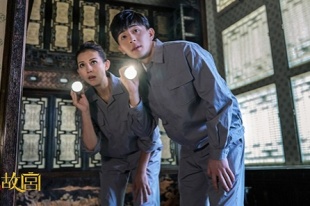



Forbidden City reveals its secrets









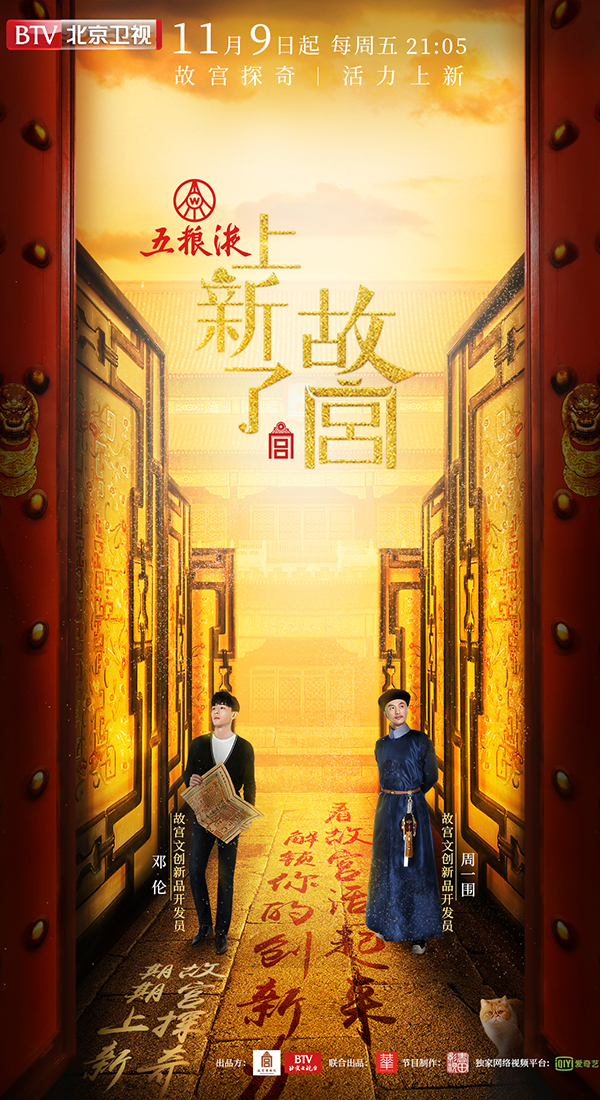
Historical accuracy
Despite the entertainment aspect of the show, Zhu says his priority is to give viewers a correct understanding of history.
"Many historical dramas based on the Forbidden City are hits," he says. "But they also make people believe that their fictional stories are real history. Now, since we are making a show in the palace, we have to ensure that everything we do is accurate."
One of the advantages that the show's makers have is that it has a huge collection of cultural relics which can be used as reference material. The downside is that there are too many of them, about 1.86 million items in total.
Mao says: "I don't feel I am making a variety show. I feel I am preparing for academic research projects, as all the costumes, props and makeup styles have to follow historical records."
This is why, Mao says, the costumes in the variety show may seem different to viewers who are used to watching history-based TV dramas.
Speaking about the moment when she first saw the clothes worn by Emperor Qianlong in everyday life, Mao says: "Frankly, my response was: Isn't this something worn by a eunuch?
"How could the outfits be so plain-looking? But it is history. Only a red decoration on the top of the emperor's hat revealed his identity."
Emperors did not wear shiny robes all the time, and neither did the empresses and the concubines. Their flamboyant robes and shoes, which are commonly seen in TV series now, were not commonplace. Elaborate styles only appeared in the late 19th century.
During the filming process no actor was allowed to touch the cultural relics.
For a scene where Qianlong sits on his throne in Juanqinzhai, the crew had to create an identical replica of the original for the actor to use.
It is hoped that the show might make the grandiose 720,000-sq-meter palace complex in heart of Beijing feel more accessible to the public.
"People think that the Palace Museum is very big and remote," says Leng Song, a media researcher at the Chinese Academy of Social Sciences.
"The program which showcases new facets of the palace complex's aesthetics could help change that with its unique treatment."
He also says that the show also sets new benchmarks for upcoming Chinese variety shows.
"A cultural program needs taste, but it cannot be a cold fish," says Leng.
"A blend of docudrama and reality show techniques can sustain the interest of the public, and producing souvenirs will make the show's influence on the cultural sector even stronger."
The show is crucial to the plans of Shan Jixiang, 64, the director of the Palace Museum, who is determined to make the museum a part of people's everyday lives.
Souvenirs developed from the abundant cultural treasures in the museum is another part of the plan.
Besides the designers featured in the show, students from top Chinese fine art academies are also being given access to cultural relics appearing in the show, in the form of pictures and background information. They are expected to come up with ideas which can ultimately be turned into souvenirs.
"Our ultimate goal is to enlighten people through these souvenirs," says Shan. "More ways are needed to better connect culture and the market."
According to Shan, the Palace Museum had 10,500 types of cultural souvenirs as of 2017.
"This number is big enough," he says. "Now it's the time to focus more on how to create new themes and improve quality."
As the series is scheduled to have many seasons, Shan says the director can also use the products as inspiration.
Despite his age, Shan's mind is buzzing with ideas.
For instance, when the show needed to find a host to connect the storyline, Shan suggested using a chubby cat speaking in a child's voice for the role. This idea has proved successful, going by feedback on the internet.
"We have 200 cats in our museum," says Shan. "Thanks to them there are no rats in the Forbidden City. So, why not have them on the show."
Contact the writer at wangkaihao@chinadaily.com.cn


















