


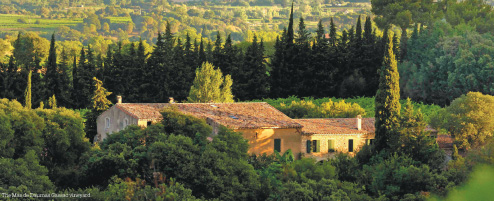
A below-the-radar vineyard in southern France, Mas de Daumas Gassac, is challenging the dominance of Bordeaux and Burgundy. Languedoc's vinous moment is at hand.
The French region of Languedoc has been a victim of its own success since early times.
The area was cultivated with vineyards by the early Greeks in the fifth century. Languedoc had belonged to France since the 13th century and Roussillon was acquired from Spain in the 1650s; the two regions were joined in the 1980s.
Spanning the Mediterranean coastline from the French border with Spain to the region of Provence, the area has around 700,000 acres of wines and is the biggest wine-producing region in the world, responsible for more than one-third of France's total. It was estimated that by 1980, Languedoc was producing ten percent of the entire planet's wine output.
But where Bordeaux and Burgundy reign in France, Languedoc has been overshadowed by their influence-one that both regions have been happy to reinforce. However, that's now changing, largely due a group of dynamic contemporary winemakers, and the supreme exponent of this mentality is Mas de Daumas Gassac, in the commune of Aniane. Although fairly under the radar in the larger wine world, the estate has been dubbed the Latour and the Lafite Rothschild of the region, and more widely as "the Grand Cru of Languedoc". Whatever the declension, it has raised Languedoc's viticultural game to a more competitive and keenly felt level.
For 46 years, the property and its iconoclastic wines have been tearing up the rule book, highlighting the excellence of a terroir first revealed in 1972 by the estate's creators, Véronique and Aimé Guibert. Although Aimé was a glovemaker by trade (he worked with both Roberto Cavalli and Pierre Cardin) and Véronique an ethnologist, they bought a 300-year-old farmhouse from the Daumas family, located in the unspoilt setting of the Gassac valley, named after the brook that cuts through it. The Guiberts asked eminent wine geologist Henri Enjalbert to analyze the land, whereupon ice-age scree (similar to the best soil in Burgundy's C?te d'Or) was discovered.
The couple began planting cabernet sauvignon in 1972, with the first vintage of Mas de Daumas Gassac released in 1978. Today, more than 38 red and 31 white vintages are aging in the cellars of the estate. Those 1,000-year-old cellars were formed in the foundations of a Gallo-Roman mill.
"We bring wine from the Languedoc, but with a style that is different," says Basile Guibert, one of four brothers who have inherited the property from their father, who died in 2016 at the age of 91. "Languedoc brings volume to the rest of the world-and if you take Languedoc out of the wine world, a lot of people will have no access to it. Forty years ago, this association with volume was bad, but now, people in Languedoc are making excellent wine, and even the most prestigious names like Rothschild and Lafite all have something in Languedoc."





