



Authorities eye ways to prevent childhood nearsightedness









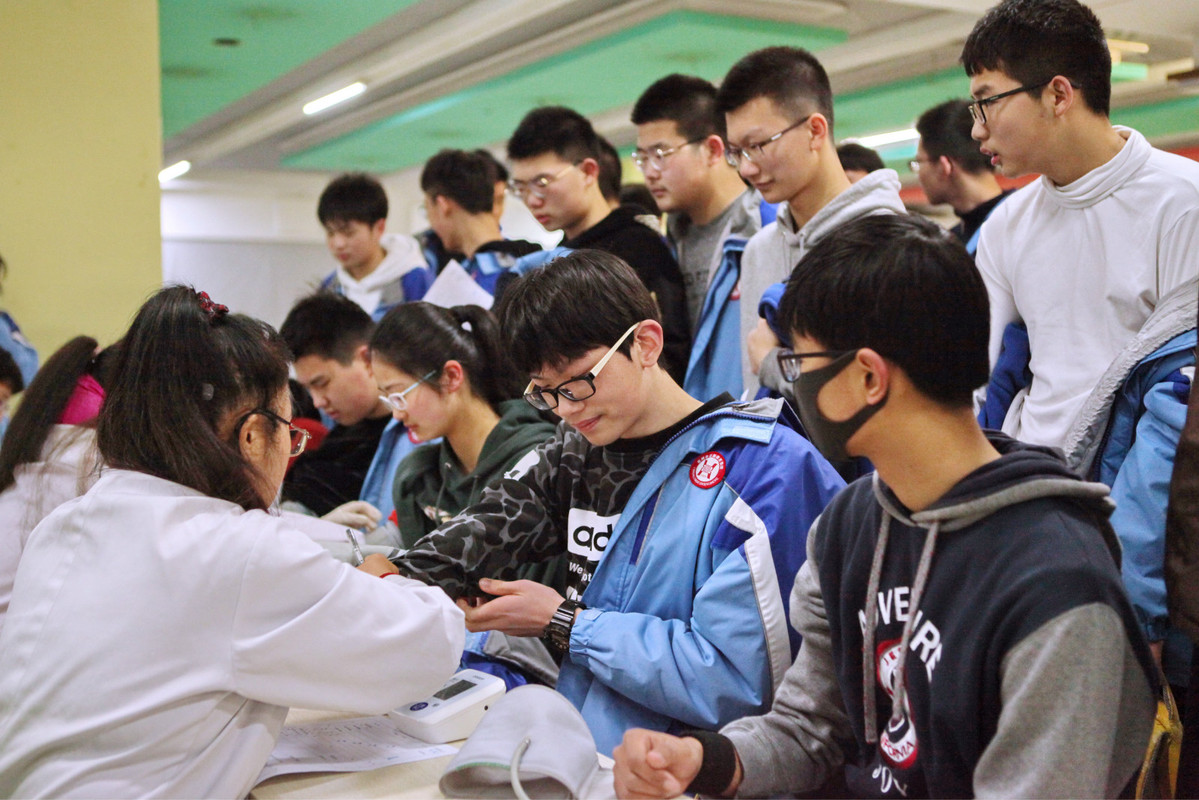
Like many nearsighted people, the first thing Chen Xu does when she wakes in the morning is grab her glasses and put them on.
Other people might say the first thing should be to dress or brush her teeth, but Chen disagrees. She doesn't want her first view of the world every morning to be blurred.
The 35-year-old, who teaches English at a junior middle school in Shanghai, started wearing corrective lenses when she was about the same age as the 13-to 15-year-old children she teaches.
"At first, my nearsightedness was only-3 or-4 diopters (a low level). It then grew with my educational background," joked Chen, who has a master's in education studies. "Before I graduated from college in 2006, it had risen to-7 diopters and has stayed at that level ever since."
Recalling spending her adolescence at her desk - often for hours without even a short break - to finish assignments or read novels, she said: "The academic workload was just too heavy at the time. As far as I am concerned, most people my age became myopic at about the same age as me and for the same reason."
Things don't seem to have improved. A 2016 report by the World Health Organization showed that with 600 million nearsighted people - almost half the population - China has the world's highest rate of adolescent myopia.
More than 70 percent of high school and college students and almost 40 percent of primary school students have problems with their eyesight.
Li Aoyu, chief ophthalmologist at the Eyecare Beaucare Clinic, a private hospital in Beijing's Chaoyang district, has worked as an optometrist for decades. In recent years, he has noticed a change in the age of the patients coming to see him.
"Primary school students now account for at least one-third of my patients. It's an obvious rise." he said. "There were not so many before."
Wang Ningli, director of the Ophthalmological Center at Beijing Tongren Hospital, a public hospital renowned for eye treatment, has also noticed the trend.
"More children are developing myopia at an earlier age. Some are already nearsighted, even though they are only 5 or 6 years old," he said.


- First National Reading Week launched
- Chinese scientist elected chair of UN commission
- Mideast tensions could increase costs for China's agricultural sector, expert says
- 7.5-magnitude earthquake strikes off Japan, no impact on China coast
- China opens citrus labs with Brazil and Montenegro in Chongqing
- Centuries-old Dong singing festival celebrates ethnic traditions in Hunan


