



A recycling crisis as markets shrink









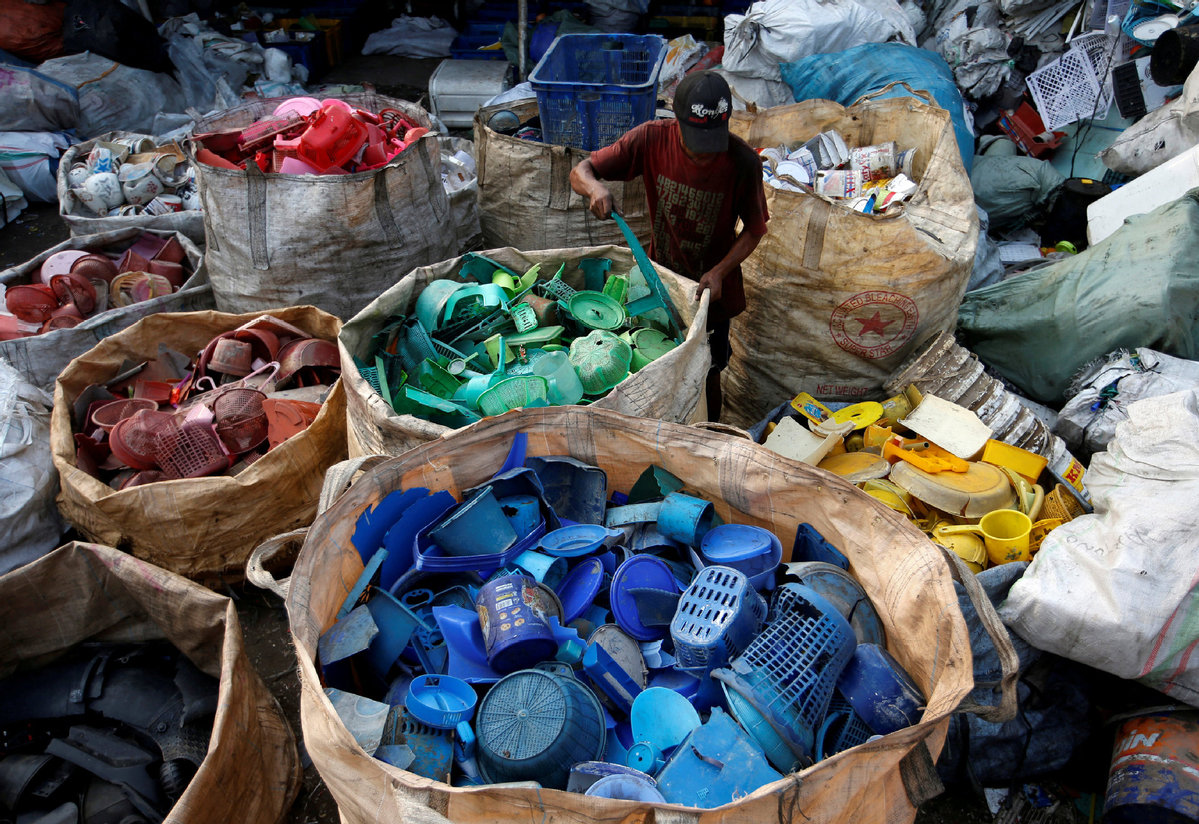
Some countries plan to limit waste imports from US
The "good old days" when Karen could walk to redeem bottles and cans in an alley behind a supermarket are gone.
Since all redemption centers near her home were closed last year, the mother of three, who didn't give her last name, has to drive about 30 kilometers to another recycling center in San Jose, California.
At the crowded Ranch Town recycling center, Karen joined a long line. About 10 minutes later, her bottles and cans were sorted and compressed into bales, ready to be shipped to India.
"It feels good to recycle. But nowadays it's become inconvenient," she said.
The old days are gone for the recycling business, too, as US recycling processors grapple with smaller markets, reducing contamination and increased costs.
When the market was good, a ton of newspaper was sold for more than $200, but now the recyclers are paying to get rid of it, said Greg Kelley, general manager at Napa Recycling and Waste Services, in a recent publication by the California Refuse Recycling Council.
The United States has long been dependent on foreign markets to absorb its recyclable material. For decades, China had been the largest importer of US recyclables.
In 2016, 16.2 million tons of US recyclable materials went to China, more than 40 percent of the total exported, according to the National Recycling Coalition.
In 2017, China announced efforts to clean up the country, known as the National Sword policy, under which certain recyclable commodities, primarily mixed paper and plastics, were banned from importation starting in March 2018.
Thailand, Malaysia and Vietnam also announced plans to limit scrap-plastic imports.
The long-term dependence on the Chinese market has led to the dwindling of US domestic markets and a lack of recycling infrastructure to process recyclables domestically.
Western states are most heavily affected by the market shift.
In California, 62 percent of the state's total recyclable material was exported to China until the National Sword policy went into effect, according to the California Department of Resources Recycling and Recovery.
The state's plastic-scrap imports to China were down 99 percent in 2018, and recovered fiber dropped 34 percent, according to the California department's January data.








