Public health warning a tough nut to crack









Historic appetite
For decades, local historians in Hunan have debated on when betel nuts were introduced to Hunan province-thousands of miles away from the major planting site-and how the chewing habit has gained a popularity that outstrips the rest of the country.
The most famous legend says that during the Qing Dynasty (1644-1911), people in Hunan, especially those in Xiangtan in the central part of the province, used the fruits to fend off a deadly plague.
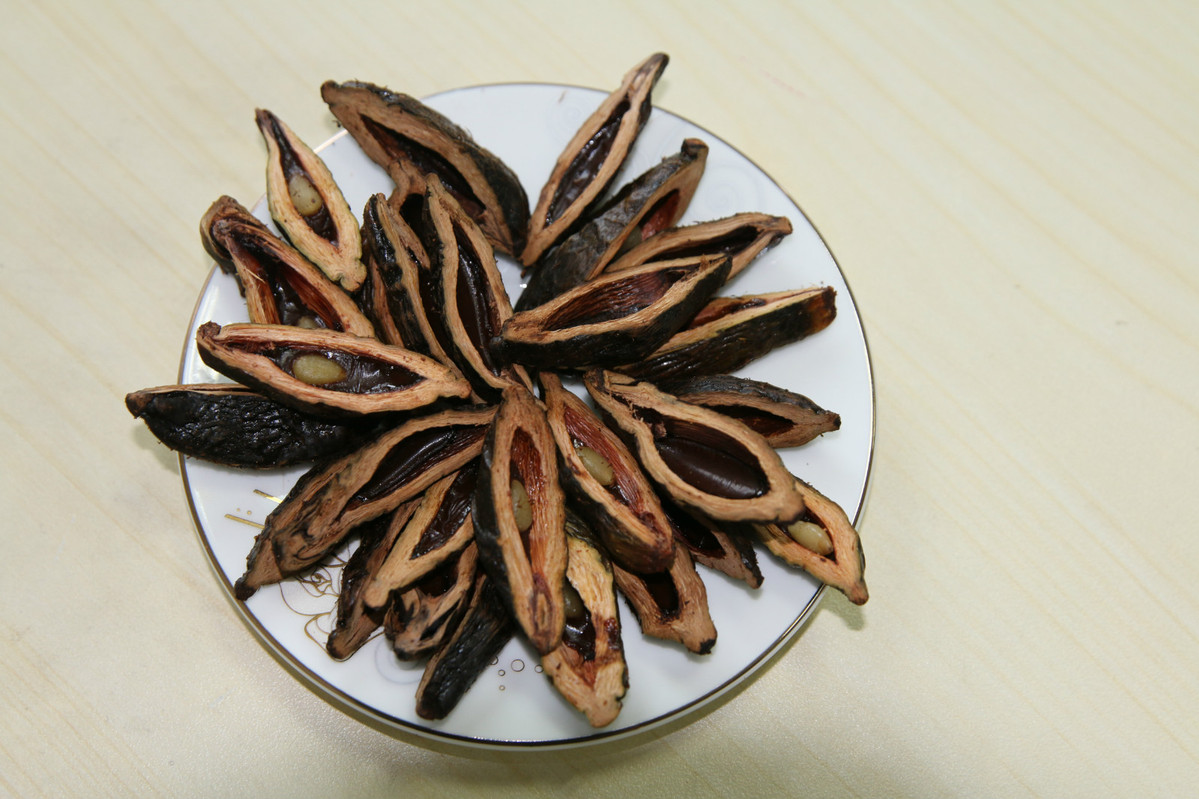
They had learned to roast raw betel nuts, cut them open and sprinkle a variety of spices on top. The simple concoction reportedly provided a refreshing and toasty feeling for the sick and prevented the disease from spreading.
He Gejin, 69, a native researcher on the history of Xiangtan, said the association between betel nuts and plague prevention is faulty for a lack of evidence in credible chronicles. But widespread belief in its medicinal benefits has played a role in boosting and sustaining consumption.
"The esteemed poet Su Shi in the Song Dynasty (960-1279) and the novelist Cao Xueqin in the Qing Dynasty, best known for Dream of the Red Chamber, have both mentioned betel nuts in their literary works," he said. "It was described as a mildly sweet snack that also works to aid digestion and soothe an empty stomach."
"According to city annals, it is likely that betel nuts were first used to remedy bloated stomachs and later adopted by a wider population," he added.
By the end of the 19th century, the sales volume of betel nuts in local markets was almost equivalent to that of rice, a staple food, he said.
The custom of chomping down betel nuts for either pleasure or remedial treatment has since become rooted in everyday life in Hunan province.
"In the 1950s, when I was little, betel nuts were quite common. I bet each and every one of the residents in Xiangtan was exposed to the smell of betel nuts or lured to have a taste," He said.
He added that during "cultural revolution" (1966-76), the betel nut craze died down, but came back in the early 1980s.






- Chinese Academy of Sciences awards key breakthroughs in ethanol, semiconductor tech
- China's rail fleets ready for Spring Festival travel rush?
- Xi urges making breakthroughs in development of industries of the future
- Myanmar crime syndicate members executed in China after top court approval
- Villagers enjoy Spring Festival gala in Jinggangshan, Jiangxi
- Robotic sector shifts from prototypes to production