



Belt and Road countries have huge solar energy potential: study









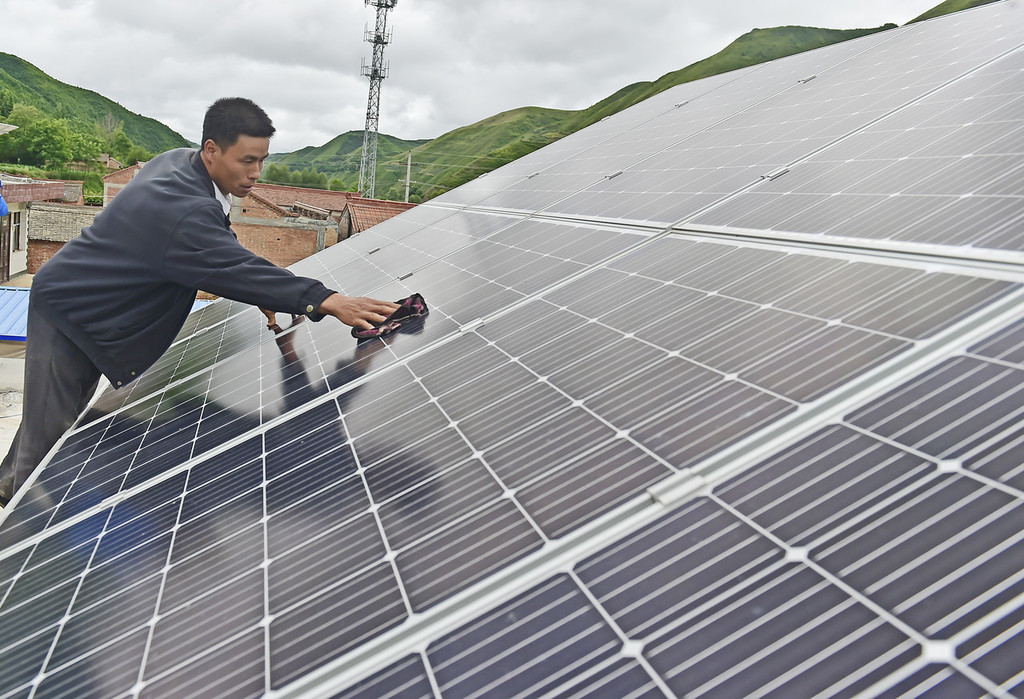
WASHINGTON -- An international team led by Chinese researchers found that tapping solar energy and improving cross-border cooperation could help countries participating in the Belt and Road Initiative (BRI) leapfrog into a low-carbon future.
The study published on Thursday in the journal Joule made for the first time a quantifiable estimate of the renewable energy potential in BRI countries, revealing that less than four percent of the region's maximum solar potential could meet its electricity demand for 2030.
The researchers from Tsinghua University, Harvard University and other institutions selected 66 BRI countries that are connected geographically and they identified areas with sufficient solar radiation and lower land value, with places like forests and agriculture being excluded.
Then they computed the spacing and packing density of solar panels to calculate maximized power yields for each area. Finally, they estimated the energy output in each hour after accounting for shading and temperature.
The team found that those countries can generate as much as 448.9 petawatt hour of solar energy, about 41 times the demand for electricity in those countries in 2016.
Also, the 2030 electricity demand for those countries could be met by converting only 3.7 percent of the region's solar energy and it would require an investment of $11.2 trillion and a land area of 88,426 square kilometers to achieve the goal, according to the study.
The infrastructure building in BRI areas is rather energy-intensive and to rely solely on fossil fuels could bring substantial carbon dioxide for the next few decades, according to the paper's corresponding author Lu Xi at Tsinghua University.
"This is not sustainable. If we want to achieve the emission reduction goal set by the Paris Agreement, we need renewable energy," said Lu.
The study also showed that countries with more than 70 percent of the energy potential consume only about 30 percent of regional electricity, which makes the cross-border power transmission grids and therefore international cooperation necessary.
As BRI countries span multiple time zones and various climate conditions, the cross-border grids could help reduce the impact when sunlight isn't available in certain areas, according to the researchers.
"The BRI is an opportunity as it sets up a framework for collaborations between countries, associations, and industries to happen. There are also funds and banks committed to promoting green development of the BRI, which provides financial support," said Lu.a








