



China develops brain-controlled rescue drone









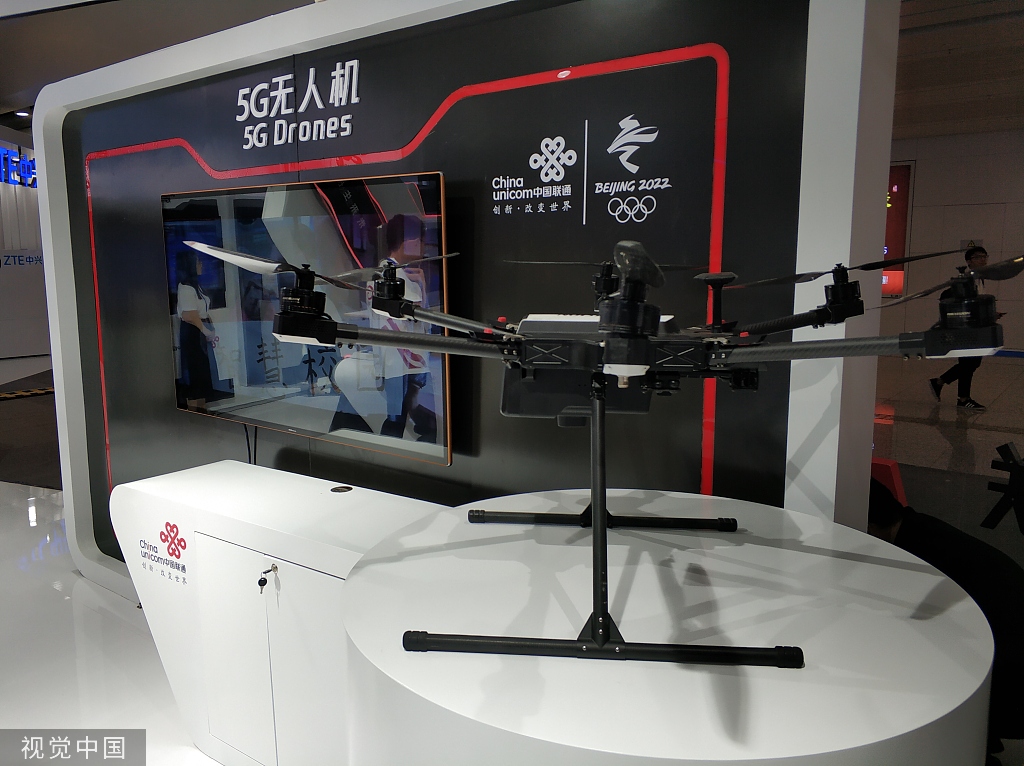
BEIJING -- Drones have been widely used for search and rescue when disasters strike, such as earthquakes, landslides and shipwrecks. Chinese researchers have developed a brain-controlled rescue drone that enables the unmanned aircraft to have precise and reliable identification in sandstorms, haze and other low-visibility weather.
According to its developer, a Beijing institution under the China Academy of Launch Vehicle Technology, the drone system mainly comes in the form of a headset with electrodes, which can detect the brain's electrical activity, or brain waves, using electroencephalography (EEG).
Humans' brain waves change according to what we are doing and feeling. When slower brain waves are dominant they will feel tired, slow or sluggish. When higher frequencies are dominant we will feel active, excited or hyper-alert.
When users watch drone-captured images transferred in real-time from disaster sites, the sensors on the headset will record and collect the changes of their brain waves. Then, an EEG data analysis system, after performing a series of analysis and computation, will identify and tell the targets to the drone.
Users do not need to speak or gesture.
It's not rare to monitor brain signals nowadays, but many advanced laboratory tools still have trouble interpreting them. The brain-controlled system can make up for those shortcomings, said researchers.
The system can read brain waves in milliseconds, allowing the drone to identify targets almost at the same time when the user discovers.
Currently, most rescue drones use an image recognition system, which can identify targets after comparing them to reference objects stored in the system.
However, in "real world" circumstances, if a target is partially covered, or if there is a sandstorm or heavy fog affecting the light in the rescue site, the drones will have difficulty with the task.
The brain-controlled rescue drone, which identifies targets with the help of the users' eyes, can see what a conventional drone will be unable to detect under complex situations.
Similar to the game of hide-and-seek, even if a hider carelessly shows his foot, the seeker can still recognize him or her at a glance, while a machine might not.
Researchers said the system could increase the accuracy of drone identification abilities by 20 percent.








