



Unilever to further green push









Company to cash in on growing demand for healthy products in Chinese market
Consumer goods giant Unilever Plc is stepping up its push to meet the growing desire for green products by Chinese consumers whose consumption trend is constantly being upgraded while becoming more concerned as well about their environmental footprint.
Such efforts coincide with a survey underlying an increasing preference for healthy and environmentally friendly products by Chinese consumers, as the local market for fast-moving products maintained a robust momentum despite slower economic growth.
Rohit Jawa, president of Unilever Northern Asia, said improving the natural environment is a key consensus at the company and it has been working for almost 10 years to build sustainable supply chains. By the end of 2018, about 56 percent of the company's agricultural raw materials were sourced in a sustainable fashion.
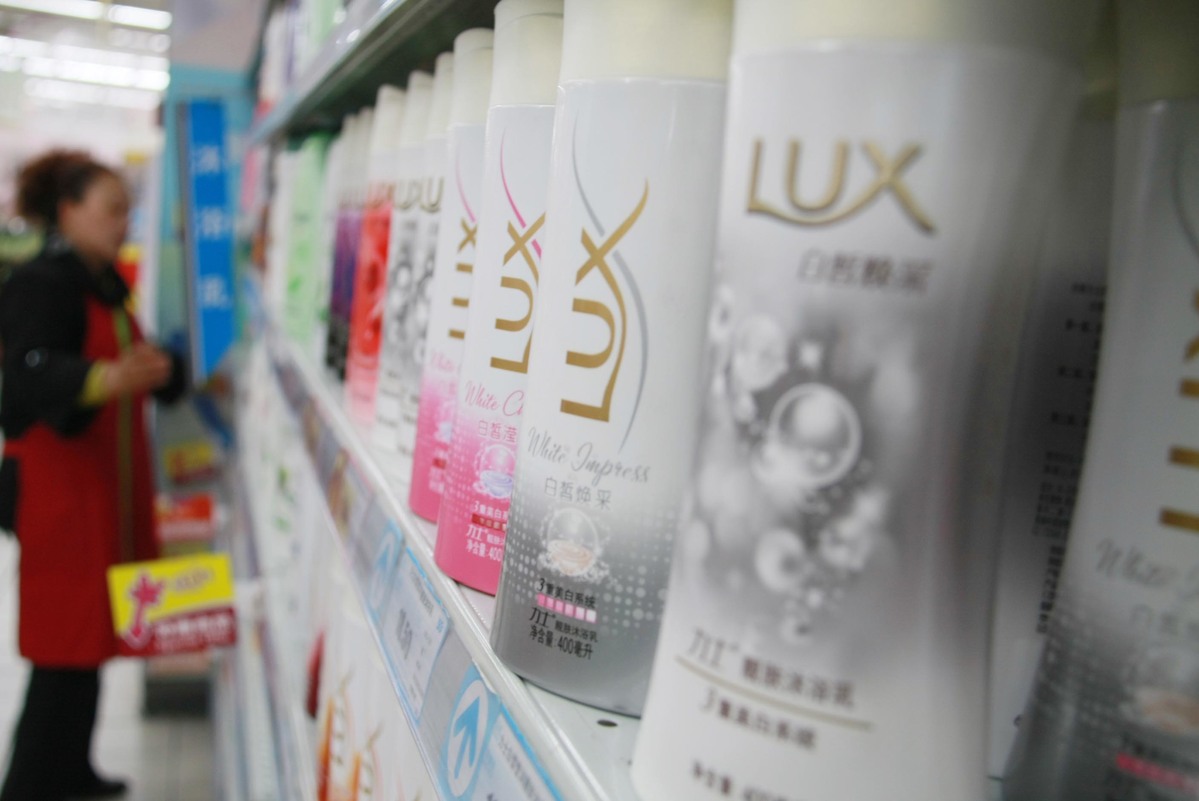
A good example of such green initiatives is Unilever's efforts to use alfalfa, a plant with small divided leaves and purple flowers grown by residents in Southwest China's Tibet autonomous region, in one of the body wash products of Lux.
"Lux is all about fragrance. When we came to Tibet, we first encountered this flower and we were impressed and inspired by the nice fragrance of the plant. Then we considered why not develop a variant or a product based on it," said Ma Wen, vice-president of personal healthcare products at Unilever's North Asia region.
Last year, the company officially launched the product and it got strong support from retail partners that include traditional supermarkets and e-commerce sites, Ma said.
A joint study by global consultancy Bain & Co and market research firm Kantar Worldpanel said spending by Chinese households on fast-moving consumer goods remains strong.
That is in line with a report released by CTR Market Research that the fast-moving consumer goods market in China grew 5.4 percent in the first half of 2019, 0.2 percentage point up from the same time in 2018.
Yu Jian, the general manager of Kantar Worldpanel China, said the market has become more diversified, with premium consumers boosting the upgrade trend in consumption in the country.
Using alfalfa in its body wash product is part of a broader Go Green, Go Lux initiative Unilever has been pushing in Kayu township, Linzhou county of Tibet.
Since 2011, the company has partnered with the China Environmental Protection Association to grow alfalfa in the grasslands, improve the ecosystem, and alleviate poverty for local people. So far, it has planted 9,166,667 square meters of grassland and helped 9,693 residents improve their incomes.
The company is now discussing with the local government to build a procurement base in Linzhou county in three years so that Lux will be able to use more of the grass grown by local residents as an essence or ingredients in its products.
"We also bring our retail partners to the county to teach local people how to better sell their agricultural products online, including helping them identify what products are more popular on e-commerce sites," Ma said.
This underscores efforts by the company in trying to build a close bond between its businesses and its corporate social responsibility by integrating the vision of sustainability into its day-to-day operations.
"To make sustainable living common place, as a company we have the resources to make sure that our business models are doing well by doing good. It directly translates into actions of our sustainable living plan," Jawa explained.
Launched in 2010, the sustainable living plan is an ambitious vision to make a difference within the company through goal-oriented branding, cost reduction, risk control and trust building to achieve sustainable business growth, reduce the firm's environmental footprint and bolster its positive social impact.
By the end of 2018, Unilever has helped 1.24 billion people around the world improve their health and sanitation, improved the livelihoods of millions of people.
With that in mind, the company also carried out many sustainable procurement projects in the tea supply chain last year.


















