Clearing up misperceptions on relations









The coexistence
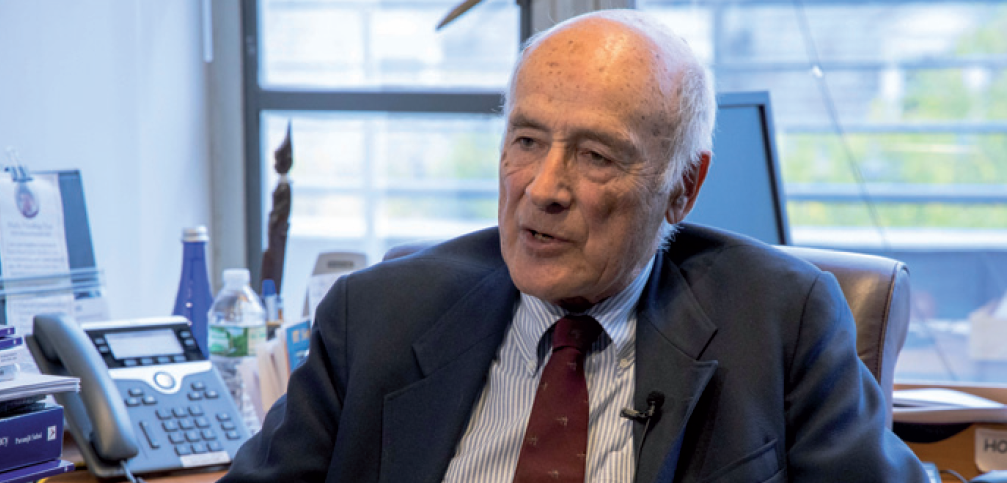
Prof. Andrew Mertha, another China expert with Johns Hopkins University, recently wrote, "It's such a fool's errand to imagine, let alone seek, a modus vivendi without conflict or competition between two such complex advanced societies within the context of global power politics."
The bitter, costly trade frictions, in particular, have now entered a 19th month. The latest round of trade talks concluded last month in Washington DC, with substantial progress in areas including agriculture, intellectual property rights, currency exchange rates, financial services, expansion of trade and technology transfers.
"The current relationship is much worse than in previous years, and there is real danger of serious friction. But there are many people in the US who want to cooperate, and we expect that there will be opportunities for the two countries to work together on major issues," Vogel said.
In an all-encompassing speech in New York in September, China's State Councilor and Foreign Minister Wang Yi elaborated on issues of Taiwan, Hong Kong and Xinjiang, urging the US to stick to the principle of non-interference in others' internal affairs and respect China's sovereignty, social system and development path.
Amid rising tensions over trade, technology and values, the top diplomat also called on the two countries to handle differences properly, continue cooperation and shoulder responsibilities together.
Experts believe that what's the same about the two countries is far more than what's different. Listing two reasons for his optimism — the economic upside of engaging with China, and the necessity for the United States to assume its global responsibilities, Szonyi marked out climate change as the most pressing area for the two countries to join hands.
"Unity and consistency on this front is essential not just for the future of our respective countries, but for the future of the world," he said.
In addition to climate change, Nye added that the two nations have much to gain through cooperation on maintaining international financial stability, developing a stable trading system and dealing with global health issues.
Nye and Vogel said that the US should have participated in some projects under China's Belt and Road Initiative and joined the Asian Infrastructure Investment Bank.
One solution brought forward by all three experts in terms of improving the relations was to strengthen people-to-people exchanges and let non-state actors play a more constructive role.
As Vogel said, "Since the governments are having great difficulty in communicating, it's all the more important that the people who have contacts with both countries do everything they can to maintain cooperation."
People-to-people exchanges could reduce some of those hard edges of mistrust and fear of the other side, Nye stressed, while calling on both countries to improve their soft powers.
"If we can make ourselves attractive to each other in ways that reduce fears that lead to miscalculations, that's a win-win," he said.
Szonyi expressed deep concern over current US policies toward Chinese students.
"US policies that are making Chinese students here feel uncomfortable are a terrible mistake," he said, adding that several leading universities, including Harvard, have been urging the White House to reconsider the policy.
Last year, the US shortened the duration of visas for Chinese graduate students. The Trump administration also accused Chinese students of stealing US intellectual property and scrutinized Chinese applications for visas to study in areas of aviation, robotics and high-tech manufacturing.
China's Ministry of Education had to warn students of potential difficulties in getting a US visa.
Most recently, however, US President Donald Trump said that his country welcomes Chinese students but stopped short of announcing policy changes.
Back in 1979, the first group of 52 Chinese students went to the United States. Today, there are more than 360,000 students from the Chinese mainland in the US, making up a third of all international students and contributing tens of billions of dollars to the US economy.
Furthermore, there are 5 million trips between the two countries every year, or 17,000 passengers every day, with one flight either taking off or touching down every 17 minutes.
Perhaps one more thing for the checklist of the two peoples' closeness: according to The Economist magazine, the third-most spoken language in the United States, after English and Spanish, is Chinese.
Looking ahead, Nye said that, if Ping-Pong Diplomacy were to come into play again, the most needed aspect of it would be the game's spirit, for the next 40 years of China-US relations.
"Friendship first, competition second — that's what a healthy relationship is all about," he said.