



Some 'trivia' that call for climate action









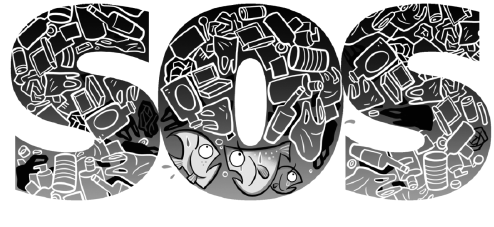
Drinking cups, plastic bottles, flip-flops, plastic bags, strings. No, these are not items for a beach party. They are a list of the trash found in the stomach of a dead sperm whale that washed ashore in eastern Indonesia on Monday. The whale had consumed a frightful collection of plastic trash, including 115 drinking cups, 25 plastic bags, plastic bottles, two flip-flops and a bag with more than 1,000 pieces of string, which weighed an alarming 6 kilograms.
Sperm whales are found in all the oceans. Yet the Endangered Species Act lists them as endangered, and the Marine Mammal Protection Act considers them "depleted". And sperm whales mostly feed on giant squid, supplemented with octopus, fish, shrimp and crab. So what was 6 kg of plastic trash doing in the dead whale's stomach?
Available data suggest there are about 5.25 trillion pieces of plastic waste in the oceans, with about 269,000 tons floating on the surface and about 4 billion plastic microfibers per square kilometer littering the deep seas. A 2015 study found that 192 coastal countries together add about 8.5 million tons of plastic trash to the oceans every year.
Get an idea how the plastic waste ended up in the sperm whale's stomach?
In the last 15 years, the world has produced more plastic than during the whole of the last century. Since it takes between 500 and 1,000 years for plastic to degrade, the first piece of plastic we produced still exists somewhere in some form.
We throw away 50 percent of the plastic after using it just once, and the plastic we throw away every year is enough to encircle the Earth four times. And we recover only 5 percent of the plastic we produce. Worse, 80 percent of pollution enters the oceans from land, and plastic comprises about 90 percent of all trash floating in the oceans with billions of kilograms of plastic floating in gyres making up about 40 percent of the oceans' surface.
How do they affect marine life? Well, plastic kills an estimated 1 million sea birds and 100,000 marine mammals ever year.
And as empirical studies show, pollution in the oceans exacerbates climate change. The impact of climate change on the only planet we can call home is becoming increasingly and painfully clear with each passing day. Frequent droughts and floods, devastating cyclones, increasingly warm weather alternated by freezing temperatures, unseasonal downpours which are destroying standing crops, wildfires, melting glaciers, rising seas and extinction of species.
A recent study reveals another striking impact of climate change on life on Earth: birds are shrinking in size and their wingspans are lengthening.
A research team led by the University of Michigan studied more than 70,000 dead birds belonging to 52 different species recovered from the streets of Chicago by Field Museum personnel and volunteers, especially by Dave Millard, a collections manager emeritus of the museum who has collected over 100,000 dead birds from 1978 to 2016. The migrating birds die after colliding with tall buildings. For the record, a mindboggling 600 million birds die every year in the US alone after colliding with tall buildings.
The researchers made multiple body measurements of each dead bird to identify trends in body size and shape, and found significant declines in the body size of 49 species-especially, the length of the tarsus, or lower leg bone, shrank by 2.4 percent and the wingspan increased by a mean of 1.3 percent. The species that showed the fastest declines in tarsus length also showed the most rapid gains in wingspan.
The smaller the bird, the more difficult it is to migrate long distances, due to reduced metabolic efficiency. And since a longer wingspan can improve flight efficiency, nature may be helping the shrinking birds to do just that.
The researchers said the shrinking body size of birds and other species is a natural response to global warming. Among animal species, individuals tend to become smaller in warmer parts of their range-a pattern known as Bergmann's rule-because a larger body size helps an animal in cold places to stay warm, and a smaller body holds less heat.
Dead whales, diminishing marine life, shrinking birds, denuding forests, vanishing species, increasing emissions and rising temperatures and more are being discussed by delegates to the Dec 2-13 UN Climate Change Conference in Madrid in order to prevent the planet from spiraling toward a point of no return. Nations have to present new plans in accordance with their Nationally Determined Contributions to restrict global temperature rise to below 1.5 C. And since Madrid is the last climate conference before that happens, clear rules have to be framed so the measures signed in the Paris Agreement can come into force.
All these efforts, however, will come to naught if the world sticks to business as usual.
Climate change is real and man-made and no efforts of skeptics to distract public attention can change this fact. And the sooner the rich and the powerful accept this, the better it would be for the Earth and the billions of lesser mortals like us.
But will they? That's a trillion-dollar question.
The Author Is A Senior Editor With China Daily.


Today's Top News
- Asia's energy pain is far from over
- China-Africa ties moving toward higher-quality growth
- Governance powered by the goals of people
- Hainan consumer fair hits all the right notes
- Iran-US peace talks hang in the balance
- Nation's market seen as magnet for German firms


