Sino-African teamwork improving food security









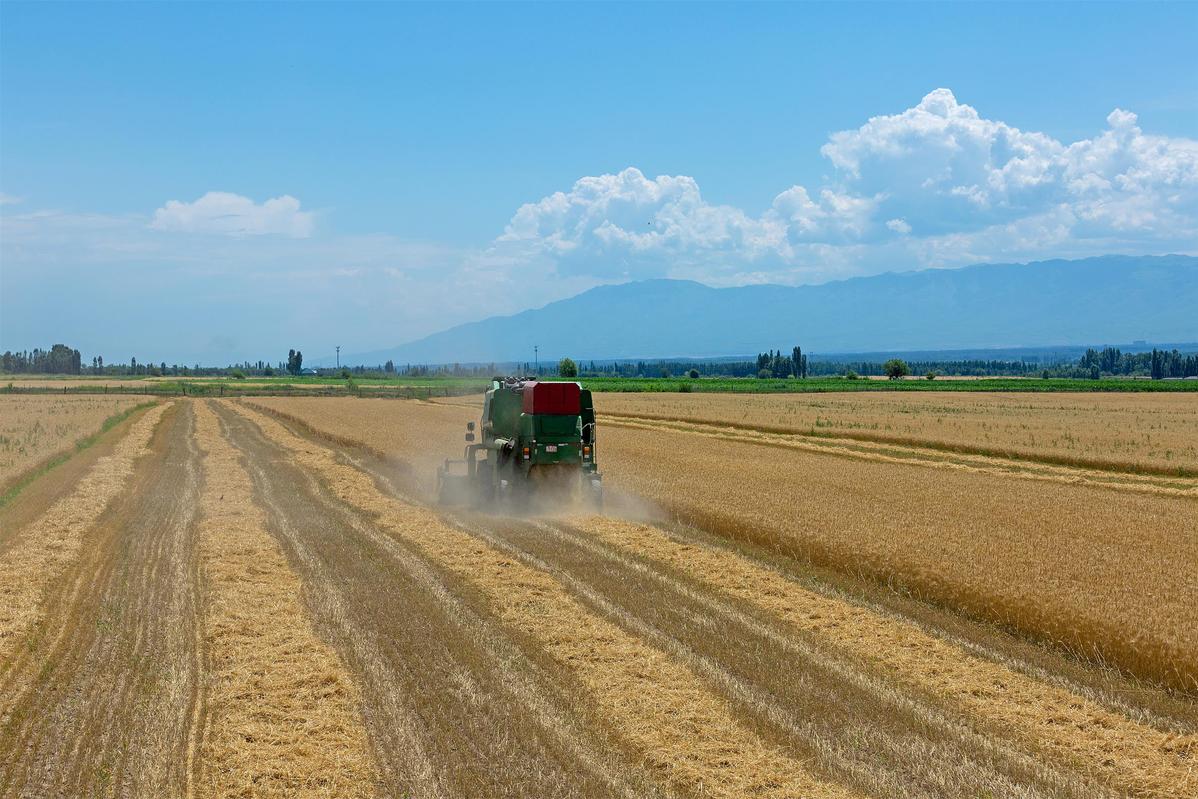
As Sino-African ties continue to deepen, the two civilizations are forging more partnerships in areas such as food safety and food security. China and the African Union signed a memorandum of understanding at AU headquarters in Addis Ababa, Ethiopia, that aims to boost bilateral cooperation on food safety and security.
Speaking at the signing event, AU Commissioner for Social Affairs Amira Elfadil said the agreement would cover cooperation between China and the African Union Commission in the areas of food security and post-harvest grain management in Africa.
Africa is home to 60 percent of the world's arable land, and agriculture is the source of livelihood for 70 percent of its population. Yet millions of people on the continent suffer from chronic hunger, according to the Alliance for a Green Revolution in Africa, an organization that supports small-scale farmers, in its Africa Agriculture Status Report 2017.
According to the United Nations' Food and Agriculture Organization, about 124 million people in 51 countries face high levels of food insecurity.
"Hunger and food insecurity plague the lives of millions worldwide," said Christos Stylianides, the European Union's commissioner for humanitarian aid and crisis management.
According to the FAO, about 27.4 percent of the population in Africa was severely food insecure in 2016.
Alarmingly, food insecurity is on the rise, especially in sub-Saharan Africa. From 2014 to 2016, food insecurity increased about 3 percent. Moreover, the UN Development Programme reported that one-fourth of the world's population in need of food security live in Africa.
The African Development Bank said Africa is spending about $35 billion each year on food imports. If the trend continues, food imports could rise to $110 billion by 2050, says Akinwumi Adesina, the bank's president.
As China partners with the continent to ensure Africa achieves zero hunger-one goal of the UN 2030 Agenda for Sustainable Development-it needs to look closely at the causes of food insecurity.
First, Africa-led agriculture has low value addition and poor rural infrastructure.
Second, it is affected by low productivity, low investment, and poor and ineffective policies that prevent the population from having access to sufficient capital. Third, food insecurity has worsened because some African countries are affected by conflicts.
When dealing with the issue of food safety and security, the various approaches being designed have to be tailored to accommodate each situation.
For example, while trying to find a solution to the issue of food security in 2003, African leaders adopted the Maputo Declaration on Agriculture and Food Security. The agreement required countries to allocate at least 10 percent of public expenditure to agriculture with the goal of achieving 6 percent annual growth in the sector.
However, 16 years later, only 13 countries managed to achieve at least 6 percent growth.
Still in search of a sustainable solution on food safety and security, China has come on board to partner with Africa. Both civilizations need to work together to promote the modernization of agriculture in Africa to ensure food sufficiency and security by giving priority to projects that bolster transformation, improvement and an increase in agricultural production, processing, storage and marketing.
There is also a need to strengthen collaboration in the fields of agricultural policy consultation, planning and design, including review of the prevailing regulatory requirements. Finally, China should continue to support African governments to implement the AU's Comprehensive Africa Agriculture Development Programme, a policy framework for agricultural transformation, wealth creation, food security and nutrition, economic growth and prosperity for all.
The author is a senior policy adviser at the Africa Policy Institute. The views do not necessarily reflect those of China Daily.