Time is ripe for policies that protect ecosystems









The 50th anniversary of Earth Day on April 22 was strikingly different from previous years, as countries across the planet grapple with an unprecedented situation.
The novel coronavirus spread into a global pandemic in less than 90 days, infecting more than 2.8 million people in more than 200 countries, and claiming at least 200,000 lives. It also has brought economic activity to a standstill.
Countries in the Association of Southeast Asian Nations region and East Asia have responded with a strong whole-of-government approach. This has meant immediate disruptions in air travel, community quarantines, stay-at-home orders, temporary business closures and social distancing. Life under containment has become the new normal.
This new normal has resulted in short-term enhancement of air quality in big cities and decreased energy use, and has therefore reduced greenhouse gas emissions. The spread of COVID-19 has also increased public awareness of personal hygiene and the importance of public health.
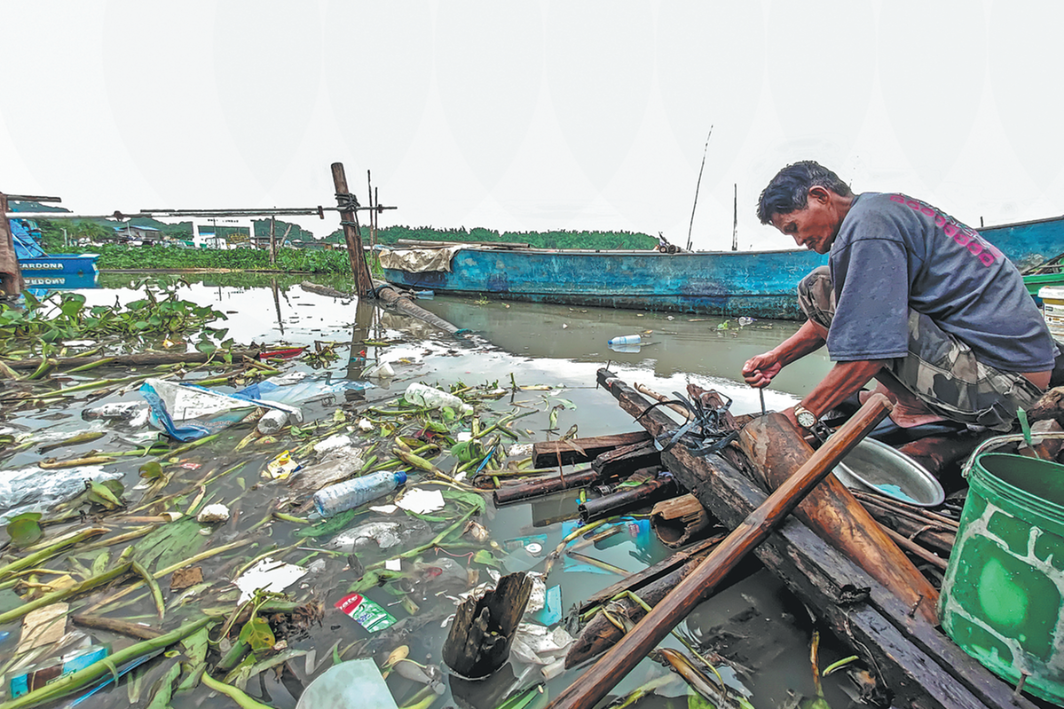
Climate change, water pollution and the drivers of biodiversity loss, such as deforestation and illegal wildlife trade, may increase the risk of further pandemics, such as vector-borne infections.
One new infectious disease emerges in humans every four months, and 75 percent of them come from animals. Healthy ecosystems help to protect us from these diseases.
Earth Day 2020 comes at a tumultuous time. The immediate priority for governments is to protect people by limiting the spread of of COVID-19 and aiding economic recovery.
Governments announced stimulus packages to assist hard-hit sectors, provide wage subsidies, tax exemptions and interest rate cuts, and increase spending on healthcare.
At the same time, the window of opportunity to take strong actions on the 2030 Agenda for Sustainable Development, which was adopted at the United Nations Sustainable Development Summit in September 2015, is closing fast.
When the coronavirus emergency recedes and recovery begins, the effects of governments' stimulus packages will need to be aligned to "build back better" and to capture opportunities for leapfrogging to green investments, such as renewable energy, smart housing and green public procurement and public transportation-all guided by principles for a sustainable society.
Sustainable societies are inherently inclusive and resilient. As governments design policy responses to the coronavirus emergency and recovery, there are three imperatives.
First, resilience is essential. It has been heartbreaking to witness people risk their lives due to shortages of crucial medical and safety equipment. This lack of planning and preparation for the outbreak has demonstrated the importance of resilience: the ability of human systems to anticipate, cope and adapt.
Resilience is also crucial for countries and communities to respond to climate change, in which further temperature increases are certain. Policymakers must succeed in planning for and adapting to climate change or risk further calamities.
Second, stimulus packages must be sustainable. Governments are racing to implement economic stimulus and support packages to keep individuals, businesses and economies afloat. While supporting urgent implementation, policymakers must ensure that these measures pave the way for a more sustainable economy.
Third, inequality needs to be addressed. The coronavirus pandemic is an unprecedented global shock that magnifies the impact of inequality, hitting poor people, women and the elderly the hardest. To flatten the pandemic curve, policymakers must immediately help these segments of society. In the longer term, they must redouble efforts to foster sustainable economic systems, including fair trade and socially inclusive investment.
All three of these actions are closely connected to the Paris Agreement on climate change, the UN Sustainable Development Goals and the ASEAN Socio-Cultural Community Blueprint. In addition, their scale and complexity demand that countries, corporations and communities continue to act together to achieve the future we want.
We share a single planet, drink from the same water and breathe the same air. If there was ever a time in which humanity should finally recognize that we belong to one connected family on Earth, this is it.
The author is a senior energy economist for the Economic Research Institute for ASEAN and East Asia, Jakarta. The views do not necessarily reflect those of China Daily.