



Second-tier cities become more attractive to grads









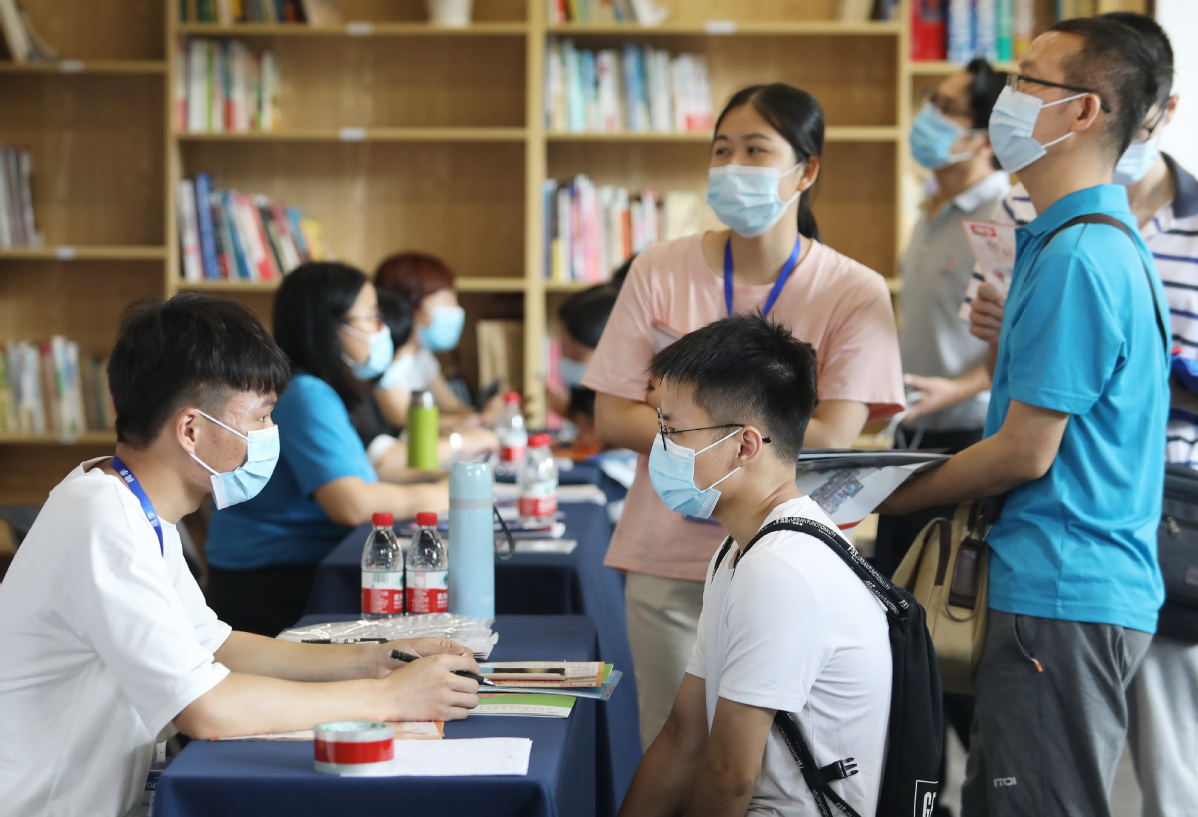
More college graduates in China are leaving first-tier cities and heading to second-tier ones for lower costs of living and easier access to permanent household residency, according to a recent report.
The Chinese 4-Year College Graduates' Employment Annual Report (2020) said that 20 percent of college graduates last year chose to work in first-tier cities — Beijing and Shanghai municipalities as well as Guangzhou and Shenzhen in Guangdong province down — 6 percentage points from 2015.
College graduates who chose jobs in one of the top 10 second-tier cities such as Hangzhou, Zhejiang province, Chengdu, Sichuan province, and Tianjin municipality rose from 22 percent in 2015 to 26 percent last year, the report found.
A separate Chinese 3-Year Vocational College Graduates' Employment Annual Report (2020) found a similar trend of graduates opting to work in second-tier cities over first-tier ones.
The report said 15 percent of vocational college graduates chose to work in first-tier cities, down 4 percentage points from 2015, while those working in one of the top 10 second-tier cities increased from 17 percent to 23 percent during the same period.
While graduates in first-tier cities like Shanghai and Beijing have the highest job satisfaction rate-with Shanghai ranking top among all cities at 76 percent and Beijing a close second at 75.8 percent-second-tier cities like Hangzhou also had a high job satisfaction rate at 75.2 percent, the report said.
The reports were based on a survey of 274,000 graduates from 30 provincial regions. It was released by MyCOS on Thursday, an education consulting and research institute in Beijing.
After working in Beijing for three years, Deng Sheng left for a new job in Hangzhou in 2018. He said high rent, housing prices and difficulty obtaining permanent residency prompted him to make the decision.
"Coming to Beijing to work had always been a dream of mine to test my fortunes in the big cities," said Deng, who graduated from a university in Changsha, Hunan province.
"I did not see myself settling down in Beijing for the long term with the money I made back then, and Hangzhou seemed like a more affordable choice for me," he said.
Li Wei, a new graduate from Beijing Jiaotong University, said he chose to work in Zhengzhou, Henan province, because it is near his hometown in Shangqiu.
"The city is also much more affordable than Beijing, and I think I can afford a down payment for an apartment in Zhengzhou after working there for three to five years, which is unimaginable if I choose to work in Beijing," he said.
Ye Dongnan, a new graduate at Huazhong University of Science and Technology, said she chose to work at an internet company in Shenzhen because the city has many big internet companies.
"Compared with second-tier cities, first-tier cities still offer more job opportunities, so it will be much easier for me to hop to bigger companies with higher pay," she said.


- Foreign visitors taste the delicacies of Tianjin's ancient town
- China introduces a standard framework for humanoid and embodied intelligence
- CPPCC unveils agenda of the annual session
- Geologists brave rugged terrain in Yunnan prospecting mission
- Senior enterprise official facing probe
- China's anti-graft authorities reveal extent of year's work





