Cutting-edge technologies make flood prevention smarter










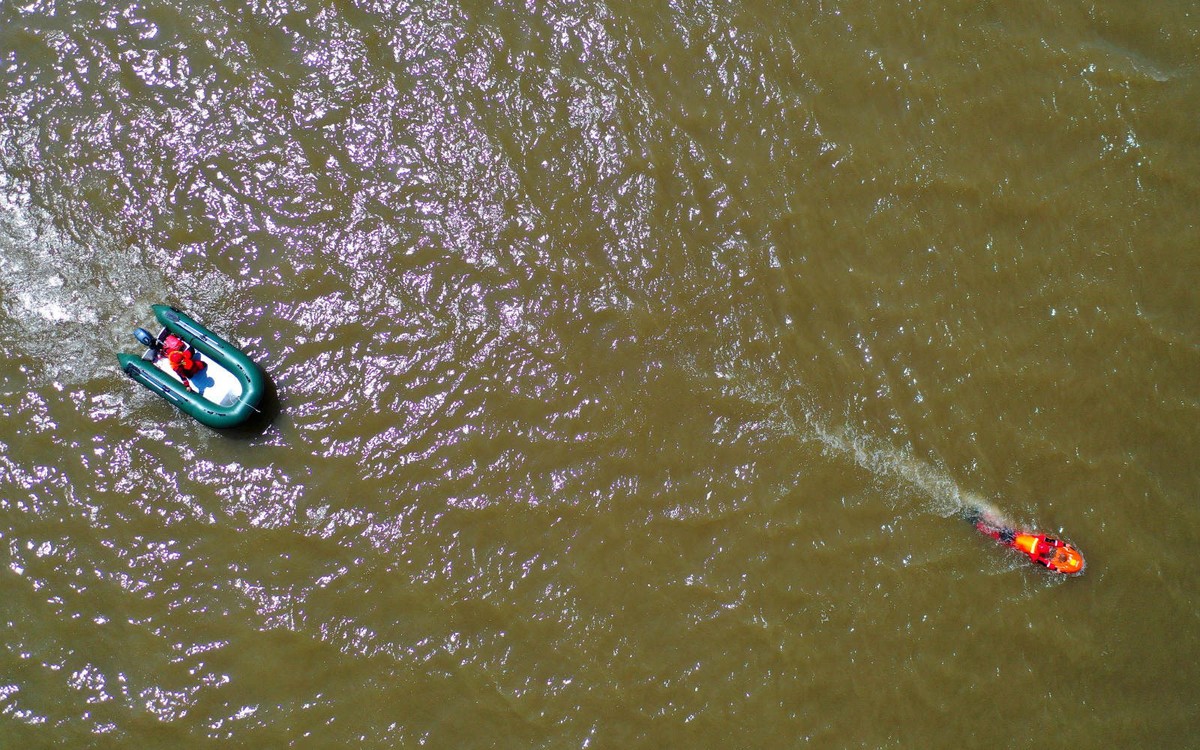
Cutting-edge technologies, such as big data and AI, are making China's flood prevention smarter, as they are applied to weather forecast, flood monitoring and warning.
Regions along the Yellow River, which officially entered flood season on July 1, are beneficiaries of these technologies.
The regime of the river is now being monitored and tracked by satellite remote sensing, and unmanned aerial vehicles are also employed to transmit real-time videos of the variation in the river's discharge volumes.
So far, 346 large and medium-sized reservoirs in the Yellow River basin have been covered by real-time monitoring with over 1,000 video signals.
South China and the regions south of the Yangtze River were hit by the first round of heavy rains in June since they entered the rainy season, and these regions had been paid special attention to by the National Meteorological Center of China Meteorological Administration (NMCCMA) a week before the rains. While closely following the development of the weather, the NMCCMA also reminded relevant regions to prepare for possible floods.
Meteorological service represents the very first line of defense in disaster prevention and relief. China's weather forecast technology has continuously upgraded, with its accuracy dramatically improved in recent years.
The accuracy of rainstorm warning rose to 88 percent in 2019, and severe convections can be forecasted 38 minutes in advance. The country also led the world in typhoon track prediction.
Hydrological monitoring offers important support for flood prevention.
The rainfall areas in East China has begun moving northward since July. Normally it is hard to forecast flood in North and Northeast China, because precipitation gathers quickly in small and medium-sized rivers in mountainous areas there, which may give rise to floods within a short period of time. Since these areas are more prone to risks of sudden torrential rains and floods, scientific supports are especially important.
"Thanks to these new technical methods, it only takes 10 to 15 minutes for the Ministry of Water Resources to collect the rainfall information from 120,000 flood-warning stations across the country. And it only takes dozens of minutes to forecast a flood," said Liu Zhiyu, deputy director of Hydrological Forecast Center of the Ministry of Water Resources.