



Guard against cold chain food infections: China Daily editorial









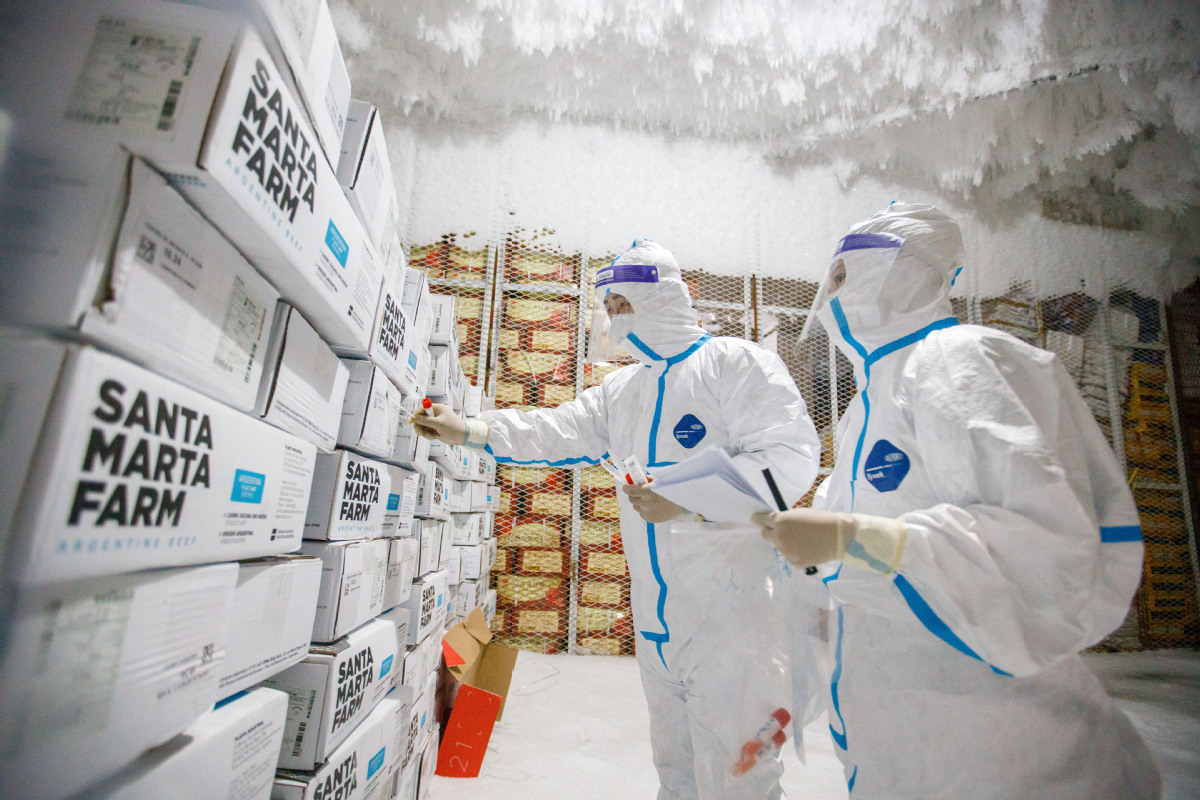
An increasing number of novel coronavirus infections linked to imported cold chain products and their packaging have been reported recently in not only coastal port cities, but also in inland provinces such as Shanxi, Henan and Anhui.
In one of the latest cases, packaging samples from a batch of frozen chicken wings imported from Russia tested positive for the virus in Henan's Zhongmou on Saturday.
Although the World Health Organization says the risk of catching COVID-19 from frozen products is low, it is evidently possible. Chinese researchers and medical workers have already traced the source of a cluster of new infections in Tianjin and Qingdao to cold chain imports, prompting authorities to launch broad inspections and testing of food shipments from overseas.
A mechanism is in place for "full-chain, closed-loop, and traceable" management of imported cold chain foods, in order to contain the spread of the virus through cold chain transportation.
But this is still not enough because the odds of infection remain high despite the stringent precautions, given the huge number of people potentially exposed to the virus. It is no exaggeration to say that the hundreds of thousands of people involved in the delivery, processing and sales of imported cold chain foods may now be one of the most vulnerable groups facing the scourge of the virus.
This makes it all the more urgent and necessary to vaccinate all of them, so as to add an additional layer of protection to prevent the spread of the virus. Such a move could be critical in the ongoing efforts to guard against imported cases and prevent a resurgence of the epidemic domestically.
There have been many reports of the safety and effectiveness of Chinese COVID-19 vaccines based on data from human trials. Almost 1 million people have been given an experimental vaccine developed by Sinopharm so far as part of an emergency-use program, and no serious adverse effects have been reported among the recipients, who include domestic medical workers and those going abroad, construction workers, diplomats and students. None of them has reported an infection, the company said.
Progress made on this front has made it possible to start a program to vaccinate those in the cold chain food industry.
China has adopted a set of mature approaches — early detection, early reporting, early quarantine and early treatment — to basically contain the spread of the virus and normalize social life and economic activities. Now, early vaccination, especially among vulnerable people, can be included in the prevention and control measures to ensure an early victory against the virus.


