Locals recall how Xi saved ancient artifacts










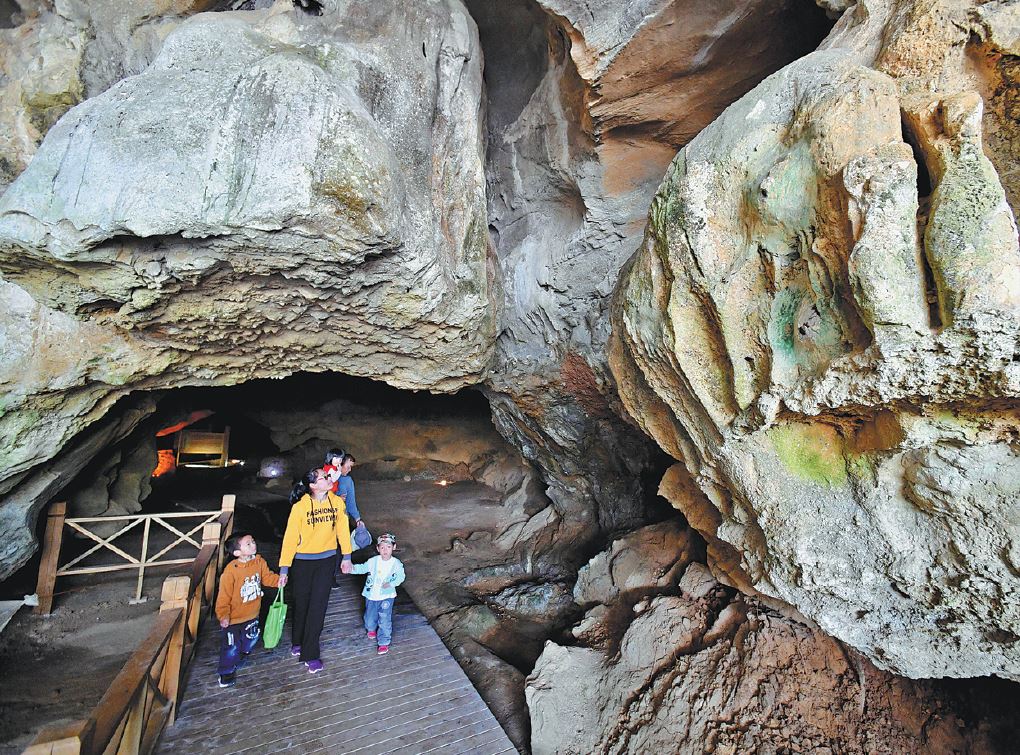
Deng Yueling started work at the Wanshouyan Cultural Heritage Museum in Sanming, Fujian province, in April. Initially, though, the Stone Age artifacts on display did not interest her.
Since then, the 24-year-old tour guide has delved deeper into the history of the Paleolithic (about 2 million to 10,000 years ago) stone tools and animal bones discovered in a cave on nearby Wanshouyan Hill.
The artifacts suggest that humans lived in the area about 185,000 years ago, the oldest evidence of such activity in coastal China.
"The more I learn, the prouder I feel about the archaeological discoveries in my hometown," said Deng, who is from Yanqian, a village about 800 meters from the spot where the relics were found.
When she guides visitors round the museum, Deng always explains the story behind the discovery of the artifacts and how they survived potentially devastating mining activities more than 20 years ago.
"Without instructions from President Xi Jinping, who was then acting governor of Fujian province, the heritage would not have been preserved," she said.
Deng added that she was impressed by Xi's insistence that no one should harm the interests of future generations simply for the sake of immediate interests.
The relics were discovered in 1999, sparking fierce debate between locals and Sanming Steel Group, a major State-owned enterprise that had used the area as a quarry for high-quality limestone since the 1970s.
As the company sought to expand its quarrying activities on Wanshouyan Hill in the late 1990s, mining facilities, cement plants and other factories mushroomed in the area.
Local people believed the hills symbolized their veneration of nature and their homeland, while the ruins of a Song Dynasty (960-1279) temple were believed to safeguard their peaceful way of life.
However, they were not aware of the hill's potential significance for Paleolithic discoveries at the time.
"We all wanted to protect the hills, but we didn't know how. We appealed from one department to another," said Wang Yuanhe, former head of Yanqian.
The villagers, represented by five retired middle school teachers, handed a petition to the local government and searched the caves for ceramic artifacts from the Song era to illustrate the site's importance.
Despite their efforts, local decisionmakers confirmed the expansion of the quarries.
Previously, there hadn't been any known findings in Fujian related to the Paleolithic age, while the first discoveries indicating prehistoric human settlements in the province were made in the 1980s.
In 1989, five human teeth, dating back about 11,000 years, were unearthed in a cave in Sanming, triggering interest in further research.