



Workers require lifelong learning opportunities









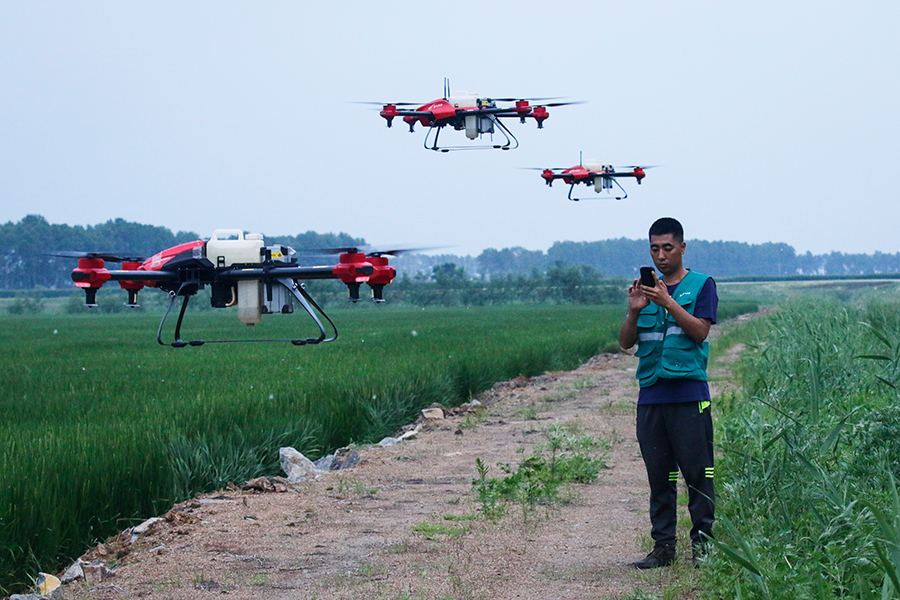
In a report released on Jan 12, McKinsey Global Institute pointed out that China's next challenge is to ensure it has the talent needed for an innovative, digitized, postindustrial economy.
That sheds light on the sustainability of the country's vast, comparatively underdeveloped rural education and vocational training systems. If not addressed, this will hinder the country's development in the near future.
The country has vowed to raise its per capita gross domestic product to 70 percent of developed economies by 2050. That means per capita GDP and income should maintain annual growth rates of at least 4.7 percent and 4.9 percent respectively up till then.
Such a marked increase over three decades will not be possible without a corresponding increase in labor productivity, which can only be realized through improving the quality of the workforce.
The current talent cultivation model in the country lags far behind that requirement, particularly in the countryside, home to about half of the country's working age population.
In its Reskilling China report, McKinsey anticipates that about 220 million laborers, about 30 percent of the country's workforce, will have to change their jobs because of the influence of automation by 2030, among which up to 40 percent are likely to be migrant workers.
Their lack of channels for improving their skills and lack of access to personal development opportunities make them a vulnerable group in the job market, which calls for government support.
China needs to refashion its education and skills-development system in the direction so that everyone, everywhere has access to lifelong learning opportunities.
That necessitates a dramatic increase in the government's inputs into education and skills-development, particularly for the country's about 300 million migrant workers.
The advancement of telecommunication technologies will further empower employers to play a leading role in providing training and education to migrant workers.
Now is the time for policymakers to draft the rules and make those initiatives that have proved successful in some places compulsory practices nationwide.


