


Locals learn to live with elephants










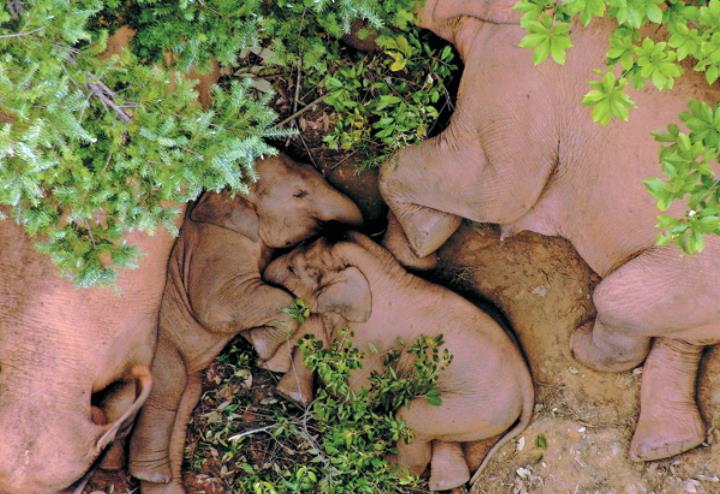
Bi Shixue, from Meizi township, Pu'er, saw elephants for the first time in 1994, when he visited Wild Elephant Valley in Xishuangbanna.
Last year, working as a farmer and part-time ranger responsible for patrolling areas around his home, he was surprised by a visiting elephant herd.
In late afternoon on Dec 21, trumpeting elephants broke the silence in Meile, which is surrounded by mountains. The trumpeting continued for hours, Bi said.
"I was scared," the 50-year-old added. "I thought the animals were in trouble."
However, on the second morning, Bi was pleasantly surprised when he saw signs that an elephant calf had been born.
He said villagers were excited to hear this news, as elephants are auspicious figures in traditional Chinese culture and "xiang", the Chinese name for elephant, translates as "good luck and happiness".
Without knowing the gender of the elephant calf, villagers prepared two names-Gaogao for a male and Lili for a female-as the area where it was born is located on Gaoli Mountain, Bi said.
Despite the elephants eating some crops in the village, he said insurers would pay compensation for the damage caused.
According to the Yunnan provincial forestry and grassland administration, in 2010, the province was the first area in China to introduce a pilot insurance program to award compensation for damage caused by wild animals. Using public funds, the program covered the entire province by 2014.
To date, a total of 297 million yuan ($45.8 million) has been paid in compensation in more than 130,000 such cases across the province, the administration said.
Bi believes the elephants arrived in his village because of the great improvements made to the local environment following the government's efforts to conserve forestry areas.
For Zhou, however, the fact that wild elephants are now entering areas they have never previously visited is a real headache.
"It's not easy for people in such areas to coexist harmoniously with wild elephants in a short time," he said.
As a result, in 2017, Zhou and his colleagues launched a pilot program called "elephant canteen". Based on years of monitoring, they mapped areas the elephants regularly pass through and planted crops especially for them, hoping that the food would confine the animals to certain locations.


