


"In September 2020, amid the COVID-19 pandemic, Boeing formed a sustainability organization dedicated to advancing our green efforts across the enterprise," said Chris Raymond, chief sustainability officer of Boeing.
"We know there is still work to do and are committed to communicating our progress and holding ourselves accountable to ensure the aerospace industry is safe and sustainable for generations to come," Raymond said.
In China, Boeing has partnered with Chinese airlines in testing flights and research institutes about developing sustainable aviation fuel. Besides, the company aims to maximize the lifespan of airplanes through a Boeing converted freighter program.
Boeing said it recycled the majority of its waste materials in China. It also takes research in airspace efficiency, green manufacturing and biofuels at a Beijing-based sustainable aviation technology center, which is set up by Boeing and Chinese aircraft manufacturer Commercial Aircraft Corp of China.
Chinese industrial players in the aviation sector are also furthering their efforts in reducing carbon emissions.
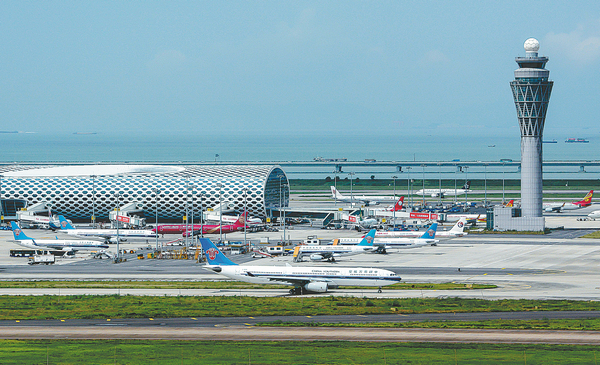
A role model for green efforts in the sector, Shenzhen Airport Group has been promoting energy saving and carbon-reduction measures such as reducing aircraft emissions and vehicle emissions. The Shenzhen Bao'an International Airport, operated by the airport group, ranked top in many fields concerning the construction of a green society in an assessment conducted by the local government.
During the 13th Five-Year Plan period (2016-20), the Shenzhen airport reduced carbon emissions by 642,000 tons in total. In 2020, the airport achieved a surplus in its carbon quota for the first time. It also entered the Airport Carbon Accreditation program and was certified as level 3. The highest is level 4 and is reserved for airports that achieve net zero carbon emissions.
Last year, 67 percent of the vehicles used at the Shenzhen airport have been changed to new energy vehicles, far exceeding the industry standard. This year, except for those for emergency use, or those cannot be replaced due to inadequate supply in the market, all the newly added cars at the airport will be NEVs, the airport said.
Besides, as the parking aircraft were mainly powered by the auxiliary power unit (APU)-which uses not only aircraft fuel, but also produces a large amount of carbon dioxide, hydrocarbons and other gases during operation-the Shenzhen airport continued to build ground APU replacement facilities. Last year, its APU alternative facilities helped reduced carbon emissions by about 110,000 tons.
zhuwenqian@chinadaily.com.cn





