Graphic: China's efforts in fighting climate change










China published a white paper on Wednesday illustrating its progress in mitigating climate change and sharing its experiences and approaches with the rest of the world.
The white paper, titled "Responding to Climate Change: China's Policy and Actions", was issued by the State Council Information Office. It shows the country's robust development in renewable energy and accelerated low-carbon transformation in recent years.
According to the document, China's carbon intensity in 2020 was 48.4 percent lower than 2005, which means it over-delivered on its commitment to cut carbon intensity by 40-45 percent from the 2005 level by 2020.
The country has pledged to further reduce its carbon intensity by over 65 percent by 2030 from the 2005 level.
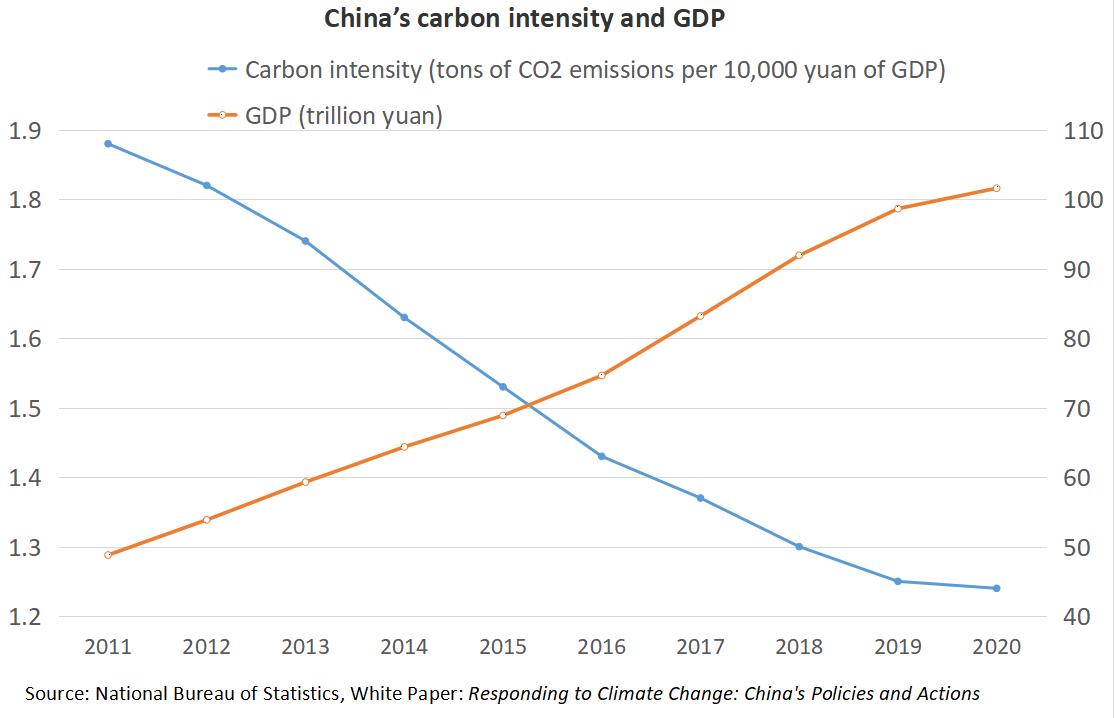
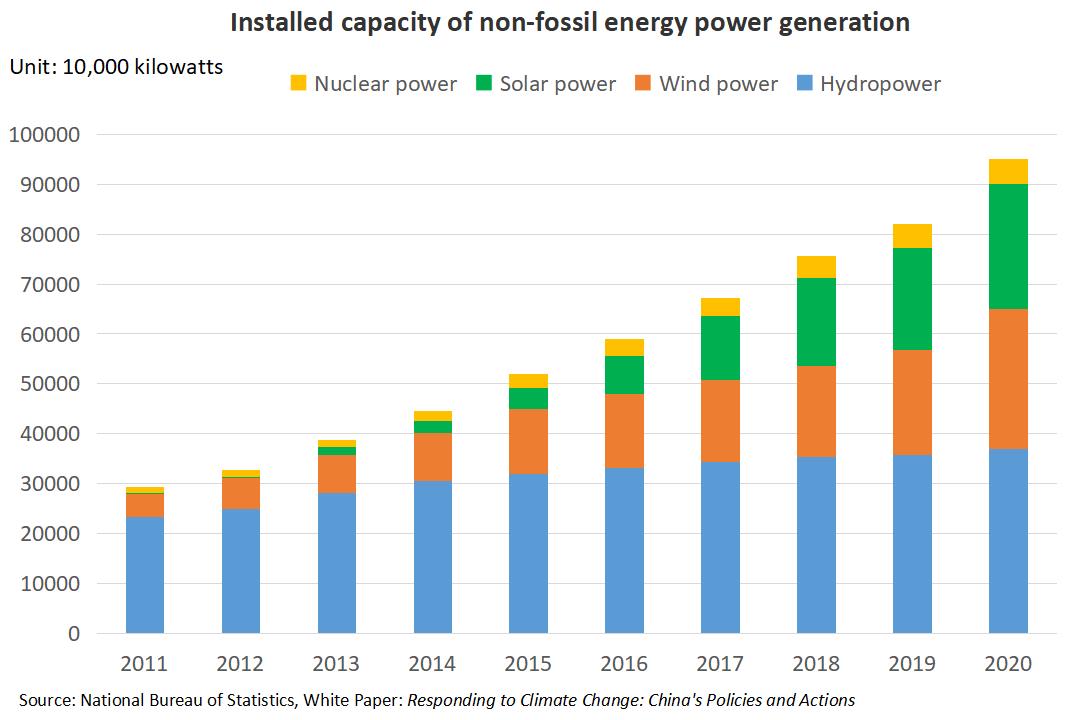
In addition, China has prioritized the development of renewable energy.
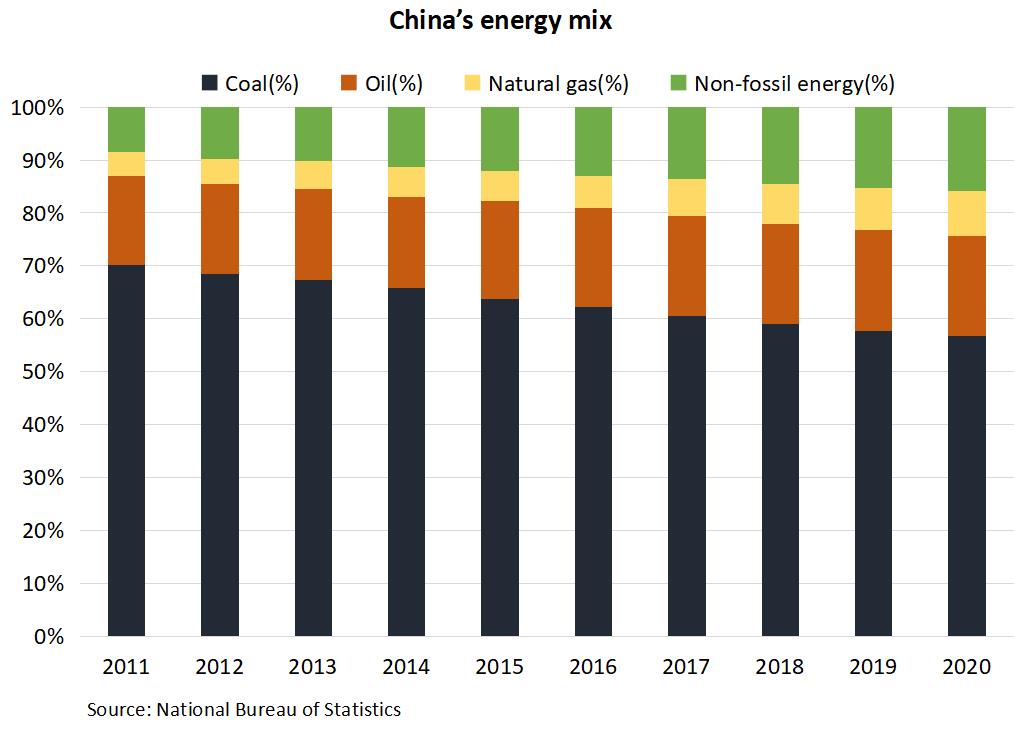
The proportion of non-fossil energy in its energy mix has been lifted to 15.9 percent last year, up 8.5 percentage points from 2005. It aims to raise the figure to around 25 percent by 2030.
China has also been rapidly reducing its energy consumption intensity. From 2011 to 2020, it has cut energy consumption intensity by 28.7 percent, one of the fastest in the world.
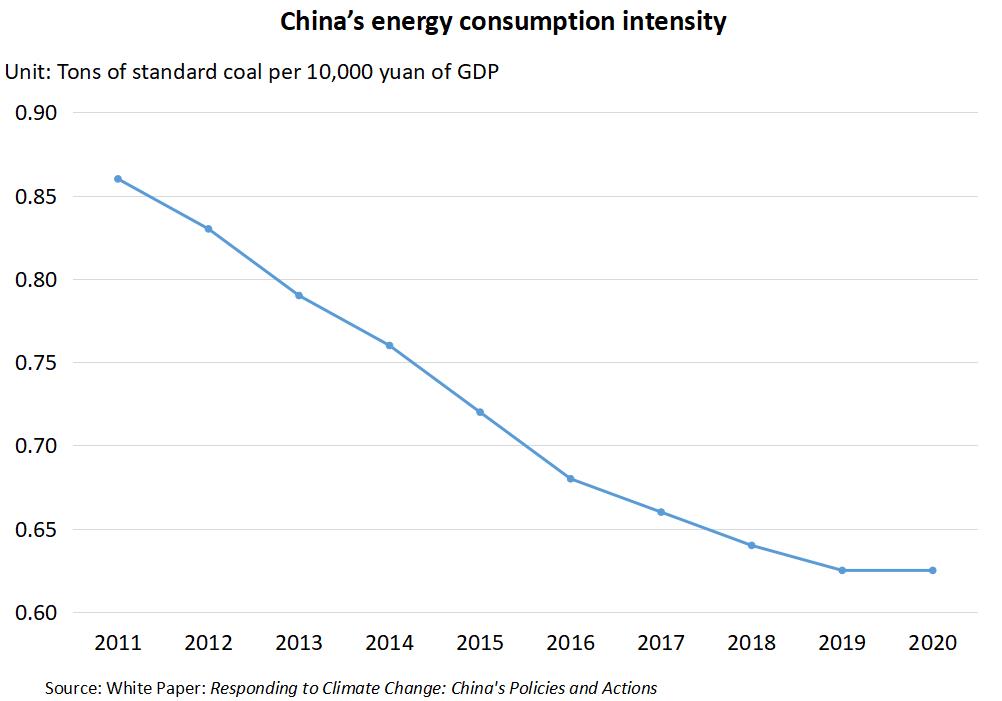
During the 13th Five-Year Plan (2016-2020) period, China saw average annual economic growth of 5.7 percent with an average energy consumption growth of 2.8 percent, and the amount of energy it saved during the period accounted for about half of the global total.
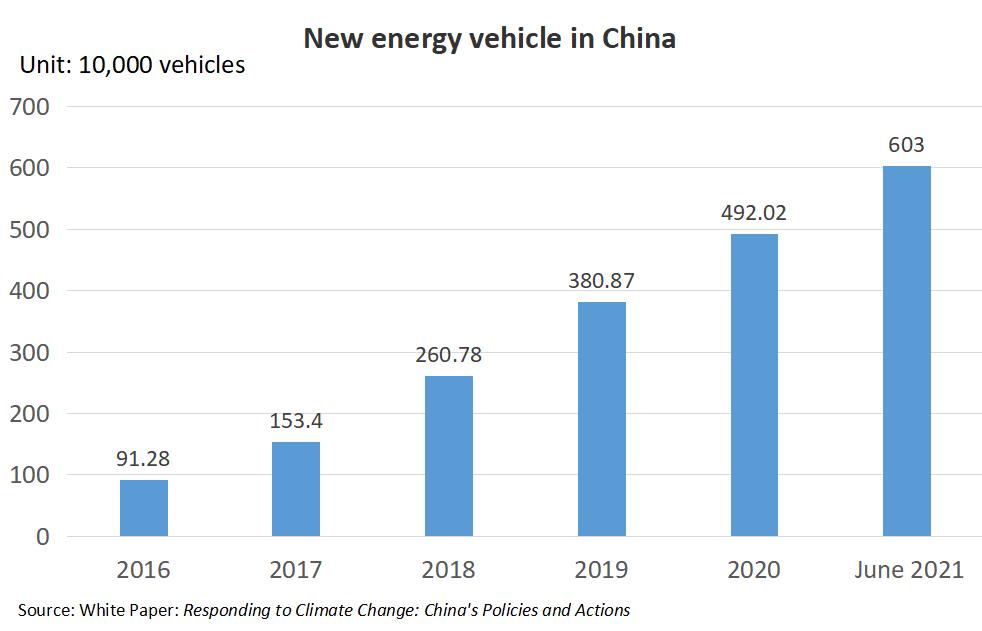
The country's new energy industry is witnessing strong growth. China has topped the world in new energy vehicle output and sales for the last six years. The country's NEV fleet surpassed 6 million in June.
In the manufacture of wind power and photovoltaic power generation equipment, China has established the most complete industrial chain in the world, the white paper said.
By the end of 2020, China was the largest producer of PV cells and modules, and led in the world in newly-added PV capacity for eight years in a row.
In 2020, China announced new targets and measures for Nationally Determined Contributions. The government aims to peak carbon dioxide emissions before 2030 and achieve carbon neutrality before 2060.