



Shanghai to start paying teachers for after-school services









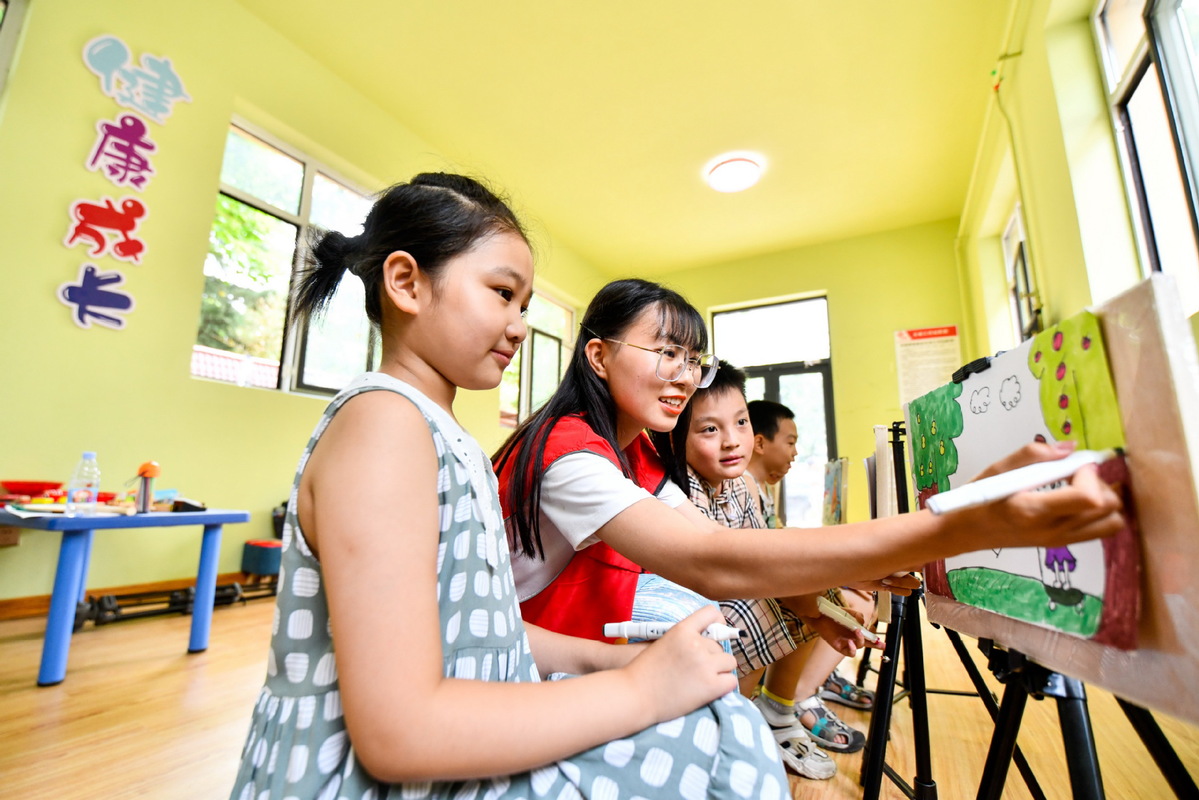
The Shanghai Municipal Education Commission announced on Thursday that it will begin paying teachers who provide after-school care to students.
According to the commission, two hours of after-school care is equivalent to three periods of classes. The remuneration for a single period is 85 yuan ($13.34).
The commission said that it will also cover the operating expenses incurred during after-school services, by a subsidy base on a school's head accounts of students, equivalent to no less than 100 yuan per student per year.
The after-school services are part of the China's "Double Reduction" policy, which aims to reduce students' education burden by enhancing education and banning after-school private tutoring.
In response to the policy, Shanghai has implemented the "5+2" model in which schools offer at least two hours of after-school services every weekday.
However, this model poses a challenge for many school teachers as they now have a heavier workload. The commission has in turn taken several measures to address this issue and alleviate the stress on teachers.
Besides providing monetary compensation, the commission will also encourage schools to recruit retired teachers or qualified professionals to provide after-school services.
Schools will also be allowed to make use of public facilities such as local children's palaces - government-funded institutions designed for children to study and practice arts and science after school - and non-disciplinary off-campus institutions to conduct extra-curricular activities.
Ling Shanshan contributed to this story.


- PLA vessel formation returns following far-sea training
- Yutu's adventure: China's 70-year journey beyond the stars
- Speeding in the rain caused 2024 Harbin bus crash, investigation finds
- New study helps deepen understanding of Qinghai-Tibet Plateau carbon cycling mechanisms
- Wearing so-called 'ROC president' title only to invite disgrace: spokesperson on postponement of Lai Ching-te's visit to Eswatini
- One-China principle remains widely recognized


