



Malnutrition rate down, but obesity on rise









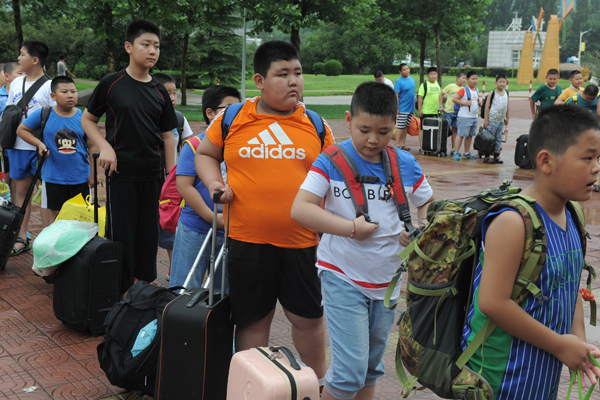
Annual child development report says students' eyesight also becoming worse
The malnutrition rate among Chinese students has fallen steadily since 2010, but they have become more prone to obesity and poor eyesight, according to the Annual Report on Chinese Children's Development.
The fourth annual report, released by the China National Children's Center and Social Sciences Academic Press earlier this month, said the malnutrition rate among Chinese primary and secondary students had dropped from 12.7 percent in 2010 to 10.1 percent in 2014 and 8.5 percent in 2019.
However, their obesity rate rose from 15.5 percent in 2010 to 20.4 percent in 2014 and 24.2 percent in 2019.
The report said boys had a higher rate of obesity than girls, and they were becoming obese at a faster pace.
It said the trend is closely associated with social and cultural norms, with society and girls themselves paying more attention to their figures and girls more tightly restricting the amount of food they eat.
The report also found that while urban children had a higher obesity rate than rural ones, the rate among rural children was growing faster.
The percentage of primary and secondary school students with poor eyesight reached 67.9 percent in 2019, up from 57.4 percent in 2010 and 62.2 percent in 2014.
Urban children had higher rates of poor eyesight than rural children, but rural children's eyesight was worsening at a faster pace because continued urbanization and economic development had narrowed the lifestyle gap between urban and rural children, the report said.
More than 85 percent of high school students had poor eyesight in 2019, but the rate was growing more rapidly among younger students.
The report said the prevention of poor eyesight must start as early as possible and more education and intervention should be conducted to protect younger children's eyesight.
A guideline issued by the Ministry of Education, the National Health Commission and six other departments in 2018 said the overall myopia rate among Chinese teenagers should be reduced by over half a percentage point a year from 2018 to 2023. In provinces with a high incidence of nearsightedness, the reduction should reach 1 percentage point a year.
Parents and schools should work together to ensure teenagers get at least one hour of outdoor activity a day and enough sleep, with a reduced academic workload and less time spent using electronic devices, it said.
In February, the ministry banned the use of cellphones in all primary and secondary school classrooms.


- PLA vessel formation returns following far-sea training
- Yutu's adventure: China's 70-year journey beyond the stars
- Speeding in the rain caused 2024 Harbin bus crash, investigation finds
- New study helps deepen understanding of Qinghai-Tibet Plateau carbon cycling mechanisms
- Wearing so-called 'ROC president' title only to invite disgrace: spokesperson on postponement of Lai Ching-te's visit to Eswatini
- One-China principle remains widely recognized


