Zero-COVID policy keeps pandemic under control









Striking a balance
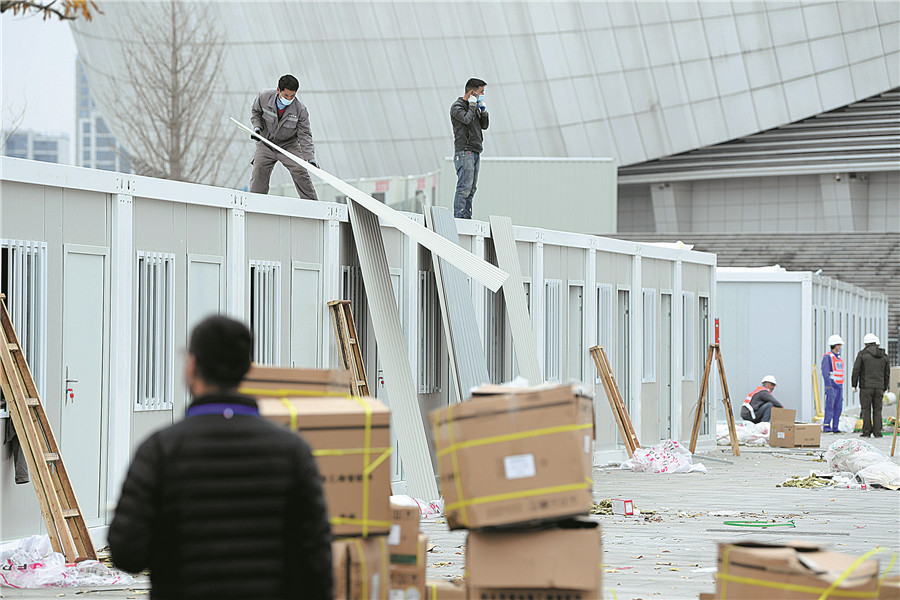
As China becomes increasingly efficient in tackling imported infections and local outbreaks, more emphasis has been placed on striking a balance between disease control requests and enabling people to live normal lives.
Ma Xiaowei, minister of the National Health Commission, said in an interview with Xinhua News Agency, "Virus control work should be precise and considerate, and local authorities should provide a range of supportive policies to reduce the impact on people's lives and production, and achieve the best results at the lowest possible social cost."
The introduction of buffer zones in a number of border and port areas is an example of such efforts, according to authorities.
Liang said, "Villages in a port city where buffer zones are established can adopt stricter measures, including setting up checkpoints and imposing restrictions on people's movements, while the remaining areas of the city only need to impose regular disease control measures.
"In the buffer zones, regular activities can take place when there are no new cases, but regular screening and health monitoring will be performed."
In Yunnan province, authorities in Ruili city pioneered this approach due to the long border with Myanmar.
Last year, the city experienced 42 local infection clusters triggered by imported infections, disrupting the once-booming jade trade.
According to Liang, "Establishing buffer zones can provide an additional barrier to protect against the virus being imported, further reducing the likelihood of it spilling over from high-risk areas."
On Dec 19, authorities in Ruili said offline jade vendors located outside strictly regulated zones could resume business.
Zhang Guizhen, who owns a local jade business, said: "On hearing this, I began tidying up my shop, preparing hand sanitizers, disinfectant and thermometers. It was great news for jade vendors."
In October, a local COVID-19 outbreak was reported in Ejine Banner, Inner Mongolia, during the peak autumn tourist season. Local authorities said more than 9,000 visitors were stranded in the area.
To help them return home while ensuring their health and safety, the authorities drew up plans for rail passengers, individual travelers, motorists and those using buses.
Xu Xiuzhen, a traveler from Shanghai, said on the train journey home, "Even though we were stranded, we were treated warmly, with the local authorities providing us with sufficient protective equipment, medical products and food."
- Beijing 2022 opening ceremony will be historic, says chief director Zhang Yimou
- Beijing 2022 opening ceremony will be historic, says chief director Zhang Yimou
- The 'atrocity propaganda' game of Western media demonizes China's zero-COVID approach
- China - A Pillar of Peace and Stability for Pacific Island Countries
- COVID-19 response and economy of Chinese cities from the perspective of China Integrated City Index 2020




- Infrared cameras film wild panda mother, cub in snow
- Expert: Private sector purchases key force supporting gold prices
- National observatory urges preparedness measures amid north China cold spell
- Chongqing celebrates wintersweet bloom with floriculture festival
- Cornell students explore China's agricultural development
- China makes strides in promoting child development and fertility-friendly society: association