


Jumping in on the action










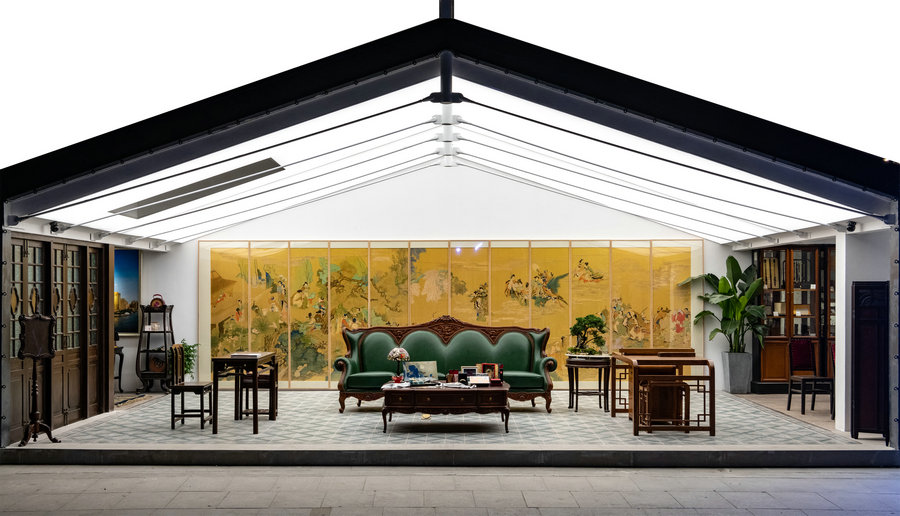
Promoting traditional art
On April 18, art institution Duoyunxuan followed suit and released an NFT comprising traditional wood prints from a famous screen painting by a Chinese artist. The 24,000 copies that were made available similarly sold out within a minute.
Founded in 1900, Duoyunxuan has functions that include auction, reproduction and publication of artwork in China, and is especially known for its collection of water-ink paintings. The institution has also developed and refined traditional Chinese wood print techniques, which were used to make high-quality replications of Chinese ink paintings before modern printing machinery was available in China. Duoyunxuan's wood print handicraft has been recognized as an intangible cultural heritage of China.
"We have noticed the irreversible rise of the digital economy, and this was closely followed by the global NFT trend and the burgeoning market for digital art," said Chen Jiayong, an executive with Duoyunxuan. "We felt that we would not be able to understand how this trend works if we did not try to be a part of it."
The NFT by Duoyunxuan features the 12-piece Chinese painting by Ren Bonian (1840-1895) which depicts the gathering of 46 immortals in a heavenly palace. In reality, the screens form a larger artwork measuring 206.8 centimeters in height and 714 centimeters in width.
The screens were exhibited at the World Expo 2010 in Shanghai, as well as the second edition of the China International Import Expo in 2019.
"Several generations of our finest craftsmen dedicated their entire careers to this work, and it is recognized as the most important woodprint masterpiece by Duoyunxuan. This work represents the highest level we could possibly achieve with the traditional handicraft," said Chen.
"We believe that this is an appropriate choice for our first NFT release," he added. "We are also keeping close watch on contemporary artists that are working with digital media and looking to find potential collaborators for new digital projects."
As a State-owned company, Duoyunxuan is cautious about the risks involved in the emerging NFT segment, but is also optimistic of what it could bring to the arts community.
"We are closely following the national policies regarding this field and have noticed the major metaverse platforms have lately been going through a period of adjustment," Chen said.
"I believe that as this sector continues to develop, new artworks will emerge and new business forms will be created. Art is an indispensable part of virtual life as much as in real life. Maybe one day people would decorate their virtual rooms with NFT artwork, just like in their actual home."
According to current regulations in China, NFTs cannot be resold and can only be presented as gifts to another person six months after its acquisition.
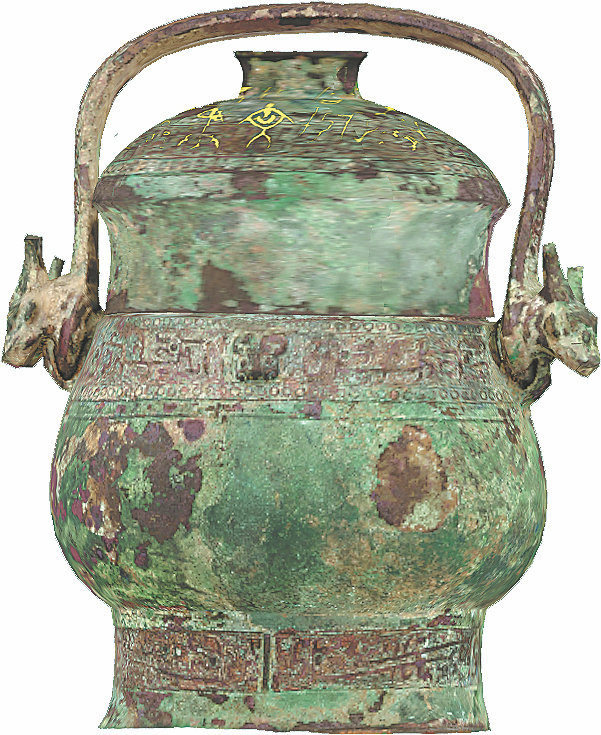
The Shanghai Museum is the latest to join the action, having released NFTs in August to introduce two important artifacts that were showcased at its new exhibition The Making of China: the Civilization of Xia, Shang and Zhou Dynasties.
The two NFTs, one of a you (wine vessel) from the early Western Zhou period (1046 BC to 771 BC), and the other of a sheng, which is known as China's first standardized unit of measurement, sold out almost instantly.
The museum also unveiled its own mobile application during the launch of the NFT, making it the first museum in China to have a digital collection supported by its own blockchain system.
On Sept 2, Shanghai Museum released its second series of NFTs, and the digital collectibles of a bronze water vessel named Zi Zhong Jiang Pan and a bronze halberd named Shang Yang Ji were similarly snapped up within seconds.
The museum recently started allowing reservations for its next batch of NFTs featuring two lacquer art objects that would be released during the Mid-Autumn Festival. The museum is also working with the Capital Museum in Beijing and will sell two NFTs of ceramic pieces from the latter's collection.


