



US must put halt to partisan polarization









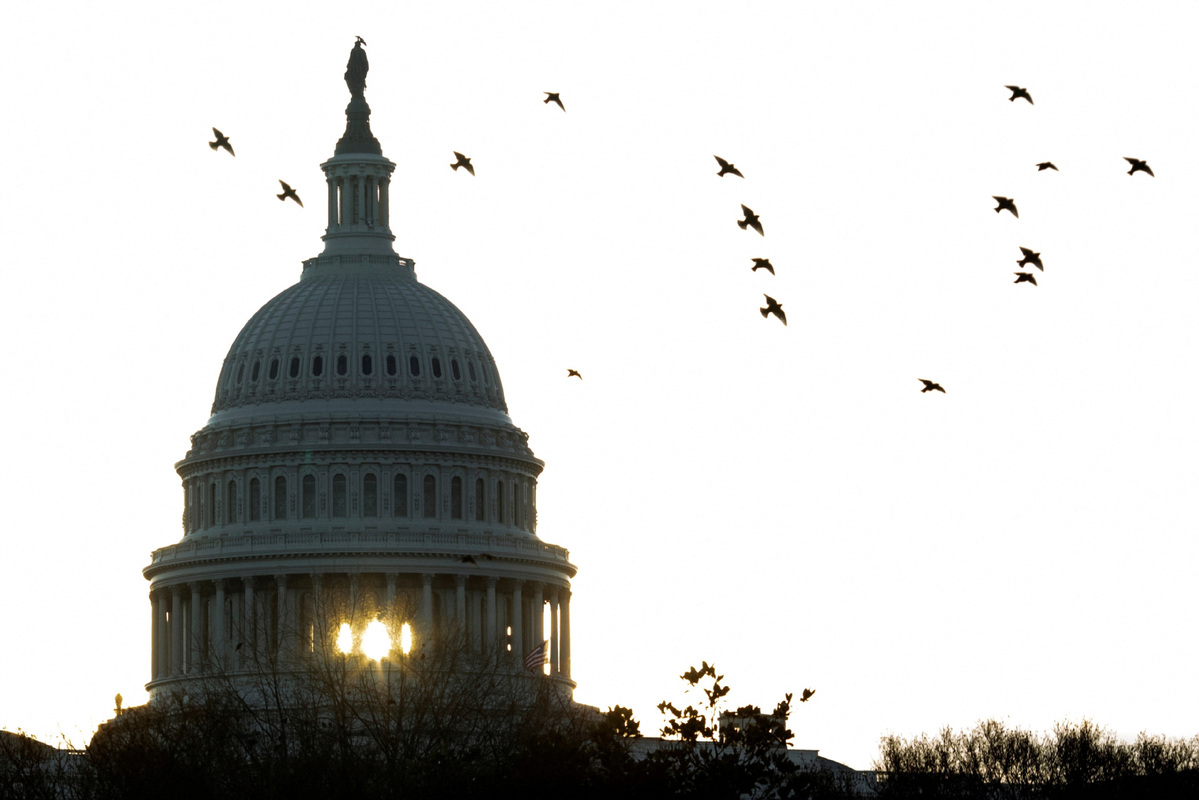
The prolonged battle earlier this month for leadership of the United States House of Representatives turned the outflow of frustration with the US political system from a trickle to a torrent.
Kevin McCarthy, a Republican, was eventually elected speaker of the House after making concessions to a group of right-wing hard-liners. The concessions have raised questions about possibly aggravating congressional dysfunction, social cohesion and democratic degradation in the US.
Before the Republican voting, the Freedom Caucus — a Republican voting bloc — issued an array of demands that would fundamentally change House procedures by weakening the power of the speaker and strengthening the power of both the caucus and rank-and-file House Republicans as a whole.
The Freedom Caucus has close political ties with the Tea Party, which was famous for its unwillingness to cooperate with less-conservative Republicans.
Although partisan polarization is a uniquely corrosive and dangerous force in US politics, the convergent forces from both ends of the political spectrum have often offered a path to short-term compromise and reconciliation between Democrats and Republicans in past decades. Putting a temporary end to "vetocracy" could improve the atmosphere for further cooperation. Scholar Michael Burleigh described the convergent forces as "purple path in the middle" in his 2017 book The Best of Times, The Worst of Times. It hardly needs to be emphasized that the rise of extremism has limited the wiggle room for convergent forces to maneuver.
Democrats, meanwhile, are worried that the concessions that McCarthy agreed to could lead to sharp cuts in social programs. Even the controversial Affordable Care Act, a healthcare project introduced by the administration of former president Barack Obama, is at risk of fresh challenges from the empowered hard-line Republicans.
Entrenched racial injustice, wide socioeconomic gaps and attempts by unscrupulous politicians to exploit these gaps have strengthened, to the maximum extent possible, polarization in the US. Far from being a melting pot, the US is an artificially amalgamated nation of great diversity. Partisan polarization and the rise of extremism have reinforced religious-secular, urban-rural and racial-ethnic cleavages. Supporters of each camp perceive the opposing camp in negative terms.
To make matters worse, the US has been experiencing a demographic shift that poses a threat to the white population, which has historically been the dominant group in all areas of power. It is worth noting that some white militant groups participated in the Capitol Hill riot of January 2021.
Externally, the election of McCarthy will add new complexity to the already complicated Sino-US relations. McCarthy has characterized the Communist Party of China as the "greatest geopolitical threat of our lifetime" and called for a whole-of-government approach to ensure that the US is prepared to tackle the economic and security challenges that he sees as posed by the CPC.Adding a heavyweight China-basher to the Sino-US chessboard, US policymakers will inevitably reduce the scope for flexibility within the limits of strategic realism, just as there are likely to be fewer opportunities for cooperation between the two giants in areas of common concern.
As Jennifer McCoy, a US political science professor, has pointed out, some countries have experienced chronically pernicious levels of polarization for some time without undergoing democratic downgrading. To arrest the backsliding of US democracy and resume the delivery of good governance, the US must launch necessary reforms to reduce partisan and group polarization before they become dangerous. The Congress should give top priority to these reforms and break the habit of wrongfully targeting China as a geopolitical threat to the US.
Junius Ho Kwan-yiu is a Legislative Council member of the Hong Kong Special Administrative Region and a solicitor. Kacee Ting Wong is a barrister and a part-time researcher at Shenzhen University's Hong Kong and Macao Basic Law Research Center.








