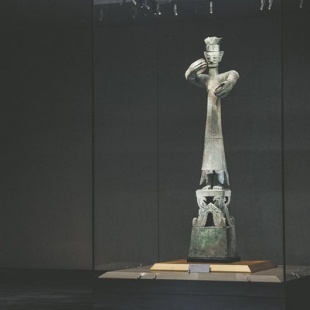



A gripping mystery
One of the biggest questions that still confounds Sanxingdui experts is: What did the bronze standing man once hold in his hands? Zhao Xu feels around for answers.









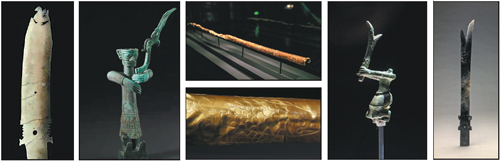
The elephant tusks
Although the nature of the elephant tusks, unearthed in large numbers from several pits on the site, is still open to debate, their cultural and religious significance is undeniable, making them a possible answer to the question.
"During the time of Sanxingdui, the Yellow River Basin had a subtropical climate. And the Yangtze River Basin to its south, a tropical rainforest climate. So it wouldn't surprise me if researchers, assisted by modern technology, eventually decide that the tusks had come from the surrounding regions, rather than distant lands that, today, have a large elephant population," Hu says.
However, this is not to deny any connection that Sanxingdui might have with those lands, notes the curator. Cowrie shells, as well as small jade and gold pieces, have been found within bronze ritual vessels unearthed from the site, the shells believed to have come from the Indian Ocean.
"Since the late Shang Dynasty between the 12th and 11th century BC, an ancient route had existed that linked the Chengdu Plains with the land to its south and southwest, including modern-day Myanmar and India," Hu says. "The shells could have journeyed to Sanxingdui via this route."
And the silk fabric, depicted vividly as the giant bronze figure's clothing, had probably traveled the same path to foreign lands, more than a millennium before the opening of the Ancient Silk Road in the 2nd century BC.