


Historic kilns fire up memories
Craftsmen carry on traditions that stretch back 2,000 years, Cai Hong reports in Jingdezhen, Jiangxi.










The city is conducting an exhaustive investigation of the underground relics and its layout, including kilns, buildings, streets, alleys, river systems and wharves.
The areas related to the porcelain making will make it to the city's conservation plan, while new archaeological findings in the future will also be put on the conservation list, according to the official.
"We want the conservation plan to be the most authentic and complete picture of Jingdezhen's ceramic-making industry and city building," he says.
Old district
Jingdezhen was previously known as Changnan, which literally means "south of the Changjiang river" in Chinese. In 1004, Emperor Zhenzong of the Song Dynasty (960-1279) was so enchanted by the translucent beauty of white porcelain from the town that he renamed it Jingde after the name of his reign.
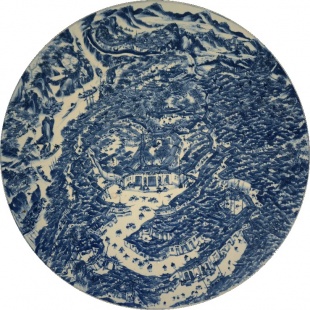
It is on the bank of the Changjiang River, which flows from the mountains that separate northeastern Jiangxi from neighboring Anhui province. The city stands at the point where the river exits rocky gorges and loses its swiftness, broadening into a shallow, curving basin 5 kilometers long. Dozens of streams flowing into the basin powered waterwheels and iron trip hammers that crushed rocks used for making pottery.
The city's layout was generated by nature and the porcelain industry. What makes Jingdezhen's old district special is the network of the long, narrow alleys extending in all directions along the Changjiang River. They are in between the kiln complexes.
The old district has been kept almost intact, with more than 100 alleys and some 100 buildings dating to the Ming and Qing dynasties, according to Wang.
Most of the alleys still have their original names. Some are named according to regions, such as Fuzhou alley and Hukou alley. Others are named after a particular business, such as firecracker, pawnshop and straw sandals, while some are named after surnames like Zhan, Bi, Peng and Fang.