


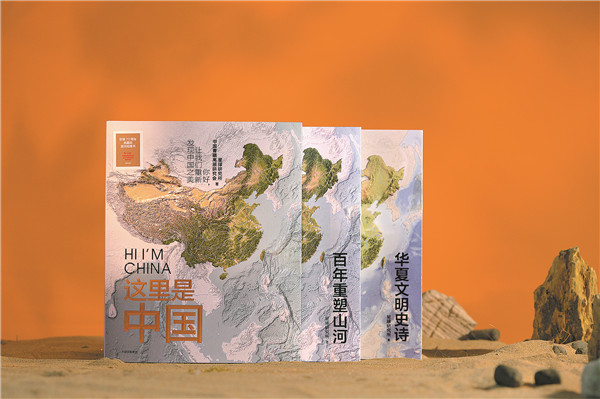
Thanks to the country's comprehensive research program tracing the origins of Chinese civilization, Geng admits that the program's fruitful achievements have made the book possible. The program, launched in 2002, has led to the excavations and studies of key sites, which have revealed a host of secrets about ancient China, including how early civilizations were formed and merged to create united diversity.
"Only based on these archaeological research results can we interpret the academic content into reader-friendly stories," Geng says.
Chen Xingcan, head of the Institute of Archaeology at the Chinese Academy of Social Sciences, speaks highly of the book: "It tells the story of the origin, growth, interactive communication and continuous creative process of Chinese civilization. The team has put in a lot of effort, producing a wonderful account of the cultural evolution and providing readers with ample room for imagination."
On the book review site Douban, the book scored 9.4 points out of 10. A Douban user named Wasi from Beijing comments that the book is like a museum on paper, unlocking the development of Chinese civilization. "Our ancestors built countless cities, some of which have long vanished, some leaving only ruins, and some enduring wind and rain to this day. Their existence allows us to travel through hundreds or even thousands of years."
In the Origin chapter, the book introduces the Archaeological Ruins of Liangzhu City, a UNESCO World Heritage Site that dates back 4,300 to 5,300 years in Hangzhou, East China's Zhejiang province; the massive Erlitou Site in Luoyang, Central China's Henan province, widely believed to be a late capital of the Xia Dynasty (c. 21st century-16th century BC); and the Sanxingdui Site in Guanghan, Southwest China's Sichuan province, which dates over 3,000 years ago.
There are also regrets in the topic selection, Geng says, adding that they wanted to write a story about the 4,300-year-old Taosi relics site in Linfen city, North China's Shanxi province, but the idea was abandoned because it lacked an interesting angle.





