


Intangible cultural heritage sees growing consumer appeal










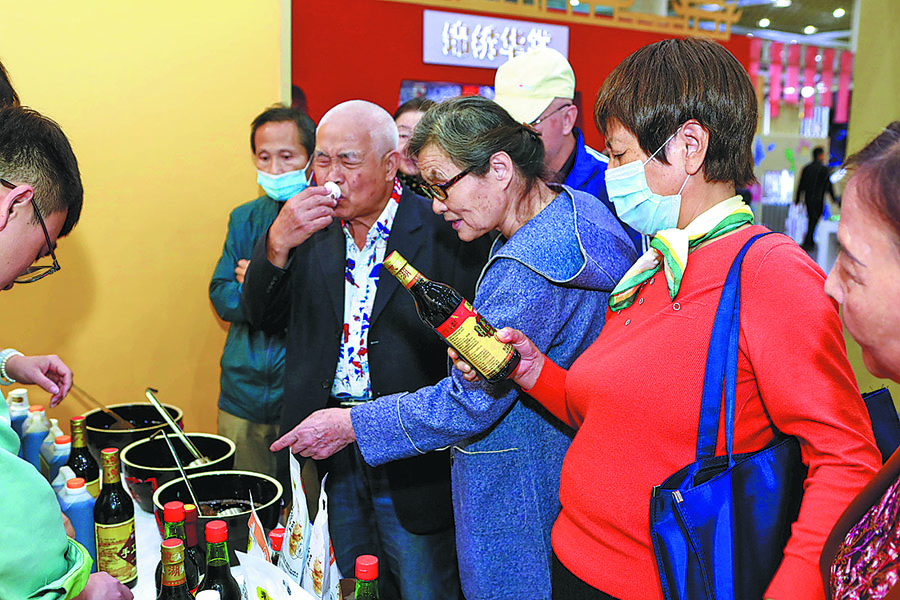
The traditional Chinese medicine session also turned out to be a big magnet, packing in young visitors to have medical practitioners take their pulse, receive massages and try therapeutic food.
"More than 10 doctors took nearly 100 visitors' pulses during the first day of the expo," says Qi Xianghua, an inheritor of the Bian Que pulse diagnosis, a provincial-level intangible cultural heritage in Shandong.
The traditional Chinese medicine diagnostic method is attributed to Bian Que, a legendary physician from ancient China who emphasized the pulse as a vital tool for understanding a patient's health status.
To better serve modern needs, innovations have been made based on traditional pulse diagnosis techniques.
"We combine traditional pulse methods with modern technology, analyzing multiple dimensions such as pulse pressure, speed, texture and weight. By precisely grasping these subtle characteristics, doctors can gain a more comprehensive understanding of the patient's physical condition," Qi says.
Additionally, performances and workshops are arranged for the public to better appreciate the charm of cultural heritage.
Tian Yiming, 8, had an opportunity to get his hands on a loom, which he had only seen on the popular video-sharing platform Bilibili.
Under an inheritor's guidance, he wove threads into a short piece of cloth in a few minutes, which gave him great satisfaction.
His mother, surnamed Zhang, says she didn't know her son could weave and appreciated the rare opportunity.
Zhang hopes the experience can pique her son's interest in more intangible cultural heritage in the future.
During the expo, related brand launches and business matchmaking events were hosted to boost exchange and cooperation. Practitioners, industry associations, experts, scholars, e-commerce platforms, and media exchanged new measures and achievements in the protection and inheritance of intangible cultural heritage.
The goal is to have intangible cultural heritage better make its way into modern life, according to an official with the Ministry of Culture and Tourism.
After years of effort, the country has established a four-level intangible cultural heritage inventory system at the national, provincial, municipal and county levels, which has recognized over 100,000 representative items and more than 90,000 inheritors, according to the ministry.
The ministry will work with other related parties to actively promote the integration of intangible cultural heritage with tourism, enriching tourism content and innovating offerings.
By enhancing the travel experience, it also aims to find modern applications for traditional crafts and bring new vitality to them in contemporary life, says the official.


