Pride in thangka tradition motivates artist










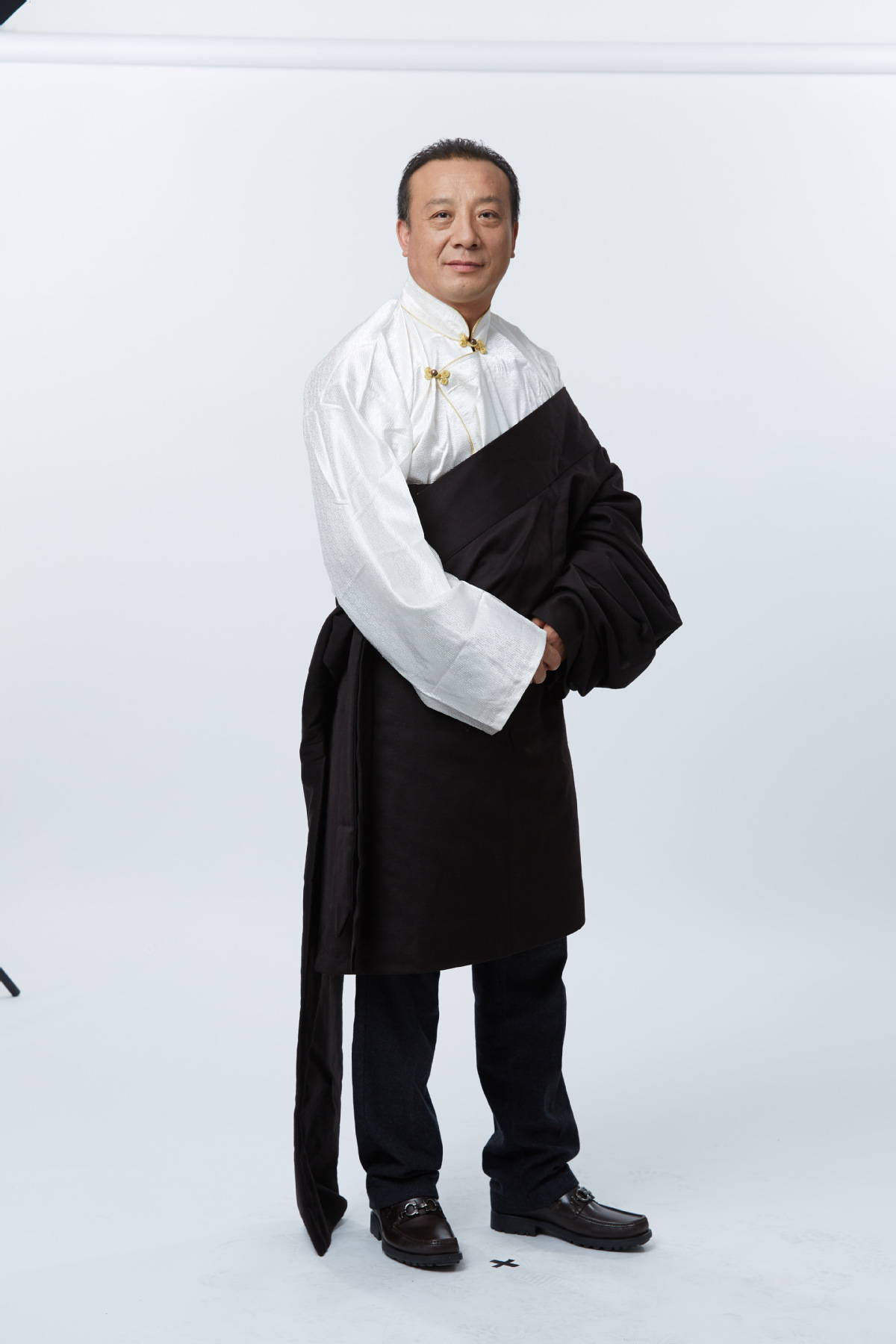
Initially, painting thangka was merely a way for Niangben to earn money, but he soon developed a deep passion and talent for the art. Over the years, he dedicated himself to studying Regong Thangka and Tibetan Buddhism.
In August 2006, Niangben established the Qinghai Huangnan Regong Painting Institute, the first thangka art institute in the region, and became its director.
"Our goal in starting this institute was to open up learning opportunities for more people," Niangben said. "Traditionally, this art was passed down within families, from father to son, one-on-one, but that just wasn't enough. At first, I could only take in about a dozen kids to study at my place, but now we're able to accept over 70 each year."
The institute covers 120,000 square meters, with a building area of 7,000 square meters, focusing on protecting, preserving and promoting the intangible cultural heritage of Regong art, as well as training local artists. Niangben said that this large space allows more children to learn and engage with the art.
"Every year, we check how many students graduate and how many new kids we can take in. Our institute is really here for kids from low-income families, the 'left-behind' children (who remain in rural areas while their parents migrate to cities for work). We cover their meals, housing and education — all free of charge," Niangben said.
The institute has been recognized as a National Cultural Industry Demonstration Base, a National Intangible Cultural Heritage Productive Protection Demonstration Base, and a Youth Employment and Entrepreneurship Training Base.
"Painting thangka is time-consuming and requires sincerity and patience," Niangben said. "It takes an artist weeks or months to finish a painting."
The pieces he brought to New York took an average of two to three months each to complete. Visitors can view not only the vibrant, colorful Buddha figures but also the line-drawn sketches. They can observe the detailed color-mixing Niangben uses, with precious mineral pigments like gold, silver and cinnabar, along with natural dyes from plants such as saffron and gardenia, which can make the art last for decades.