



Green fashion turns old plastics into profits
As awareness of the climate crisis and environmental issues grows, consumers warm to living more sustainable lifestyles









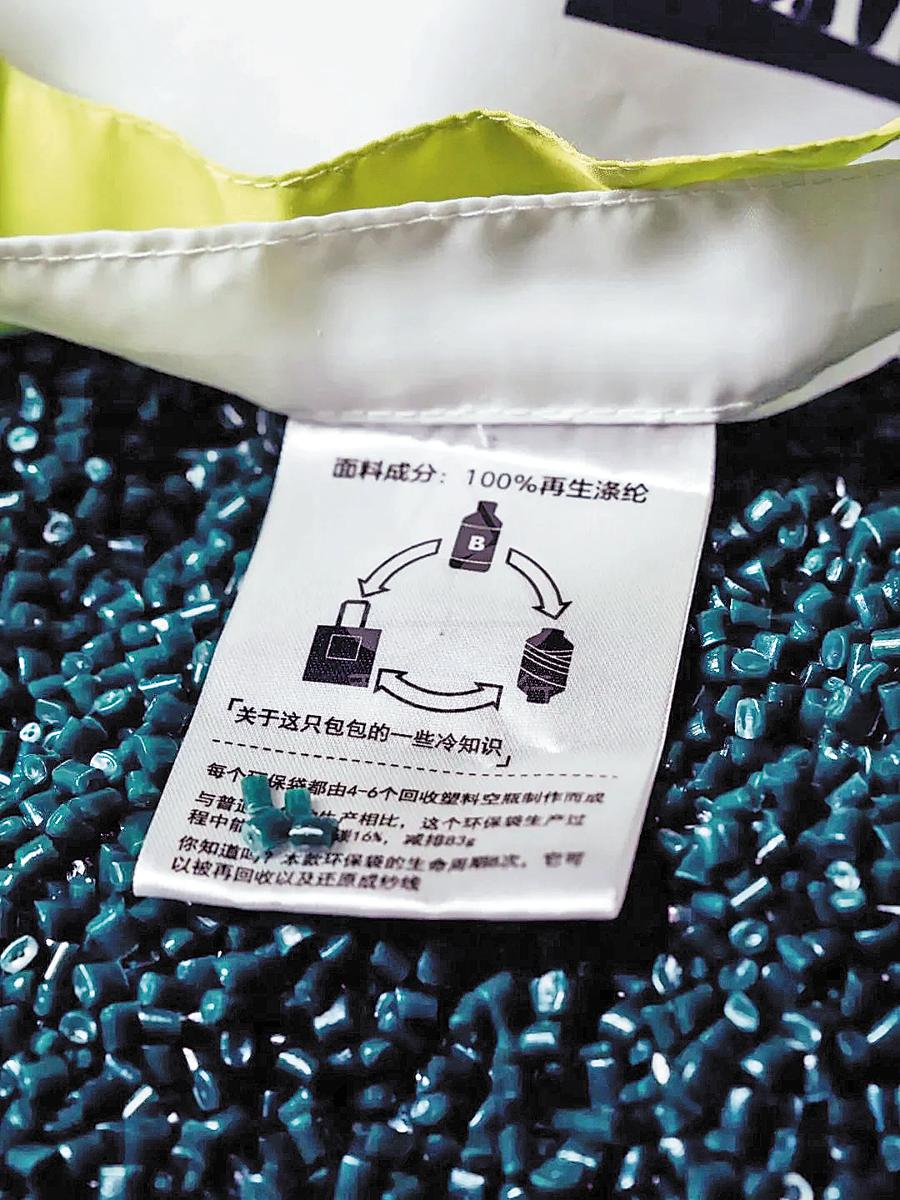
Diversified materials
Zhang Na, who founded Shanghai-based Reclothing Bank in 2011, dislikes throwing things away.
"To me, every garment resembles a museum for the good old days and memories of the past, and by giving new life to old clothes, I want to connect the past, present and future and soothe people," said Zhang, who makes new clothes out of the so-called outdated ones that have been thrown away.
When Reclothing Bank was in its initial stages, it primarily collected worn clothes and handcrafted them into various pieces of patchwork with the help of migrant workers, she said.
To scale up production, Zhang developed a generic design, which meant that fabrics of different colors and styles could be used to produce similar products using a fixed template.
Years later, Reclothing Bank started to use technologies to recycle other materials such as "ghost" fishing nets.
At recycling bases on Zhoushan Islands off the coast of Zhejiang province, migrant workers are hired to disentangle shrimps and crabs caught in these discarded nets.
After being picked from the sea, the fishing nets are remade into recycled nylon fabric by crushing, slicing and spinning them up. The resultant fabric is resistant to abrasion, shrinking, heat, oil and chemicals. It can be used to make durable and brightly colored bags and garments, according to Zhang.
Producing 100 tons of this recycled nylon is equivalent to saving 700 barrels of oil and reducing 571 tons of carbon dioxide emissions, the founder said.
"This has not only improved the economic situation for locals, but has also given them a feeling of achievement after learning that they have contributed to protecting the planet," she added.
There is a badge attached to every piece of apparel made by Reclothing Bank, which shows how much carbon emissions have been reduced by using recycled fabrics to make the piece. It also shows the number of trees needed to be planted equivalent to the amount of carbon emissions reduced.
Reclothing Bank doesn't just use reusable and recyclable materials in its products, but natural fibers too.
The company has started using yak wool obtained at an altitude of around 2,500 meters on the Tibetan plateau.
"It takes about three months and nine processes for herdsmen to create the fabric using ancient hand-twisting techniques," Zhang said.
Yak wool is sometimes referred to as the "soft gold of the highland", as a coat made of it weighs only 1 kilogram and yet is warmer than a down jacket. Producing yak wool provides herders with additional income.
Reclothing Bank's yak wool coats are dyed with natural minerals such as turquoise and malachite through an environmentally friendly waterless process, resulting in vibrant, fade-resistant colors.
She and her team also transform biobased materials, including pineapple skin and leaves, corn stalks and fungi fiber, into a leather-like polylactic acid fabric through cutting-edge technologies. The resultant material is 100 percent biodegradable, reducing carbon emissions by 90 percent.
"Every part of a pineapple is valuable. The fibers from three pineapple leaves are so strong that they can pull a car," said Zhang.
At Milan Fashion Week in September last year, Reclothing Bank unveiled an "edible" coat made from fungi. Made from mycelium filaments grown from a fungus root, the coat is indistinguishable in look and feel from traditional leather.
"Because the mushroom material is composed of protein, it emits a pleasant scent during the heating and shaping process, just like that of an omelet," Zhang said.
"The key to such innovative design lies in passion. Without it, the results may be lackluster. Our goal is to create sustainable products that stand out from the typical 99 percent in your wardrobe; we aspire to be part of that exceptional one percent," she said.


- Free health checkups reach high-altitude communities in Xizang
- China urges Japan to make 'clean break' with militarism
- Xi congratulates Guelleh on re-election as president of Djibouti
- Former head of national TCM administration indicted for bribery
- Wuhan University researchers return from five-month Antarctic expedition
- New city established in Xinjiang


