



China expresses concerns over US tariff policy









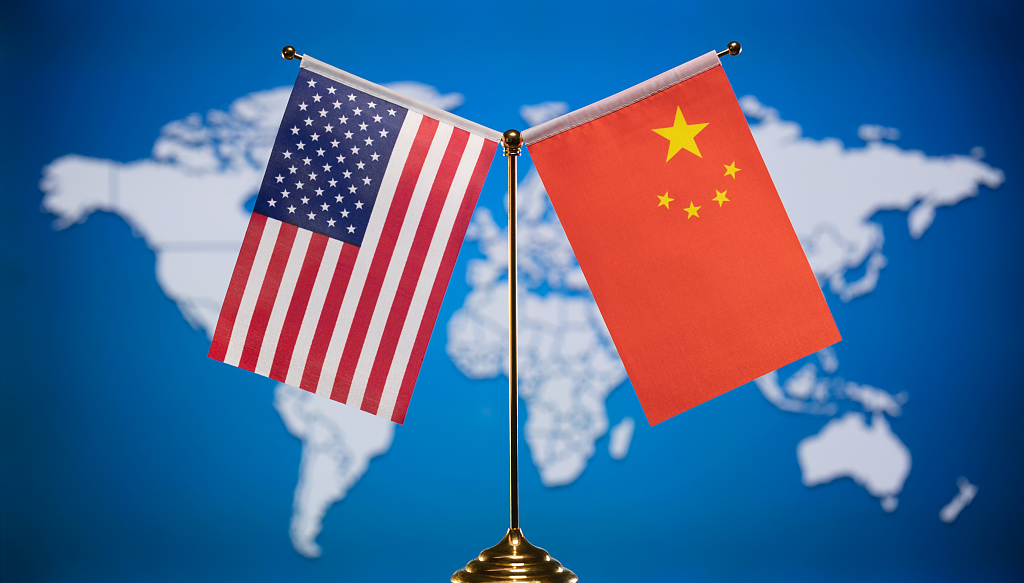
China has reaffirmed its commitment to resolving mutual concerns through equal dialogue and consultation with the United States, emphasizing that Washington's unilateral tariff hikes are disrupting normal economic and trade cooperation between the two countries, according to China's top commerce official.
In a letter sent on Wednesday to Howard Lutnick, the newly appointed US secretary of commerce, Chinese Commerce Minister Wang Wentao expressed China's concerns over US tariffs on Chinese exports, the Ministry of Commerce said in an online statement.
Wang said that economic and trade relations form a critical pillar of China-US ties. Both sides should strive to foster a fair and predictable business environment to support sustainable economic engagement, he added.
The US government's aggressive tariff policy is bound to fail, as history has proved that wielding the tariff stick only leads to price hikes, exacerbates inflation and disrupts global trade, economists said.
Highlighting that tariffs are duties ultimately imposed on US businesses and consumers, they said that rather than bring manufacturing back to the US, protectionism would isolate Washington in the world economy and politics.
Their comments came after US President Donald Trump said on Tuesday that he intends to impose auto tariffs "in the neighborhood of 25 percent" and similar duties on semiconductors and pharmaceutical imports. This is the latest of a series of US measures threatening to upend international trade.
Sebnem Kalemli-Ozcan, a professor of economics at Brown University in the US state of Rhode Island, said, "Economists don't typically agree on all things, but if you ask me what is one thing they do agree on, it's that tariffs are costly to the American consumer in the end."
Trump imposed a 50 percent tariff on imports of washing machines in 2018. As a direct result, the value of washing machines jumped by around 12 percent, and US consumers paid around $1.5 billion extra a year in total for these products, researchers from the University of Chicago estimated in a paper published in 2019.
Kalemli-Ozcan also expressed concern about the inflationary impact of the extra tariffs.
The US consumer price index jumped 0.5 percent month-on-month in January, the biggest gain since August 2023. This was higher than expected, as Americans face higher costs for a range of goods and services, Reuters reported.
Computer manufacturer Acer said that the price of its laptops would increase by 10 percent next month due to US tariffs.
"Tariffs (could) also lead to appreciation of the dollar, meaning it will be hard for US exporters to sell their goods to other countries, even in the absence of any retaliation from any country that it imposes tariffs on," Kalemli-Ozcan added.
Jeffrey Sachs, director of the Center for Sustainable Development at Columbia University, said a multifaceted rationale exists behind the aggressive US trade policy, citing reasons such as attempting to weaken China, pushing for compliance with US foreign policy demands and boosting US exports.
"But Trump's strategy is bound to fail," Sachs said. "China will diversify its trade to the rest of the world, while the US will increasingly lose competitiveness of its own exports in third markets."
Li Zhi, assistant dean of the China Institute for Development Planning at Tsinghua University, said, "Eight years ago, the US government tried to use the tariff weapon to make the US great again, but the result was soaring prices domestically, blocked manufacturing investment and disrupted global supply chains."
"The trade war launched by Washington has proved to be of little use to help it reduce the deficit," Li said. "We need to learn how to compete and cooperate more gracefully."
Wang Changlin, vice-president of the Chinese Academy of Social Sciences, said Trump is triggering widespread trade frictions with his tariff plans. "Such an approach will drive up inflation in the US, disrupt global supply chains, and accelerate the restructuring of global industrial, technological and energy resource landscapes. As a result, global economic growth is expected to slow further," Wang said.
Shi Hongxiu, a professor of economics at the National Academy of Governance, said: "The tariff policy reflects a decline in US influence in global trade, as it increasingly resorts to protectionism to shore up domestic industry. Such moves will trigger countermeasures from its trading partners and deal a blow to global supply chains."
Cheng Dawei, a professor at the School of Economics at Renmin University of China, said Trump called for "reciprocal tariffs".
"But such remarks are unfair and contradict the laws of the World Trade Organizations," Cheng said. "Under WTO rules, special and differential treatment should be applied to developing countries. Trump's planned 25 percent tariff on all imported automobiles violates such rules."
Contact the writers at masi@chinadaily.com.cn








