Learning lessons from living without walking









I recently became a Meituan delivery.
A deliveryman hoisted me on his back like a backpack and deposited me at the bottom of a pedestrian overpass.
He'd seen me hopping up the bridge's stairs on one leg, clutching the rail, while my wife towed my wheelchair behind us.
About halfway down, the man wearing a Meituan helmet approached me and said: "I saw you struggling. Let me help you." He volunteered to let me ride piggyback down the remaining stairs.
I was leaving a hospital where I'd attempted, unsuccessfully, to enroll in physical rehabilitation, following ankle surgery. The operation was to repair four torn tendons, including a severely ruptured peroneal brevis — a part of my body I'd never heard of — which suffered a rare kind of longitudinal split.
One wrong step now means three months of needing mobility aids, half a year of difficulty walking and at least a year before returning to sports.
It initially meant inhabiting a bed-sized world and losing control over most of my life. Weeks later, my world essentially ends at my door, unless I'm taken for a walk, like a pet.
Sometimes, the elevator rejects me because sensors mistake my manual wheelchair for an e-bike, which are prohibited in our building because of battery-fire risks.
I used to psych myself up to go for a run. Now, I give myself a pep talk to go outside at all.
I've been spending these days struggling to gracefully accept the shrinking of my world where I must and resisting it where I can, pushing with all my might against the invisible walls closing in on my existence.
And I'm particularly vulnerable to lifestyle claustrophobia.
I relish a kinetic regimen of travel, socializing, field work and combat sports. I find relaxing …stressful.
Many people would consider breakfast in bed sumptuous. Not me.
I spend summer vacations frying breakfasts over campfires on a wilderness hilltop.
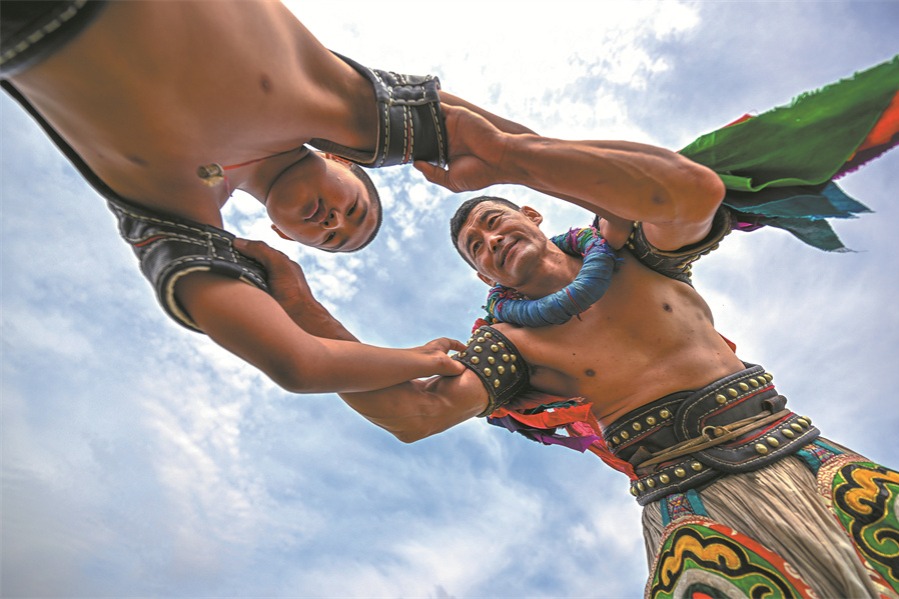
Previously, I did eight martial arts classes a week — jiujitsu, eskrima (Filipino stick-fighting), sanda (Chinese kickboxing) and MMA, plus weights and running. I filled evenings and weekends with punches, kicks, takedowns, headlocks and arm bars.
I was the happiest I'd ever been.
Often, my work schedule didn't allow for so much training. I spent enough time on the road that I always kept a suitcase packed.
I went into the pandemic a skinny-fat smoker who devoured junk, scorned sleep, and hadn't exercised on purpose in decades. Health, I thought, was something to sacrifice to work and family.
By the time I emerged from the lockdowns fitter than most 20-somethings, several good friends crinkled their foreheads at me and asked, disbelievingly: "Erik? Is that you?"
Once again, I find myself in a different kind of lockdown. A life in motion has lurched to a jolting standstill.
I've spent much of the past 20 years investigating disability in China as a volunteer and journalist.
I've covered Beijing's two Paralympics, profiled numerous initiatives and founded a volunteer group providing wheelchairs, surgeries and prosthetics for nomadic children with disabilities on the Qinghai-Tibet Plateau.
About a third of my most recent book, Closer to Heaven: A Global Nomad's Journey Through China's Poverty Alleviation, is devoted to such stories as sexual rehabilitation for people paralyzed in the 2008 Wenchuan quake in Sichuan province.
I never imagined myself living on the other end of disability issues in China.
Lately, I've been reassessing every corner of the country I experience — even the high lip to our apartment building's hefty door, which my wheelchair can't clear unassisted — in new ways.
I'm thankful for the Paralympics' legacy. But I see areas for improvement and how a single snaggled brick can make a thruway impassible.
I am grateful my injury is temporary — albeit protracted — and not worse.
It has also led me to think more deeply about the challenges China faces as its population grays and more people will need barrier-free access and corresponding services.
We will all get old — unless we don't.
On March 31, I turned one year older in a hospital bed.
My original plan was to celebrate my birthday by training in ethnic wrestling in the Inner Mongolian autonomous region's capital, Hohhot.
Other birthdays in China have involved inviting 100 friends to eat a whole sheep with Sichuan Opera mask-changing performances and dancing pandas; sleeping in a cave in Yan'an, Shaanxi province; and visiting a mass grave in Wenchuan county during Tomb Sweeping Festival. Spending so many birthdays in the disaster zone taught me to appreciate every year so much more.
This year brings different experiences and lessons. I'm still learning them.