Vocational education needs revamp to make it fit for modernization









The Ministry of Education announced before the end of last year that China has established the world's largest vocational education system. According to statistics, about 35 million students are studying in 11,133 vocational schools and universities. Their graduates have made up over 70 percent of those newly employed in the nation's modern manufacturing and modern service industries in recent years.
Given the fact that China has a population of over 1.4 billion and that more than 80 million students are studying in junior and senior high schools, the scale does not surprise me. It is only natural for the country to have the world's most extensive educational system as well as the largest network for vocational education.
China operates a nine-year compulsory education system. On graduating from junior-high schools after completing the compulsory period, about 40 percent of the graduates choose to stop studying or to go to middle-level vocational schools. The majority choose to go to normal senior-high schools for another three years to fight for a university place. Competition has always been tough in the annual national university entrance exams and those who score low may have to settle for a high-level vocational college.
As of now, about half of the young Chinese are studying in vocational schools or colleges with the rest in universities. As a country boasting the world's biggest and most comprehensive industrial network, China has good reasons to take vocational education seriously as it needs millions of skilled hands to support its manufacturing industries.
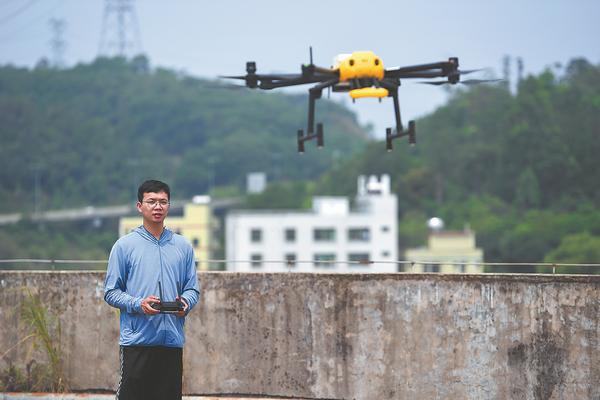
But as China has turned more of its attention to developing vocational education, it has found that there are a lot of problems to be solved. Most of the vocational schools are poorly-equipped and can't meet the demands of enterprises that are using delicate instruments and robots for production. Poor resources have led vocational schools to train their students with outdated skills and teachings, making it difficult for their students to get a good job upon graduation.
On the other hand, potential employers are frustrated by the difficulties they face in getting young workers with the skills they need for their production even when they offer decent wages. The governments at different levels should greatly increase investments to buy more equipment and improve facilities to enable vocational schools to provide their students with proper education and training to sharpen their edge.
Vocational schools used to be mostly run by big enterprises who trained students according to their demands. Three decades ago when many enterprises ran into operational difficulties, investing in such schools became a burden. To ease their burden, the governments at different levels took over the schools, operating them as State-run. But that led to enlarging the disparity between demand and supply so far as vocational education is concerned.
Under the government arrangement, closer cooperation should be reached between vocational schools and potential employers. The enterprises can invest in the form of money, equipment, teaching and coaching and in arranging internships for the students — suitable internships being critical to the training of vocational students. The investing enterprises, in return, should be given priority in selecting from among the graduates. Such an arrangement should help to achieve a win-win result.
But the hardest nut to crack to promote vocational education is how to enhance its social status. Deeply soaked in the traditional culture of "He who excels in learning can be an official", most people today believe that going to university for higher learning is the natural choice for a smart youngster. As a result, the social status of vocational education is low and most students make do with vocational schools reluctantly after failing to do well in middle school.
We are born different and each of us has different talents with some being good in memory, some being excellent in logical thinking and some boasting nimble hands. To promote vocational education, the country for several years has been holding grand ceremonies to award a number of craftsmen as national heroes. With progress made in high-end industries, China now finds itself thirsty for such craftsmen as much as it needs cutting-edge scientists.
Raising the quality of vocational education will help it become better respected, something it deserves, and enable it to develop along the right track. It will also help vocational students to enjoy their study, career and life more confidently.

The author is former deputy editor-in-chief of China Daily.
kangbing@chinadaily.com.cn