


Unit 731 atrocities a deep wound that can't be forgotten
As 80th anniversary of war victory nears, memories of Japanese crimes still vivid










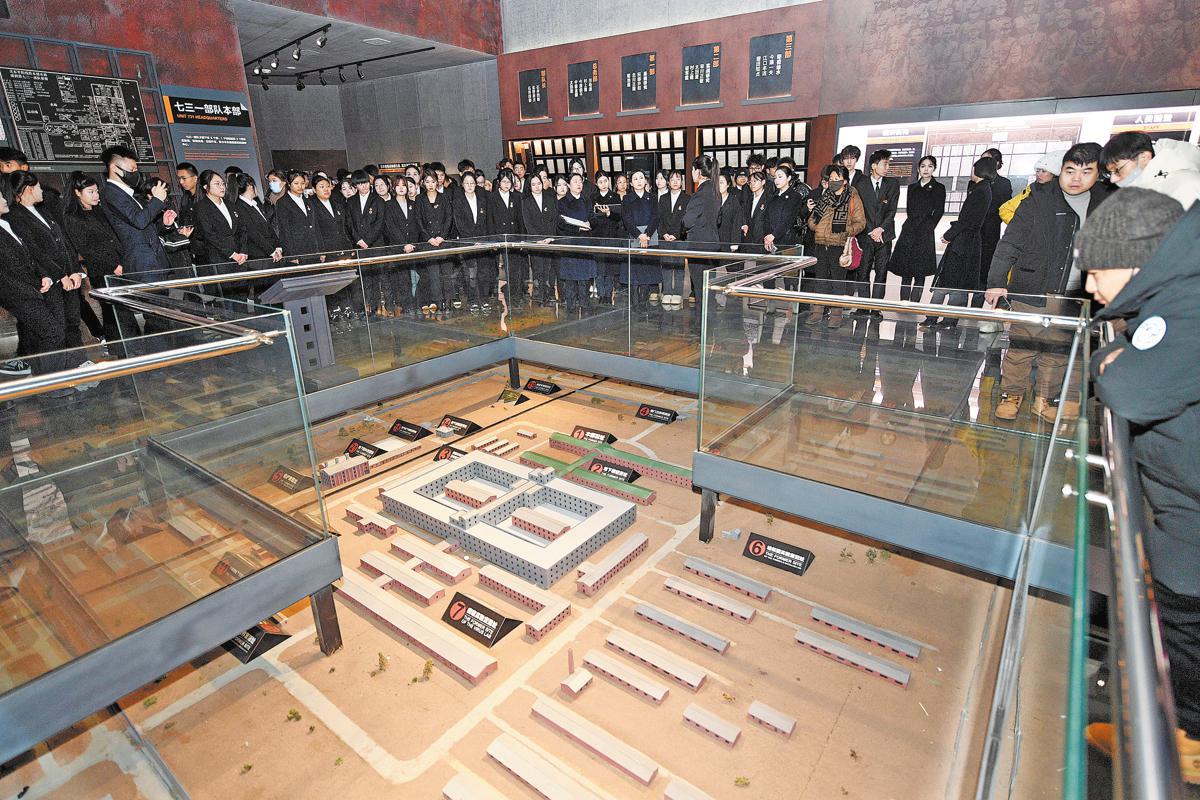
Gruesome reckoning
Wang first learned about Japan's bacteriological warfare program in 1995 from a newspaper article, while working at her husband's trading company in Japan.
With support from her husband, she quit her job and devoted herself to the campaign to expose the crimes of Unit 731. Now 73 years old, she has become one of China's leading researchers into Japan's use of biological weapons during World War II.
Her quest began with the collection of evidence in Japan. She contacted Japanese historians and researchers to learn about the background of the unit and to gather relevant material.
She also visited Japanese military veterans who had participated in the biological warfare program, attempting to obtain firsthand evidence from them.
"Most of these veterans were elderly. Some of them began to reflect on their past and were willing to tell me about what happened back then," she said. "I still remember the first veteran I interviewed who was over 80 years old at that time and lived in a small town.
"When I first met him, he appeared very nervous," she said. "I told him that I just wanted to learn the truth and let more people know about the crimes of Unit 731."
After remaining silent for a long time, the veteran finally opened up to Wang.
"He described the cruelty of those experiments — how they tied living people to the operating table, performed dissections, injected germs, and even conducted live dissections," said Wang. "I noticed that his voice trembled, and his eyes were filled with remorse."
A Japanese civilian group and Japanese lawyers she worked with finally organized 180 bacteriological warfare victims or their families to launch legal action. The firsthand experiences of some of them became crucial evidence for a lawsuit.
In 2002, Wang led China's largest plaintiffs' group — with 180 members, including herself — in a lawsuit against the Japanese government.
On Aug 27, 2002, the Tokyo District Court rejected a demand for Japanese government compensation after some 28 hearings. However, the court declared for the first time that the deployment of biological weapons was a strategic part of Japanese war plans and was carried out under orders from the central army command.


