



Calls for tougher penalties on drug trafficking mount in Bali









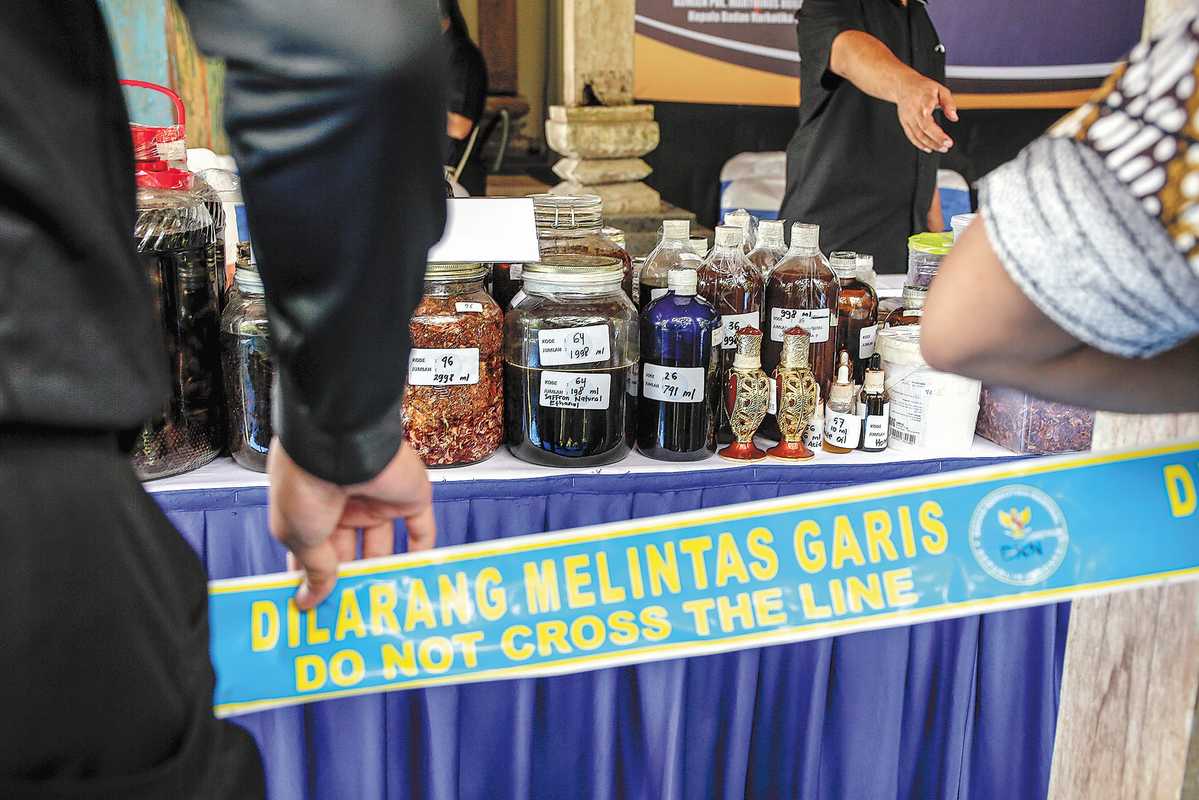
Calls for harsher penalties and immediate deportations of drug dealers are growing in Bali, with local residents warning that rising offenses among foreign visitors threaten to damage the island's international reputation.
Komang Nova Sewi Putra, deputy chairman of Bali's legislative council, said the time had come for decisive action against tourists who violate the law or flout local customs, including immediate deportation.
"If we were abroad in a fight, we would immediately deport them. Why isn't it implemented in Bali? Once caught, deport them. The effect is to make Bali safe," Putra was quoted as saying during a council meeting in June, according to local news website The Bali Sun.
"The quality of tourists coming to Bali is decreasing," local politician Agung Bagus Pratiksa Linggih said as quoted by The Guardian. "This is due to the rapid growth of illegal homestays, which allows low-budget foreigners to stay longer in Bali."
"Bali is a beautiful, sacred island, and we expect our guests to show the same respect that we extend to them," Bali governor I Wayan Koster said.
According to Bali Police, 226 foreign nationals were involved in criminal activities on the island last year, including drug trafficking, marking a 16 percent increase from 194 cases the previous year.
The majority of those convicted were US citizens, followed by Australians, Russians and British nationals.
Bali police arrested more than 1,300 people for drug-related offenses in 2024, marking an almost 23 percent increase compared to the previous year. They also seized 21 kilograms of methamphetamine, over 18,000 ecstasy pills and nearly 90 kg of cannabis during various operations in 2024.
Despite growing concerns over drug trafficking involving foreign nationals in Bali, there is an increasing trend of leniency in the foreigners charged with such offenses.
In July, Bali prosecutors requested prison sentences of nine and six years, respectively, for an Argentine woman and a British man on trial for smuggling 244 grams of cocaine into Bali, even though the maximum sentence for trafficking over 5 grams is life imprisonment.
In June, prosecutors sought just one-year sentences for three British nationals accused of trafficking almost 1 kg of cocaine to the island province.
Indonesia has also moved in recent months to deport to their home countries several high-profile foreign inmates convicted of drug offenses.
In February, Serge Atlaoui was sent back to France after Jakarta and Paris agreed on a deal to repatriate him on "humanitarian grounds" because of ill health. He was granted a conditional release by French authorities in July.
Raising fears
A surge in foreigner-linked crime has raised fears that Bali may turn into a spot for drug traffickers and organized crime groups.
Indonesian National Narcotics Agency revealed that Bali has become a central hot spot for transnational drug trafficking, warning that syndicates are using increasingly sophisticated methods to evade capture and have begun setting up drug production facilities on the island.
The National Narcotics Agency Chief Marthinus Hukom said that international drug dealers are now using blockchain technology and cryptocurrency to conduct transactions in Bali. Blockchain and cryptocurrency enable users to conduct out anonymous and decentralized financial transactions, making it more difficult for authorities to track the flow of money.
"They use messaging apps like Telegram to communicate with buyers, then send coordinates for pickup locations, eliminating the need for face-to-face contact with dealers or couriers. These transactions can take as little as two minutes and are extremely difficult for authorities to trace," Marthinus said on July 15, as quoted by Antara News.
Marthinus also warned that Bali may be turning into a "killing ground" for members of transnational drug syndicates.
According to Marthinus, several major transnational drug syndicates are currently operating in Bali. These include Southeast Asia's Golden Triangle, which spans northern Myanmar and parts of Laos and Thailand, as well as the Golden Crescent, which spans Afghanistan, Pakistan and Iran.
Authorities have also discovered that the Sinaloa Cartel from Mexico, considered the largest and most powerful drug trafficking organization in the Western Hemisphere, recently began operations in Bali.
THE JAKARTA POST, INDONESIA








