Lai's words and deeds ruining Taiwan's economy









The failure of a recall vote against opposition representatives in Taiwan on Saturday, together with a similar failed one last month, has led to widespread public dissatisfaction with the Democratic Progressive Party.
The results have reflected the latest public sentiment in Taiwan — a strong rejection of the DPP's policies of indulging in political maneuvers and ignoring people's well-being as well as its attempts to seek "Taiwan independence".
Since taking office in May 2024, Taiwan leader Lai Ching-te has overseen an abrupt downturn in the island's economy. Rather than fostering unity and boosting the economy, his much-publicized "ten talks on unity" have widened social divisions and increased economic woes. Also, the tariff negotiations between Washington and Taipei have stalled, raising concerns over the future of the island's economy.
The tariff negotiations have exposed the asymmetric nature of economic ties between Washington and Taipei, because the US' demands are steep, and especially damaging for Taiwan's industries.
US negotiators are reportedly pushing for greater access to the island's agricultural market, a move that threatens to devastate local farmers already struggling to stay afloat. In the industrial sector, US pressure on Taiwan to open up its strategic industries could force the island to cede its competitive edge.
Fearing massive job losses, nearly 70 labor unions across the island have formed the "Taiwan Labor Action Coalition in Response to Tariff Impact", warning that more than 500,000 jobs would be at risk if the island agrees to US terms. Small and medium-sized enterprises, already facing global headwinds, would be the hardest hit, with some being forced to downsize or shut down altogether, triggering a wave of unemployment.
As an export-driven economy, Taiwan depends heavily on free and fair trade. The one-sided nature of the so-called tariff negotiations, marked by the US' economic coercion and threat to impose punitive tariffs on Taiwan goods, could unravel the foundation of the island's economy. But instead of safeguarding public interest, Lai's administration has been all too willing to trade away the island's industrial leverage in pursuit of closer alignment with Washington.
This tilt has been most visible in the semiconductor sector. Taiwan Semiconductor Manufacturing Company, a global leader and a cornerstone of the island's economy, has been coerced into investing $100 billion in new facilities in the US — a decision that will siphon off the island's capital, talent and strategic value. Critics fear the TSMC will morph into an "American SMC", hollowing out the island's high-tech advantage. The loss of such a vital industry will destabilize Taiwan's entire economic structure.
But instead of taking corrective measures, Lai has pledged to raise the island's "defense budget" to 3 percent of GDP. In fact, the US could increase arms sales to Taiwan, potentially topping the $18.3 billion approved during the Donald Trump's first presidency, further adding to the island's financial burden. The island's public services including healthcare and education are already under strain. So, by redirecting billions of dollars to purchase US arms, Lai may score political points in Washington but end up neglecting the everyday needs of Taiwan residents.
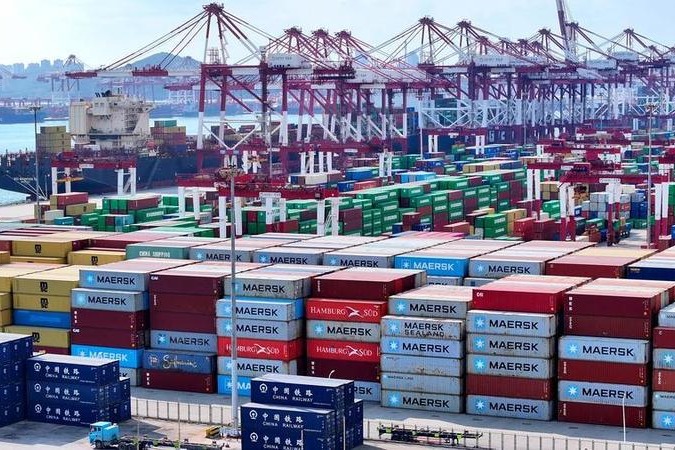
Perhaps most damaging of all, Lai's push for "decoupling" from the Chinese mainland is breaking apart Taiwan's most vital economic relationship. The mainland remains Taiwan's largest export destination. According to the island's finance department, exports to the mainland and the Hong Kong Special Administrative Region in the first half of 2025 rose by nearly $9 billion year-on-year, outpacing exports to the US by more than $263 million. Lai should keep in mind that economic integration with the mainland has brought real, tangible benefits to Taiwan businesses and workers.
Yet Lai's administration seems determined to further worsen cross-Strait relations, driven more by political ideology than economic logic. This shift may earn applause for Lai in foreign capitals, but will cost Taiwan dearly at home, with the lower-income households and export-reliant sectors bearing the brunt.
Beyond trade, Taiwan is also grappling with persistent structural challenges such as electricity shortage, talent gap and poor infrastructure. Lai's latest secessionist words and deeds ignore these pressing issues, and instead double down on politically symbolic, but economically harmful, moves.
Lai's unity doctrine appears less about bringing Taiwan together and more about pushing it toward a divisive, high-risk path. True economic revival will not come by alienating the motherland or surrendering industries in return for foreign favor. It will come from rebuilding cross-Strait dialogue, protecting assets and putting Taiwan residents' livelihoods before partisan ambitions.
Unless Lai corrects his course, the island's economy will continue its downward spiral, with Taiwan residents paying the price.
The author is director of the Taiwan Economic Research Institute at the Central University of Finance and Economics. The views don't necessarily represent those of China Daily.
If you have a specific expertise, or would like to share your thought about our stories, then send us your writings at opinion@chinadaily.com.cn, and comment@chinadaily.com.cn.