



China-Germany auto cooperation key driver of progress, says industry leader









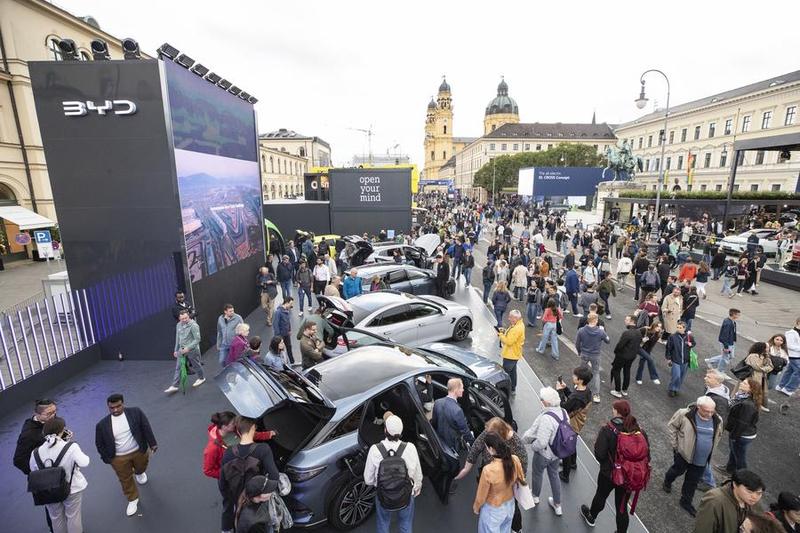
MUNICH - China and Germany are deepening cooperation to address global challenges in the auto sector, Hildegard Mueller, president of the German Association of the Automotive Industry, has told Xinhua in Munich during the IAA Mobility fair.
This year's event hosted 116 Chinese exhibitors, up from just over 70 in 2023, setting a new record. Companies ranged from automakers to suppliers, showcasing the strength of China's EV industry, from batteries and smart cockpits to autonomous driving and connectivity.
"It highlights the depth and breadth of cooperation between the two industries," said the head of VDA, the organizer of IAA Mobility 2025.
"German automakers bring a century of global experience, while Chinese companies add innovation and scale. Together they are building an ecosystem that sets a benchmark for the future of mobility," Mueller said.
She noted that many Chinese firms are now going beyond technology demonstrations, with several preparing to enter the European market and even announcing local production plans, "the best proof of internationalization," she added.
Cross-border partnerships are also expanding. European brands are increasingly integrating Chinese technologies: BMW's Neue Klasse iX3 uses autonomous driving systems from Momenta and batteries co-developed with CATL and EVE Energy, while Audi's Q6L e-tron, launched in August, features Huawei's "Qian Kun" driver-assistance platform.
Mueller stressed that such cooperation underscores Germany's globally integrated economy. While competition is inevitable, she said collaboration is becoming the key driver of progress.
At the same time, challenges remain. A recent EY report showed the German auto industry lost 51,500 jobs in 2024, around 7 percent of its workforce, making it the hardest-hit sector. Industrial employment overall fell 2.1 percent year-on-year, or 114,000 jobs.
On trade policy, Mueller reiterated her opposition to tariffs, calling them "never a good solution." She warned that protectionism raises consumer costs, undermines competitiveness, and disrupts supply chains. Despite the U.S. decision to lower tariffs on EU goods to 15 percent, German automakers still face billions of euros in extra duties annually.
"The auto industry is global and it needs a global policy framework," Mueller said. "I hope dialogue between China and Europe will strengthen again. Only through cooperation can we find solutions and ensure sustainable growth."








