Premium cotton crops, prices unravel false claims
Western accusations of 'forced labor' in Xinjiang disproved by high degree of mechanization, seed advances










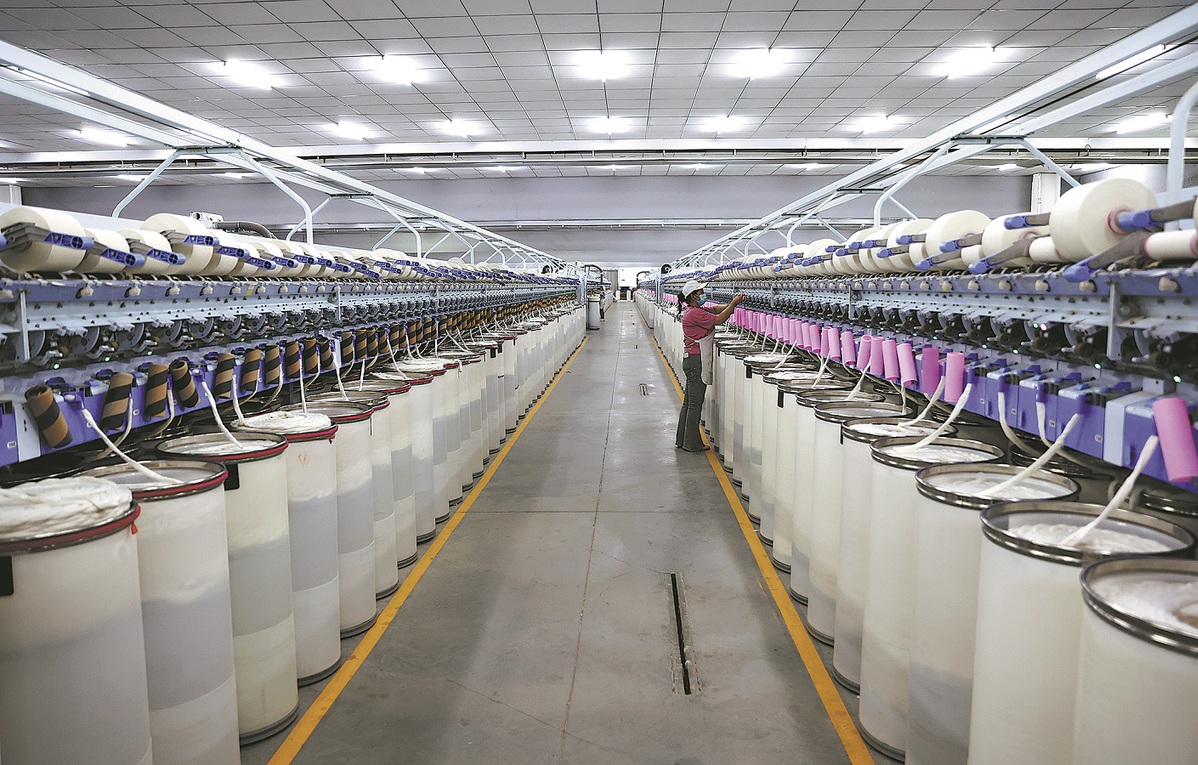
Textile hub emerges
The cotton industry has emerged as a pivotal cornerstone in elevating the livelihoods of local communities in Xinjiang. The region's cotton and textile industry generated an output value of 220 billion yuan ($30.93 billion) last year and provided employment for more than 1 million people, despite market disruptions caused by Western sanctions.
Thanks to government efforts to leverage regional advantages and extend industrial chains, Xinjiang is rapidly emerging as a textile manufacturing hub. By the end of 2024, the region was home to 3,848 registered textile and garment companies, employing 970,000 people. The number of spindles rose from 7 million in early 2014 to 29.1 million in late 2024, and the local processing rate for cotton climbed from 11 percent to 42 percent.
Gulgena Aniwar, a member of a human resources team of a company producing high-quality cotton yarn in Awat, said the company, which sources cotton locally, has expanded its manufacturing capacity by adding more production lines this year to meet surging market demand.
"Installing more production lines means we need to recruit more workers. And for the local people, it means more job opportunities and income at their doorstep," he said. "To compete with other textile companies, we have offered better pay and welfare packages to the workers."
Gulgena laughed at the accusation of "forced labor" in Xinjiang's textile industry. "If any of that was true, then why do I have to keep posting recruitment advertisements online and on social media?"
Meanwhile, railway authorities in Xinjiang have increased transport capacity and launched dedicated cotton yarn train services this year.
According to China Railway Urumqi Group Co, to ensure efficient transportation of cotton textiles, two fixed train routes have been established in southern Xinjiang. One links Aksu and the Yangtze River Delta region on the eastern coast while the other connects Aksu and Kashgar with the Pearl River Delta region in the south.
"Through close cooperation with the Urumqi Railway Logistics Center, dedicated trains will further enhance the market competitiveness of Xinjiang's cotton textile products," said Li He, general manager of a supply chain management company.
Xinhua contributed to this story.